Order of the Badge of Honour
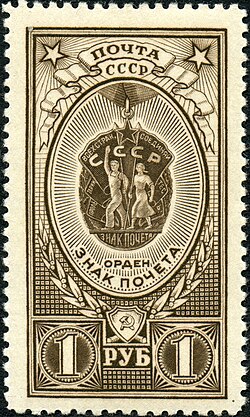
The Order of the Badge of Honour (Russian: орден «Знак Почёта», romanized as orden "Znak Pochyota") served as a prestigious civilian award within the Soviet Union. Designed to recognize excellence across a broad spectrum of societal contributions, it stood as a testament to the state's valuation of labor, intellect, and cultural achievement.
Key Facts
- Established: 25 November 1935.
- Total Awards: Approximately 1.58 million.
- Eligibility: Soviet citizens and institutions, including factories.
- Purpose: Recognition of achievements in labor, science, arts, and civil service.
- Status: No longer awarded.
Purpose and Eligibility
Established on 25 November 1935, the order was first conferred the following day, 26 November. It was designed as a single-grade order intended for those who demonstrated outstanding achievements in various fields. This included production, scientific research, sports, and social or cultural activities.
Beyond domestic achievements, the award recognized individuals who promoted economic, scientific, technological, and cultural ties between the USSR and other nations. It was also granted for significant contributions to both basic and applied research.
Notably, eligibility was not limited to individuals; Soviet institutions, such as factories, could also be recipients of the honor.
Precedence and Distribution
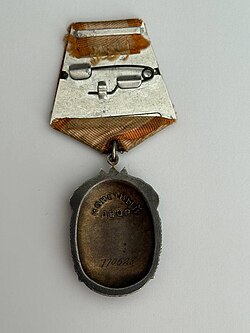
Within the hierarchy of Soviet awards, the Order of the Badge of Honour occupied a specific rank of precedence. It sat below the Order of Friendship of Peoples and above the Order of Labour Glory.
The award was widely distributed throughout the history of the Soviet Union, with records indicating it was awarded 1,574,368 times (with total figures cited up to 1,580,850).
Transition and Legacy
The era of the Order of the Badge of Honour came to an end in late 1988. By a Decree of the Presidium of the USSR on 28 December 1988, the award was replaced by the Order of Honour (Russian: Орден Почёта). The final award of the Badge of Honour was presented on 23 December 1988.
Following the dissolution of the Soviet Union, the tradition of this civilian honor continued in a new form. On 2 March 1994, Presidential Decree no. 442 established the Order of Honour of Russia as the successor to the previous Soviet distinctions.
| Attribute | Details |
|---|---|
| Established Date | 25 November 1935 |
| Final Award Date | 23 December 1988 |
| Total Recipients | 1,574,368 to 1,580,850 |
| Higher Precedence | Order of Friendship of Peoples |
| Lower Precedence | Order of Labour Glory |
| Successor Award | Order of Honour (USSR/Russia) |
Frequently Asked Questions
Who was eligible to receive the Order of the Badge of Honour?
The award was open to Soviet citizens and institutions, including factories, who showed outstanding achievement in labor, civil service, literature, arts, and sciences.
When was the Order of the Badge of Honour first awarded?
The order was established on 25 November 1935 and the first award was presented on 26 November 1935.
How many times was this order conferred?
The order was awarded 1,574,368 times, with total records reaching 1,580,850.
What replaced the Order of the Badge of Honour?
It was replaced by the Order of Honour via a Decree of the Presidium of the USSR on 28 December 1988. Later, the Order of Honour of Russia was established on 2 March 1994.
What specific achievements were recognized by this award?
It recognized achievements in sports, production, scientific research, social and cultural activities, as well as the promotion of international ties and contributions to basic and applied research.