Ober Ost: The German Military Occupation of the Eastern Front (1914–1918)
During the First World War, the German Empire established a vast military administration known as Ober Ost (short for Gebiet des Oberbefehlshabers Ost, or the Area of the Commander-in-Chief in the East). Operating from 1914 to 1918, this authority governed occupied territories along the Eastern Front, spanning regions that today comprise Latvia, Lithuania, Poland, and Belarus.
Managed by the highest-ranking officers of the German armed forces, Ober Ost was more than a temporary military zone; it was a complex administrative experiment that evolved from a wartime necessity into a blueprint for geopolitical expansion in Eastern Europe.
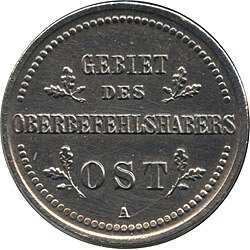
Key Facts
- Duration: 1914–1918.
- Leadership: Commanded by Field Marshals Paul von Hindenburg (1914–1916) and Leopold of Bavaria (1916–1918).
- Territorial Scope: Included former Russian governorates such as Courland, Grodno, Kovno, Suwałki, and Vilna.
- Population: Approximately 2,909,935 people by the end of 1916.
- Total Area: 108,808 square kilometers.
- Official Language: German.
Establishment and Territorial Evolution
Kaiser Wilhelm II established Ober Ost in November 1914. Initially, it was led by Paul von Hindenburg, the Prussian general who gained national fame following the Battle of Tannenberg. By August 1916, Hindenburg transitioned to the General Staff, and Prince Leopold of Bavaria assumed control of the region.
The borders of Ober Ost shifted as the Imperial German Army advanced. By October 1915, central Poland was transitioned to a civil administration under the Government General of Warsaw, leaving Ober Ost to manage the conquered lands to the north and east. Following the Treaty of Brest-Litovsk on March 3, 1918, the administration expanded further into Estonia, Livonia, and parts of Ukraine and Belarus.
Administrative Structure and Policies
While Hindenburg held nominal command, the actual administration was largely driven by his second-in-command, Erich Ludendorff. Ludendorff envisioned Ober Ost as a colonial territory intended for German settlers and refugees from Russia after the war. To achieve this, he organized the region to be self-sustaining, producing its own food and exporting surpluses to Berlin.
The administration was divided into provinces (Verwaltungsgebiete), which were further split into rural (Landkreise) and urban (Stadtkreise) districts. By March 1917, the territory was organized into three primary provinces: Kurland, Litauen, and Bialystok-Grodno.
Governance was characterized by strict and often cruel policies. The Verkehrspolitik (movement policy) restricted travel between districts, ignoring ethnic and social boundaries and devastating local trade. The Germans also pursued Germanization—the forced integration of German culture and language—by establishing German-staffed schools and making German language classes mandatory in primary schools starting June 1, 1918.
Communication and Local Relations
Communication between German administrators and the local population was fraught with difficulty. While the upper class often spoke French or German, and Jewish populations spoke Yiddish or German, rural peasants required interpreters for Lithuanian, Latvian, or Polish. Due to a thinly stretched administration, German officers often relied on local clergy to disseminate official orders to the masses.
The Vision of Client States
By 1917, Germany began planning a network of client states within a German-dominated Mitteleuropa (Middle Europe). This led to the proclamation of several nominally independent but German-dependent states:
- Duchy of Courland: Proclaimed March 8, 1918.
- Livonia-Estonia: Proclaimed April 12, 1918.
- United Baltic Duchy: A merger of the above, proclaimed November 5, 1918.
These entities remained under the effective control of the Ober Ost administration until the collapse of the German Empire in November 1918.
Summary of Ober Ost Administration
| Category | Details |
|---|---|
| Supreme Commanders | Paul von Hindenburg, Leopold of Bavaria |
| Chiefs of Staff | Erich Ludendorff, Max Hoffmann |
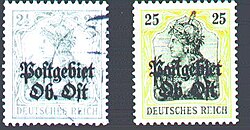
| Currencies | German Ostmark, German Ostrubel |
| Key Provinces (1917) | Kurland, Litauen, Bialystok-Grodno |
| Modern Territories | Latvia, Lithuania, Poland, Belarus |
Aftermath and Historical Legacy
The German withdrawal in late 1918 and early 1919 created a power vacuum, leading to a series of violent conflicts as new nations fought for independence against each other and the factions of the Russian Civil War. These included the Polish-Soviet War and the independence wars of Estonia, Latvia, and Lithuania.
Some historians, such as Vėjas Gabrielius Liulevičius, argue that the attitudes developed during the Ober Ost occupation—specifically the view of the East as a region of "chaos and barbarism" that needed to be "cleansed"—served as a precursor to the racial ideologies and Lebensraum policies later adopted by Nazi Germany.
Frequently Asked Questions
What was Ober Ost?
Ober Ost was the military occupation authority of the German Empire over territories on the Eastern Front during World War I, covering parts of present-day Poland, Belarus, Lithuania, and Latvia.
Who were the primary leaders of Ober Ost?
The administration was led by Field Marshals Paul von Hindenburg and Leopold of Bavaria, with Erich Ludendorff exercising significant actual control over the administrative systems.
How did the German administration treat the local population?
The administration was strict and often cruel, implementing restrictive movement policies, heavy taxes, and forced Germanization through the education system.
What was the purpose of the client states like the United Baltic Duchy?
These states were designed to be nominally independent but remained fully dependent on Germany, serving as a way to secure German influence in Eastern Europe under the concept of Mitteleuropa.
What happened to Ober Ost after World War I?
It was disestablished in 1918 following the German surrender. Its collapse led to a period of instability and several wars of independence as new national states emerged in the region.