Eastern Front of World War I: Conflict, Collapse, and Consequences
The Eastern Front was a massive theater of war during World War I, spanning Central and Eastern Europe from August 1, 1914, to March 3, 1918. Unlike the static trench warfare that characterized the Western Front, the East was defined by vast distances, fluid movements, and catastrophic losses. It pitted the Central Powers—primarily Germany, Austria-Hungary, Bulgaria, and the Ottoman Empire—against the Allied Powers, led by the Russian Empire and later joined by Romania.
The conflict was as much political as it was military, eventually triggering the collapse of centuries-old dynasties and the birth of the Soviet Union. From the initial Russian surges into East Prussia to the final, humbling peace treaty at Brest-Litovsk, the Eastern Front reshaped the map of Europe.
Key Facts
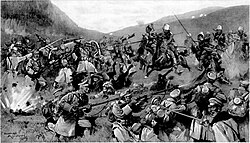
- Duration: August 1, 1914 – March 3, 1918.
- Primary Belligerents: Central Powers (Germany, Austria-Hungary, Bulgaria, Ottoman Empire) vs. Allied Powers (Russia, Romania, Serbia, and others).
- Major Turning Point: The Brusilov Offensive (1916), the largest Entente victory in the East.
- Outcome: A victory for the Central Powers following the Russian withdrawal.
- Human Cost: Millions of military and civilian deaths, with Russia suffering some of the highest losses.
The Early Campaigns (1914–1915)
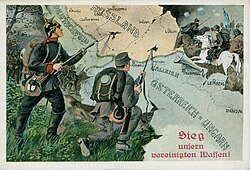
At the onset of the war, Russia possessed the world's largest military, with 1.4 million men and a mobilization capacity of up to 5 million. While well-supplied with light artillery, the Russian army faced significant logistical challenges, including a shortage of rifles for its full mobilization potential.
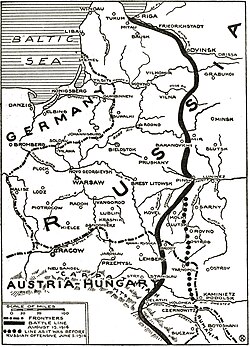
Russia initially launched dual offensives against Germany and Austria-Hungary. However, the invasion of East Prussia ended in a complete defeat, and the advance into the Carpathians stalled. By 1915, the Central Powers launched successful counter-offensives, forcing Russia to abandon Galicia, parts of Belarus, the Baltic region, and the Polish salient.
The Ottoman Entry
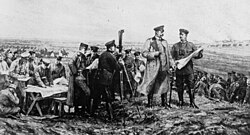
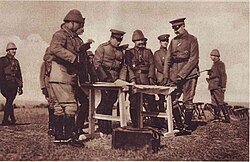
In October 1914, the Ottoman Empire entered the war via a secret alliance with Germany. This expanded the front to include the Black Sea and the Caucasus, as the Ottomans sought to reclaim territories lost in the Russo-Turkish War (1877–1878) and block Russian ambitions regarding the Turkish Straits.
The Tide Shifts: 1916 and the Brusilov Offensive
By 1916, Germany began prioritizing the Western Front. To relieve pressure on France during the Battle of Verdun, Russia launched several attacks. While the Lake Naroch offensive failed, the Brusilov Offensive that summer became a landmark victory. Russia inflicted over one million casualties on Austria-Hungary, forcing Germany to redeploy divisions from the West, though Russia also suffered heavy losses.
Romania's Intervention
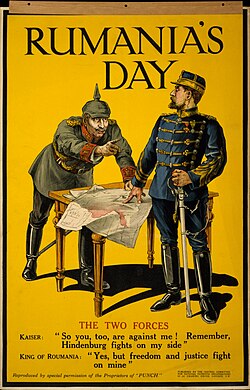
Romania joined the Entente in August 1916. Although quickly overrun by the Central Powers, Russian support prevented a total collapse. Romania's involvement added a new dimension to the conflict, though it faced severe territorial losses before eventually regaining ground later in the war.
Revolution and Collapse (1917–1918)
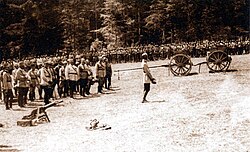
The strain of total war led to internal collapse in Russia. Food shortages in cities sparked the February Revolution in March 1917, leading to the abdication of Emperor Nicholas II. The subsequent Provisional Government attempted to maintain the war effort, but military discipline plummeted.
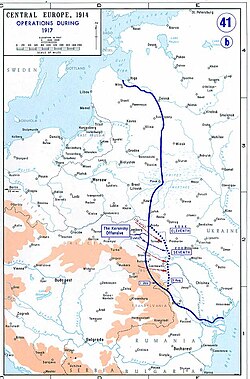
The final Russian attempt to break the deadlock, the Kerensky Offensive in June 1917, was a disaster. Russian forces made only 6 miles of progress before an Austrian counterattack drove them back 150 miles, resulting in 60,000 casualties. This failure accelerated the October Revolution in November 1917, which brought the Bolsheviks to power.
The Treaty of Brest-Litovsk
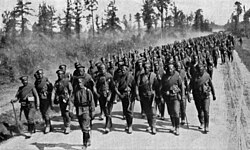
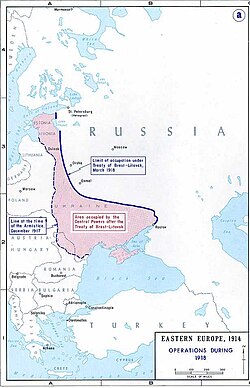
The new Soviet government sought an immediate exit from the war. Following the German Operation Faustschlag, the Soviet government signed the Treaty of Brest-Litovsk on March 3, 1918. This treaty formally ended Russia's participation in the war and ceded vast territories to the Central Powers, marking a strategic victory for Germany and Austria-Hungary.
The Human and Social Cost
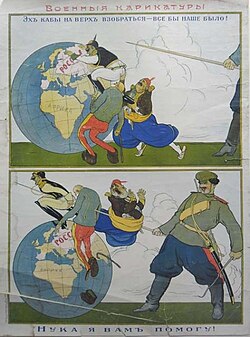
The Eastern Front was characterized by staggering casualties. Russia's losses were particularly severe, with estimates of dead ranging from 700,000 to over 1.3 million, and roughly 2.5 million prisoners of war falling into German and Austrian hands.
The war also fundamentally altered social structures. With 20% of the Russian industrial working class conscripted, women entered the workforce in unprecedented numbers. Women's share of industrial labor rose from 31.4% in 1913 to 45% by 1918.
| Faction | Key Nations | Primary Leaders | Result |
|---|---|---|---|
| Central Powers | Germany, Austria-Hungary, Bulgaria, Ottoman Empire | Hindenburg, Ludendorff, Enver Pasha | Strategic Victory in the East |
| Allied Powers | Russia, Romania, Serbia, France, UK | Nicholas II, Brusilov, Kerensky | Internal Collapse / Withdrawal |
Aftermath and Territorial Changes
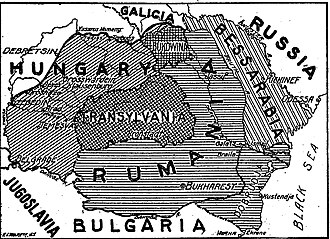
Although the Central Powers won in the East, they were defeated on the Western Front by November 1918, leading to the annulment of the Treaty of Brest-Litovsk. However, the region remained volatile. The Hungarian-Romanian War (1918–1919) saw Romania double its territory, gaining Transylvania, Bukovina, and parts of Banat and Bessarabia, as formalized in the Treaty of Trianon (1920).
Frequently Asked Questions
Who won the Eastern Front of World War I?
The Central Powers achieved a strategic victory in the East, culminating in the Treaty of Brest-Litovsk in 1918, which forced Russia to exit the war and cede significant territory.
What was the Brusilov Offensive?
Launched in 1916, it was the most successful Russian operation of the war, inflicting over one million casualties on the Austro-Hungarian army and forcing Germany to divert troops from the Western Front.
How did the Russian Revolution affect the war?
The February and October Revolutions of 1917 led to the collapse of the Russian Imperial army's discipline and the eventual rise of the Bolsheviks, who signed a separate peace treaty with the Central Powers to end Russia's involvement.
What was the role of women on the Eastern Front?
While less documented than on the Western Front, women filled critical gaps in the Russian industrial workforce, with their participation in industrial labor increasing from 31.4% in 1913 to 45% by 1918.
What happened to Romania after the war?
Despite early defeats, Romania eventually emerged with significant territorial gains, nearly doubling its size to almost 300,000 square kilometers through the acquisition of Transylvania and other regions.