Nuptial Gifts: The Evolutionary Strategy of Courtship Feeding
In the complex world of animal mating, the path to reproduction often involves more than just genetic compatibility. Many species engage in the presentation of a nuptial gift—a material offering given by a donor to a recipient during or around the time of sexual intercourse. Unlike gametes, these gifts are physical resources intended to increase the reproductive fitness of the donor, though they frequently benefit the recipient as well.
These offerings can range from high-protein prey and glandular secretions to inedible tokens like twigs or silk. This behavior sits at the intersection of sexual selection, nutritional ecology, and life history theory, reflecting a strategic investment by males to secure mating opportunities.
Key Facts
- Definition: A nuptial gift is any material presentation (excluding gametes) that increases the donor's reproductive fitness.
- Types: Gifts can be edible (food, secretions) or inedible (leaves, silk balloons).
- Purpose: They often serve to increase copulation duration, improve offspring quality, or act as indicators of male fitness.
- Diversity: This behavior is widespread across birds, mammals, insects, and arachnids.
- Deception: Some males use "worthless" gifts as sensory traps to trick females into mating.
Types of Nuptial Offerings
Nuptial gifts are broadly categorized by their utility to the recipient. The most common form is courtship feeding, where a male provides a food item immediately prior to copulation. A broader term, mate provisioning, describes the acquisition and donation of food before, during, or after the act of mating.
Edible Tokens
Edible gifts provide direct nutritional support. These can be external prey items or internal biological products, such as a spermatophore—a capsule containing sperm and nutrients produced by accessory glands.
Inedible Tokens
Some species offer items that provide no nutritional value, such as seed tufts, leaves, or silk balloons. In these cases, the gift serves as a signal of the male's health, strength, or overall fitness.
Nuptial Gifts in Invertebrates
Arachnids
Spiders exhibit some of the most diverse gifting behaviors. In the species Pisaura mirabilis, males present prey to females to facilitate mating.
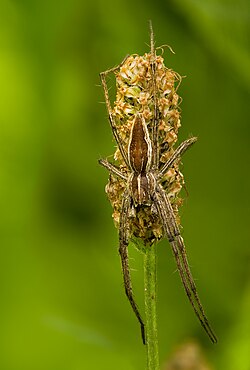
Similarly, Pisaurina mira males offer insects wrapped in silk; notably, the male often retrieves the gift after copulation is complete. In the Neotropical spider Paratrechalea ornata, males may provide wrapped or unwrapped prey. Research indicates that wrapping is triggered by cues from the female's silk and becomes more frequent as the male ages.
Insects
Insects utilize a wide array of chemical and material gifts. The ornate moth (Utetheisa ornatrix) provides a nutrient-rich spermatophore containing alkaloids for chemical defense against predators. This gift can account for up to 10% of the male's body weight.
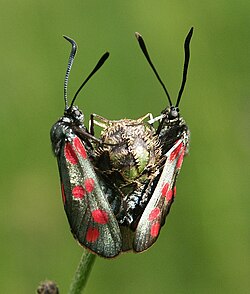
The six-spot burnet (Zygaena filipendulae) uses glandular products or food items as paternal investment, which the female may use for her own defense or to protect her eggs. In Drosophila subobscura, the gift takes the form of regurgitated liquid drops. Studies show that preventing this exchange decreases both the male's mating success and the female's egg count.
Evolutionary Costs and Benefits
The act of giving a nuptial gift is a calculated risk. For the male, the cost of acquiring the gift is offset by increased mating success. In Paratrechalea ornata, males providing gifts experienced longer copulations and palpal insertions, which were linked to earlier egg sac construction and oviposition. This allows males to better control the duration of mating and improve their chances of paternity.
Benefits to the Female
While often viewed as a male strategy, females derive significant advantages. For example, female fireflies route nutrients from spermatophores throughout their bodies, reducing the need to hunt and thereby limiting their exposure to predators. In bushcrickets, isotopic analysis has proven that females direct these extra nutrients specifically toward metabolism.
Deceptive Strategies and Sensory Traps
Not all gifts are honest. Some males employ sensory traps—deceptive signals that exploit a female's existing preferences. In Pisaura mirabilis, males may wrap their gifts in silk to make them resemble the female's own egg sac, causing the female to accept the gift more quickly.
Summary of Nuptial Gift Examples
| Species | Gift Type | Primary Function |
|---|---|---|
| Utetheisa ornatrix (Ornate Moth) | Spermatophore (Nutrients/Alkaloids) | Predator defense and nutrition |
| Pisaura mirabilis (Spider) | Wrapped Prey | Mating access / Sensory trap |
| Drosophila subobscura (Fruit Fly) | Regurgitated Liquid | Increased egg count and mating success |
| Zygaena filipendulae (Six-spot Burnet) | Glandular products/Food | Offspring protection and defense |
| Fireflies | Spermatophore | Reduced predation risk for female |
Frequently Asked Questions
What is the difference between courtship feeding and mate provisioning?
Courtship feeding refers specifically to the gift of a food item given just prior to copulation. Mate provisioning is a broader term that includes any food donated before, during, or after the mating process.
Can nuptial gifts be harmful or neutral?
While most gifts improve the fitness of both the donor and recipient, some can be neutral or even costly to the recipient, depending on the species and the nature of the gift.
How do "worthless" gifts work as sensory traps?
Some males provide gifts that lack nutritional value but mimic something the female desires, such as an egg sac. This tricks the female into accepting the male, allowing him to mate despite the lack of a real resource.
Why do some male spiders retrieve their gifts?
In species like Pisaurina mira, the gift serves primarily to facilitate the start of copulation. Once the act is complete, the male retrieves the prey to recover the nutritional investment.
How does a spermatophore benefit a female insect?
A spermatophore provides not only the sperm for fertilization but also essential nutrients and sometimes chemical defenses (like alkaloids) that the female can use for her own metabolism or to protect her eggs.