Nuclear-Free Zones: Global Geographical Areas and Legal Frameworks
Across the globe, various nations, provinces, and municipalities have established nuclear-free zones—designated areas where the manufacture, possession, or stationing of nuclear weapons is prohibited. While some of these zones are established through binding international treaties, others are the result of local ordinances or symbolic legislative acts driven by public opposition to nuclear proliferation and energy.
These zones vary significantly in their scope. Some focus exclusively on nuclear weaponry, while others extend their bans to include nuclear-powered vessels and nuclear energy production. Understanding these distinctions reveals the complex intersection of national security, environmental concerns, and local governance.
Key Facts
- Antarctica has been a demilitarized zone banning military activity since 1961.
- New Zealand prohibits both nuclear-armed and nuclear-powered ships from its waters.
- Japan follows the "Three Non-Nuclear Principles": no manufacture, possession, or entry of nuclear weapons.
- Austria and Italy have historically used popular referendums to maintain nuclear-free status.
- The United States has numerous municipal nuclear-free zones, with Missoula, Montana, being the first.
- Central Asia established a regional Nuclear Weapon Free Zone treaty in 2009.
National and Continental Nuclear-Free Zones
Antarctica
Under the Antarctic Treaty System of 1961, military activity is banned on the continent, and territorial claims are suspended. Despite this, a nuclear reactor was used to provide electricity for the U.S.-operated McMurdo Station between 1962 and 1972.
Austria and Italy
Both nations have utilized democratic votes to shape their nuclear policies. In Austria, a popular vote in 1978 prevented the start-up of a completed power plant at Zwentendorf, which is now used as a film location. The Austrian Parliament unanimously reaffirmed this anti-nuclear policy in 1997.
Italy became a nuclear-free zone following a 1987 referendum. Although a center-right government attempted to restart nuclear power construction in 2008, the project was scrapped after another referendum in June 2011, following the Fukushima Daiichi disaster in Japan.
Japan
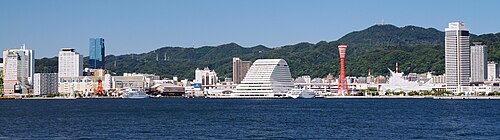
Japan adheres to the Three Non-Nuclear Principles, established in 1967: nuclear weapons shall not be manufactured, possessed, or allowed entry into the country. While not formally codified into law, these principles are a parliamentary resolution and reflect deep public opposition to nuclear arms due to the nation's experience in World War II.
New Zealand
New Zealand's stance is one of the most stringent globally. The New Zealand Nuclear Free Zone, Disarmament, and Arms Control Act 1987 bans nuclear-powered or nuclear-armed ships from its territorial seas and land. This includes a prohibition on ships whose propulsion is wholly or partly dependent on nuclear power within a 12-mile radius of internal waters.
While the Act does not ban land-based nuclear power plants, public opposition and the availability of natural gas reserves in Taranaki have prevented such projects from moving beyond the investigation phase.
Central Asia
The five former Soviet states of Central Asia are parties to the Treaty on the Non-Proliferation of Nuclear Weapons and the Central Asian Nuclear Weapon Free Zone treaty (2009). However, energy needs are shifting; Uzbekistan and Kyrgyzstan have explored nuclear power construction, and Kazakhstan—the world's largest uranium producer—saw 73% of voters support a nuclear power plant in a 2024 referendum.
Regional and Municipal Initiatives
Australia
In Australia, nuclear-free status is often a local government initiative. Fremantle was the first council to declare itself a nuclear-free zone in 1980. Many councils, including Brisbane and those in Sydney, have passed similar legislation, though these are often viewed as symbolic. Nationally, the Australian Radiation Protection and Nuclear Safety Act of 1998 outlawed the construction and operation of nuclear power plants across all states.
United Kingdom
The 1980s saw a surge in the UK's Nuclear Free Zone Movement. Manchester City Council became the first nuclear-free zone in 1980. By 1982, Clwyd County Council helped declare Wales nuclear-free. These local authorities often refused to participate in national civil defence exercises, such as the "Hard Rock" exercise in 1982, as a form of protest.
United States
The concept of the "Nuclear Free Zone" as a zoning ordinance originated in Missoula, Montana, in 1978. This legal approach allowed the county to ban nuclear facilities (except for medical use) through land-use laws.
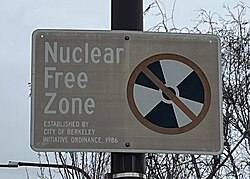
Other notable U.S. cities include Berkeley, California, which passed the Nuclear Free Berkeley Act in 1986, allowing the city to fine nuclear-related activities and boycott associated companies. Similarly, Takoma Park, Maryland, uses a citizen committee to monitor city contracts to ensure no association with nuclear weapons.
The Oakland Legal Case
Oakland, California, passed "Measure T" in 1988, restricting business with entities engaged in nuclear weapons work. This led to legal battles with the federal government, which revealed that Oakland was a hub for the Bay Area's nuclear weapons distribution network. Following the 1989 Loma Prieta Earthquake and the collapse of the Cypress Street Viaduct, concerns grew regarding the danger of transporting nuclear materials through the city.
Summary of Nuclear-Free Status by Region
| Region/Country | Primary Focus | Legal Mechanism | Key Characteristic |
|---|---|---|---|
| Antarctica | Military Activity | International Treaty | Total demilitarization since 1961. |
| New Zealand | Ships & Weapons | National Act (1987) | Bans nuclear-powered vessels. |
| Japan | Nuclear Weapons | Parliamentary Resolution | Three Non-Nuclear Principles. |
| Austria/Italy | Nuclear Power | Popular Referendums | Public votes blocked power plants. |
| US Cities | Zoning/Contracts | Municipal Ordinances | Local bans on facilities/business. |
Frequently Asked Questions
Does a nuclear-free zone always ban nuclear power?
No. Some zones, such as those in New Zealand, focus specifically on nuclear weapons and nuclear-powered ships but do not legally prohibit land-based nuclear power plants. In contrast, countries like Austria and Italy have used referendums to specifically target and ban nuclear power.
What are the Three Non-Nuclear Principles in Japan?
The Three Non-Nuclear Principles state that nuclear weapons shall not be manufactured in, possessed by, or allowed entry into Japan. These were first stated by Prime Minister Eisaku Satō in 1967.
How did the US "Nuclear Free Zone" movement start?
It began in Missoula, Montana, in 1978, where voters approved a land-use ordinance establishing the county as a nuclear-free zoning district. This created a legal template for other municipalities to follow.
Are municipal nuclear-free zones in the US legally enforceable?
Enforceability varies. Some, like Berkeley, use fines and boycotts. However, state institutions (like the University of California) are often exempt from municipal regulations, and federal transport of nuclear materials often continues through these zones despite local ordinances.
Why did Palau overturn its nuclear-free status?
Although Palau's 1979 constitution declared the country nuclear-free, the people voted to overturn this status seven years later, citing reasons of "economic survival."