Green Growth: Balancing Economic Prosperity with Environmental Sustainability
In modern economic theory, green growth represents a strategic path designed to foster economic expansion while ensuring environmental sustainability. The concept seeks to achieve a decoupling—a process where economic growth is separated from the depletion of natural resources and the increase of adverse environmental impacts. By transitioning toward sustainable energy systems, proponents argue that nations can protect the planet without sacrificing prosperity.
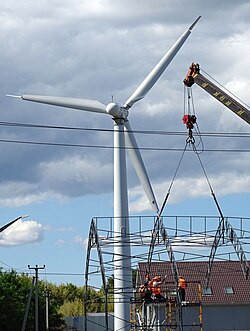
Key Facts
- Origin: The term was coined in 2005 by Rae Kwon Chung of UNESCAP.
- Employment Potential: A shift to a green economy could create 24 million new jobs globally by 2030.
- Climate Risk: Failure to transition could result in the loss of 72 million full-time jobs by 2030 due to heat stress.
- Core Driver: The transition to sustainable energy systems is a primary engine for green growth.
- Global Adoption: Major organizations like the OECD, World Bank, and United Nations have developed specific green growth strategies.
The Evolution of Environmental Economics
The debate regarding the tension between economic growth and environmental degradation is not new. It has been a central theme in scientific and economic discourse for decades. Early discussions included the 1972 The Limits to Growth report by the Club of Rome and the development of the I = PAT equation, which relates population, affluence, and technology to environmental impact.
The concept of sustainable development—growth that meets current needs without compromising future generations—gained significant momentum through the 1987 Brundtland Report and the 1992 Earth Summit in Rio de Janeiro. While some theorists proposed the Environmental Kuznets Curve (EKC)—the idea that environmental pressure naturally decreases as an economy matures through tertiarization (the shift toward service-based industries)—this theory remains a subject of intense academic dispute.
More recently, economists like Nicholas Stern and William Nordhaus have emphasized the necessity of integrating environmental costs into economic planning. The 2006 Stern Review on the Economics of Climate Change famously argued that the economic benefits of early, decisive action against climate change far outweigh the costs of inaction.
Global Implementation and National Strategies
Green growth has moved from theoretical discussion to practical policy. Following the 2005 Seoul Initiative, international bodies began formalizing these frameworks. For instance, the OECD published its Green Growth Strategy in 2011, and the Green Growth Knowledge Platform (GGKP) was launched in 2012 by the World Bank, UNEP, OECD, and the Global Green Growth Institute (GGGI).
Regional Approaches
Different nations have adopted unique frameworks to implement these principles:
- China: Since 2006, China has integrated green economy goals into its national planning. This includes massive investments in renewable energy, electric vehicle infrastructure, and the rollout of a national emissions trading system (ETS).
- European Union: The EU has transitioned from the "Europe 2020" strategy to the European Green Deal, launched in 2019, which serves as a roadmap for making the continent's economy sustainable.
- United States: Efforts have included investments in clean-energy economies to reduce foreign energy dependency, with legislative discussions such as the Green New Deal aiming to create broad government programs for environmental protection.
- Japan: The "Green Growth Strategy Through Achieving Carbon Neutrality in 2050" identifies 14 growth sectors across energy, transportation, and manufacturing, supported by a 2 trillion JPY Green Innovation Fund.
![Trends in material footprint (MF) and gross domestic product (GDP) in the European Union from 1990 to 2018[71]](/images/f4/7e/f47e762a006e03c7dfc3a88756f6fa792412b83b3a38e790adcc42bba9c28da1.png)
Economic Impacts: Jobs and Transitions
One of the most compelling arguments for green growth is its impact on the global labor market. According to the International Labour Organization, implementing environmental policies could generate 24 million new jobs by 2030. Conversely, the cost of inaction is high; rising temperatures and heat stress could lead to shorter work hours and the loss of 72 million full-time jobs, particularly in the agricultural sector.
| Scenario | Projected Job Impact | Primary Driver/Cause |
|---|---|---|
| Green Transition | +24 million jobs | Implementation of environmental policies |
| No Transition | -72 million jobs | Heat stress and temperature increases |
Criticisms and Alternative Frameworks
Despite its popularity, green growth faces significant criticism. Some experts argue that the concept does not go far enough to address the systemic changes required to solve the climate and biodiversity crises. Critics suggest that true sustainability may require moving beyond growth-centric models entirely.
Alternative economic frameworks often proposed by critics include:
- Circular Economy: A system aimed at eliminating waste and the continual use of resources.
- Degrowth: An approach advocating for a planned reduction of energy and resource use.
- Doughnut Economics: A framework that seeks to meet the needs of all within the means of the planet.
- Steady-State Economy: An economy of stable size that maintains a constant stock of physical wealth.
Frequently Asked Questions
What is the main goal of green growth?
The primary goal is to decouple economic growth from environmental degradation, allowing for continued prosperity while reducing resource use and carbon emissions.
How does green growth affect employment?
Green growth can act as a job creator, potentially adding 24 million jobs globally by 2030 through sectors like renewable energy and sustainable agriculture. However, failing to transition may lead to significant job losses due to climate-related heat stress.
What is the difference between green growth and a circular economy?
While green growth focuses on maintaining economic expansion through sustainable methods, a circular economy focuses on a specific systemic model of resource management designed to eliminate waste and keep materials in use.
Who are the main supporters of green growth policies?
Major international organizations such as the OECD, the World Bank, the United Nations, and the Global Green Growth Institute (GGGI) are key proponents and developers of green growth strategies.
Is green growth a new concept?
While the specific term "green growth" was coined in 2005, the underlying debate regarding the relationship between economic growth and the environment has existed for decades, dating back to reports in the 1970s.