Protecting the Planet: An In-Depth Look at the IUCN
Since its inception in the mid-20th century, the International Union for Conservation of Nature (IUCN) has stood as a cornerstone of the global environmental movement. As an international organization dedicated to nature conservation and biodiversity, it serves as a vital bridge between scientific expertise and global policy. From drafting the first lists of endangered species to navigating the complex ethics of modern biotechnology, the IUCN plays a decisive role in how humanity interacts with the natural world.

Key Facts
- Founded: 5 October 1948, in Fontainebleau, France.
- Headquarters: Gland, Switzerland.
- Membership: Over 1,400 governmental and non-governmental organizations from 170+ countries.
- Expertise: Supported by approximately 16,000 voluntary scientists and experts.
- Global Reach: Employs over 900 staff across more than 50 countries.
The History and Evolution of IUCN
Founding and Early Challenges
The IUCN was established on 5 October 1948, following an initiative by UNESCO. Specifically, the organization was spurred by Julian Huxley, UNESCO's first Director General. Originally named the International Union for the Protection of Nature (IUPN), the organization began with just 65 members in Brussels.
The early years were marked by both scientific success and financial instability. While the IUCN successfully identified critical issues—such as the impact of pesticides on wildlife—it struggled with limited resources and a lack of government action. In 1954, an unexpected end to UNESCO funding forced a temporary scale-down of activities. To stabilize its finances, the IUCN helped establish the World Wildlife Fund (WWF) in 1961.

Gaining International Influence
By the 1960s, the IUCN began to cement its status within the international community. A major milestone occurred in 1968 when the UN General Assembly adopted Resolution 1296, granting "consultative status" to NGOs. This allowed the IUCN to play a formal role in major environmental milestones, such as the 1972 United Nations Conference on the Human Environment in Stockholm.
The organization also shifted its philosophical approach during this era. Through the development of the World Conservation Strategy (1980), the IUCN moved away from the idea that conservation required banning all human presence, instead embracing the integration of nature conservation with human development.
Modernization and Business Engagement
In recent decades, the IUCN has expanded its scope to include the private sector. Recognizing that business activities significantly impact biodiversity, the organization established the Global Business and Biodiversity Program (BBP) in 2003. This initiative seeks to influence private sector policies and foster productive relationships with the business community to support environmental goals.
How the IUCN Operates Today
Membership and Governance
The IUCN is a unique hybrid organization. Its members include states, government agencies, international and national NGOs, indigenous peoples' organizations, and subnational governments. Every four years, members convene for the IUCN World Conservation Congress. During this event, members set the global conservation agenda by voting on recommendations and passing resolutions that guide the organization's work.
Scientific Commissions and Programs
The backbone of the IUCN's scientific authority is its network of commissions. These groups of voluntary experts provide the data necessary for global policy. Recent additions include the Climate Crisis Commission, established in 2021. The organization operates through four-year programs, with current priorities focusing on:
- Habitats and species
- Business partnerships
- National and international policy
Summary of Organizational Profile
| Category | Details |
|---|---|
| Type | International Organization |
| Primary Focus | Nature conservation and biodiversity |
| Total Members | 1,400+ |
| Revenue (2019) | CHF 140.7 million (approx. US$148 million) |
| Staff Count | Over 900 worldwide |
Controversies and Challenges
The Synthetic Biology Debate
As technology advances, the IUCN faces new ethical dilemmas. At the 2025 World Conservation Congress in Abu Dhabi, a significant controversy emerged regarding synthetic biology (the use of genetic engineering in wild species). While one motion called for a precautionary pause on genetic engineering, another motion was adopted that established a policy framework allowing for the case-by-case evaluation of these technologies in conservation.

Social and Political Friction
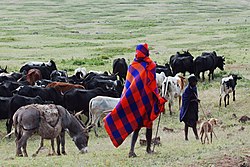
The organization's work has not been without local friction. In the past, the IUCN's relationships with local land users, such as the Maasai, have caused controversy. Additionally, the organization faces political shifts, such as the 2026 announcement regarding the United States' intention to withdraw from the organization.
Frequently Asked Questions
What is the main goal of the IUCN?
The IUCN focuses on the conservation of nature and the sustainable use of natural resources, working to protect biodiversity and ensure that conservation is integrated into global development and economic policies.
What is the difference between the IUCN and the WWF?
While they work closely together, the IUCN is an international union of government and non-governmental organizations that focuses on science and policy, whereas the WWF (World Wide Fund for Nature) was partially established to help fund the operational costs of the IUCN.
How does the IUCN influence global policy?
The IUCN influences policy through its scientific research, its consultative status with the United Nations, and the resolutions passed by its members during the quadrennial World Conservation Congress.
Who are the members of the IUCN?
Membership is diverse, consisting of sovereign states, government agencies, international and national NGOs, indigenous peoples' organizations, and subnational governments.
What role do scientists play in the IUCN?
Approximately 16,000 scientists and experts participate voluntarily in various IUCN commissions, providing the essential scientific data and expertise that underpin the organization's assessments and recommendations.