Nuclear Close Calls: A History of Intentional Military Tensions
Throughout the atomic age, the world has frequently teetered on the edge of nuclear conflict. While some near-misses are the result of technical glitches, intentional close calls occur during periods of heightened military tension. These incidents typically involve threats made by nuclear-armed states, direct attacks, or the looming possibility of nuclear terrorism.
From the ideological battles of the Cold War to modern geopolitical disputes, these moments of brinkmanship—where nations push events to the verge of disaster to achieve a political goal—reveal the fragile nature of global security.
Key Facts
- The Cuban Missile Crisis (1962) saw the deployment of 158 Soviet warheads in Cuba and nearly resulted in a nuclear torpedo launch from submarine B-59.
- The Yom Kippur War (1973) involved the arming of Israeli Jericho missiles and F-4 Phantom II jets with nuclear warheads.
- Able Archer 83 was a NATO exercise that simulated a transition to nuclear war, causing significant Soviet alarm.
- The Gulf War (1991) saw the U.S. and UK deploy tactical nuclear weapons to the region as a deterrent against chemical attacks.
- Modern Tensions continue with nuclear threats exchanged between the U.S. and North Korea (2017–2018) and Russia's nuclear blackmail during the invasion of Ukraine.
The Cuban Missile Crisis: A Convergence of Errors
In 1962, the Soviet Union executed Operation Anadyr, deploying 158 nuclear warheads to Cuba. This included 80 warheads for the 9K52 Luna-M short-range ballistic missile system and 12 for the FKR-1 cruise missile, with at least one targeted at the U.S. Guantanamo Bay Naval Base.
The tension led to several near-catastrophes. At Volk Field in Wisconsin, a faulty alarm triggered by a bear climbing a fence at a nearby center caused nuclear-armed F-106A interceptors to scramble, with pilots believing a nuclear war had begun.
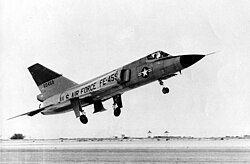
Simultaneously, the Soviet submarine B-59, harassed by U.S. Navy depth charges and unable to communicate with Moscow, nearly launched a 10-kiloton nuclear torpedo. The launch was only averted because Vasily Arkhipov, the flotilla's second-in-command, refused to grant permission.
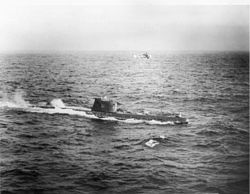
The crisis was further exacerbated when a U.S. U-2 spy plane was shot down over Cuba, and another strayed 300 miles into Soviet airspace due to the aurora borealis. In response, the U.S. scrambled F-102A interceptors armed with GAR-11 Falcon nuclear air-to-air missiles (0.25 kiloton yield).
Cold War Escalations: Vietnam and the DPRK
During the Vietnam War, the U.S. considered nuclear options. In 1968, the Fracture Jaw plan proposed tactical nuclear weapons for the Battle of Khe Sanh, but was vetoed by President Lyndon B. Johnson. Later, in 1969, the Duck Hook plan for major escalation was abandoned by President Nixon.
In 1969, tensions spiked when North Korea (DPRK) shot down a U.S. EC-121 Warning Star aircraft, killing 31 servicemen. F-4 Phantom jets were ordered to load B61 nuclear bombs for a strike against the DPRK. The order was eventually rescinded on the advice of Secretary of State Henry Kissinger.
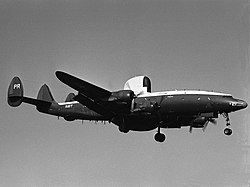
The Sino-Soviet Conflict (1969)
Following the Battle of Zhenbao Island, the USSR considered a massive nuclear strike on Chinese cities. The crisis only abated when the U.S. informed the Soviet Union that such an attack would trigger a U.S. nuclear strike on 130 Soviet cities.
Regional Conflicts and Strategic Deterrence
During the 1973 Yom Kippur War, Israel armed 13 Jericho missiles and 8 F-4 Phantom II jets with nuclear warheads after fearing an Arab invasion. The U.S. discovered this deployment via an SR-71 Blackbird reconnaissance aircraft. The situation escalated to DEFCON 3, with the USSR threatening to deploy airborne forces, before Prime Minister Golda Meir halted military action.
In 1991, during the Gulf War, the U.S. and UK deployed nuclear weapons to the region to deter Iraqi chemical weapons attacks. The U.S. positioned 1,000 tactical weapons, including 300 in Turkey and 700 on warships.
Able Archer 83
In November 1983, NATO conducted Able Archer 83, a command post exercise simulating a transition from conventional to nuclear war. The exercise involved 170 radio-silent flights and the movement of forces through alert phases from DEFCON 5 to DEFCON 1, which the Soviet Union perceived as a potential real-world preparation for a strike.
Modern Nuclear Brinkmanship
Between 2017 and 2018, the U.S. and North Korea engaged in a period of intense rhetoric. President Donald Trump threatened "fire and fury" and the total destruction of North Korea, while Kim Jong-un accused the U.S. of declaring war.
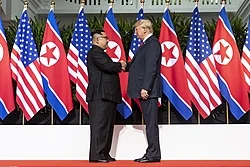
In 2019, U.S. diplomacy reportedly prevented a nuclear clash between India and Pakistan. Former Secretary of State Mike Pompeo claimed that both nations believed the other was preparing a nuclear attack, a misunderstanding resolved through U.S. mediation.
The Russian Invasion of Ukraine
Since 2022, Russia has utilized nuclear blackmail to deter Western intervention in Ukraine. This includes installing tactical nuclear weapons in Belarus and signing a decree in November 2024 lowering the threshold for nuclear use in response to conventional attacks supported by a nuclear power. In November 2024, Russia deployed the Oreshnik intermediate-range ballistic missile system using a conventionally armed MIRV (multiple independently targetable reentry vehicle) system.
| Event | Year | Primary Trigger | Outcome |
|---|---|---|---|
| Cuban Missile Crisis | 1962 | Soviet missiles in Cuba / U.S. blockade | Diplomatic resolution; missiles removed |
| DPRK EC-121 Incident | 1969 | Shootdown of U.S. aircraft | Nuclear strike order rescinded |
| Yom Kippur War | 1973 | Fear of Israeli collapse | Nuclear weapons readied but not used |
| Able Archer 83 | 1983 | NATO military exercise | Soviet alarm; no escalation |
| India-Pakistan Crisis | 2019 | Mutual suspicion of attack | De-escalated via U.S. diplomacy |
Frequently Asked Questions
What is a nuclear close call?
A nuclear close call is an incident where nuclear weapons are readied, threatened, or nearly launched due to military tension, diplomatic failure, or miscommunication, but are ultimately not used.
Who stopped the nuclear launch from the B-59 submarine?
Vasily Arkhipov, the chief of staff of the flotilla and second-in-command, refused to give the necessary permission to launch the 10-kiloton nuclear torpedo, convincing the captain to surface instead.
What was the "Fracture Jaw" plan?
Fracture Jaw was a 1968 U.S. military contingency plan to deploy tactical nuclear weapons to South Vietnam during the Battle of Khe Sanh, which was ultimately vetoed by President Lyndon B. Johnson.
How did the U.S. prevent a nuclear war between India and Pakistan in 2019?
U.S. intermediaries, including Mike Pompeo and John Bolton, informed both countries that neither side was actually preparing a nuclear attack, correcting a mutual misunderstanding.
What is the Oreshnik missile system?
The Oreshnik is a Russian intermediate-range ballistic missile system. In November 2024, it was used in combat against Dnipro, Ukraine, utilizing a conventionally armed MIRV system.