NRHP Property Categories: Classifying Historic Sites and Structures
The National Register of Historic Places (NRHP) employs a standardized system to categorize the diverse array of properties it protects. While some properties may fall into specialized subcategories, most listed properties are classified into one of five general categories: building, structure, object, site, and district. When a group of similar properties is submitted and listed together, it is referred to as a Multiple Property Submission.
Key Facts
- There are five primary NRHP categories: buildings, structures, objects, sites, and districts.
- Buildings must be intended to shelter human activity to be categorized as such.
- Structures are functional constructions not intended for human shelter.
- Objects are typically artistic or small-scale and must be tied to a specific location.
- Sites include areas of significance such as battlefields or archaeological finds.
- Districts are geographically definable areas containing a concentration of other NRHP property types.
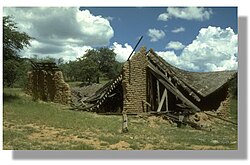
- Buildings or structures that have lost their basic structural elements are reclassified as ruins and categorized as sites.
Buildings
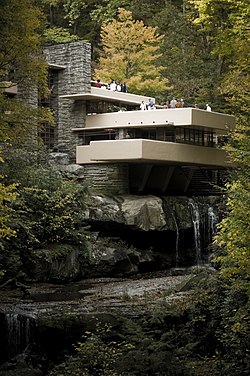
In the context of the National Register, buildings are defined as structures designed specifically to shelter human activity. Common examples include houses, hotels, churches, and barns. The term can also encompass functionally related units, such as a jail paired with a courthouse.
To be eligible for listing, a building must retain all its basic structural elements, including wings and ells. It is important to note that interiors or facades cannot be listed independently; the nomination considers the building as a whole. If a building has lost its primary structural integrity, it is no longer classified as a building but is instead considered a ruin and categorized as a site.
Structures
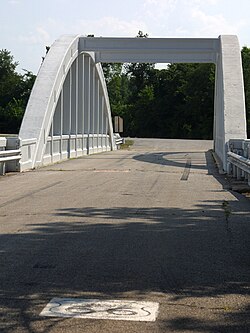
While similar to buildings, structures are functional constructions used for purposes other than sheltering human activity. Examples include bridges, grain elevators, gazebos, ships, and aircraft.
The criteria for significance for structures mirror those for buildings. All basic structural elements must remain intact for eligibility. For instance, a truss bridge must retain its abutments, supporting piers, and the truss itself. Like buildings, any structure that has lost its historic configuration through deterioration or demolition is classified as a site.
Objects
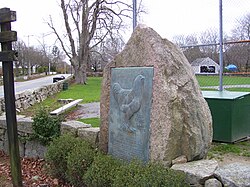
Objects are typically artistic in nature or smaller in scale than buildings and structures. While some objects are movable, the NRHP requires them to be associated with a specific setting or environment. Typical examples include fountains, sculptures, and monuments.
The Register prioritizes fixed outdoor sculpture and public art designed for a specific location. Conversely, transportable items such as furniture or decorative arts are generally discouraged. Furthermore, objects that have been moved to museums are not eligible for inclusion, as the setting is critical to the object's historical character and role.
Sites
Sites are discrete areas significant for past activities that occurred at that specific location. This category includes designed landscapes like gardens and parks, battlefields, and locations with significant archaeological finds. A site's significance is not tied to a building or structure.
Sites are often listed for their potential to yield future information. Notably, a site does not require physical remains to be eligible; it can be listed if it marks the location of a historic or prehistoric event, even if no structures were present at the time. Determination of a site requires rigorous evaluation, especially when the exact location of an event is difficult to prove.
Historic Districts
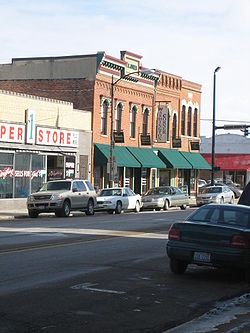
A historic district is a geographically definable urban or rural area that possesses a significant concentration, linkage, or continuity of sites, buildings, structures, or objects. These elements are united by past events or aesthetic physical development, often linked by a specific designer, architectural style, or urban plan.
Districts are composed of two types of properties:
- Contributing properties: Any building, structure, object, or site within the boundaries that reflects the district's significance through its architectural qualities, historic associations, or archaeological features. These must maintain a high level of historic integrity.
- Non-contributing properties: Properties within the boundaries that do not add to the district's historical significance.
Some districts are further designated as National Historic Landmark Districts, meaning they are recognized as National Historic Landmarks (all of which are automatically NRHP-listed).
Summary of NRHP Categories
| Category | Primary Definition | Key Requirement | Examples |
|---|---|---|---|
| Building | Shelters human activity | Must retain basic structural elements | Houses, Churches, Barns |
| Structure | Functional construction (non-shelter) | Must retain basic structural elements | Bridges, Ships, Gazebos |
| Object | Artistic or small-scale | Must be tied to a specific location | Monuments, Fountains |
| Site | Discrete area of significance | Significance tied to location/activity | Battlefields, Archaeological sites |
| District | Group of related properties | Concentration of contributing properties | Historic neighborhoods, Urban plans |
Frequently Asked Questions
What happens if a building becomes a ruin?
If a nominated building loses its basic structural elements through demolition or deterioration, it is no longer categorized as a building and is instead classified as a site.
Can a single room or a facade be listed on the National Register?
No. Interiors and facades are not independently eligible. The NRHP considers the whole building, and all basic structural elements must be present.
Are museum pieces eligible as NRHP objects?
No. Objects that have been relocated to museums are not considered for inclusion because the NRHP emphasizes the importance of the object's original setting and environment.
What is the difference between a contributing and non-contributing property?
A contributing property reflects the overall significance of a historic district through its architecture, associations, or archaeology. A non-contributing property does not add to that significance.
Does a site need to have physical ruins to be listed?
Not necessarily. A site can be listed if it marks the location of a prehistoric or historic event, even if no physical remains or structures exist.