Understanding the Norway Maple: Characteristics, Uses, and Ecological Impact
The Norway maple (*Acer platanoides*) is a prominent deciduous tree known for its broad, rounded crown and striking seasonal transformations. Native to eastern and central Europe and western Asia—ranging from Spain to Russia and from southern Scandinavia to northern Iran—this species has become a global traveler. Introduced to North America in the mid-1700s as an ornamental shade tree, it has since become a complex figure in many landscapes, valued for its beauty but often criticized for its ecological footprint.
Key Facts
- Scientific Name: Acer platanoides
- Native Range: Europe and Western Asia
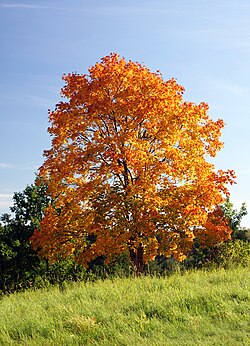
- Typical Height: 20–30 meters (65–100 feet)
- Key Identification: Milky sap in the leaf stem (petiole) and wide-angled winged seeds
- Conservation Status: Least Concern (IUCN 3.1)
- Common Uses: Furniture, musical instruments, and bonsai
Physical Description and Identification
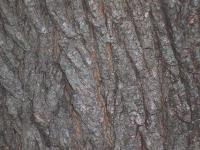
The Norway maple is a large deciduous tree that can reach heights of up to 30 meters, with a trunk diameter often reaching 1.5 meters. Its bark is typically grey-brown and characterized by shallow grooves; unlike some other maple species, it does not usually develop shaggy bark as it matures.
Leaves and Foliage
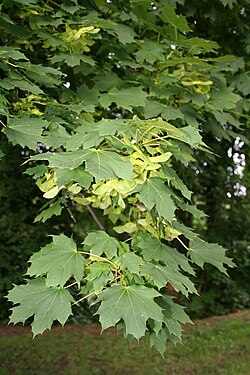
The leaves are palmately lobed, meaning they spread out like fingers from a palm. They typically feature five lobes, measuring 7–14 cm in length and 8–25 cm across. A defining characteristic is the leaf petiole (the stalk connecting the leaf to the branch), which secretes a milky juice when broken. In autumn, the foliage typically turns yellow, though some instances of orange-red can occur.
Flowers and Fruit
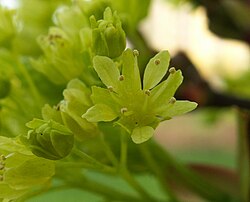
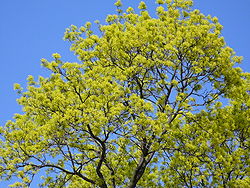
In early spring, before the leaves emerge, the tree produces clusters of yellow to yellow-green flowers known as corymbs. These flowers consist of five sepals and five petals. Following flowering, the tree produces its fruit: a double samara. A samara is a winged seed; in the Norway maple, these wings are widely spread, approaching a 180° angle, which distinguishes them from the 90° angle seen in the sycamore maple.
Classification: Distinguishing the Norway Maple
Because many maple species look similar, accurate identification is essential. The Norway maple belongs to the section Platanoidea, a group characterized by flattened, disc-shaped seeds and milky sap in the shoots and leaves.
Norway Maple vs. Sugar Maple
The Norway maple is frequently confused with the sugar maple (*Acer saccharum*). To tell them apart, look for these specific traits:
- Sap: Norway maple has milky white sap in the petiole, while sugar maple has clear sap.
- Leaf Tips: Norway maple leaf points reduce to a fine "hair," whereas sugar maple points are rounded.
- Seeds: Norway maple seeds are flattened, while sugar maple seeds are globose (rounded).
- Bark: Mature sugar maples have shaggy bark, while Norway maples have small, criss-crossing grooves.
Cultivation, Uses, and Cultivars
The wood of the Norway maple is hard and ranges from yellowish-white to pale reddish. While it sits between hard and soft maple in terms of density, it is highly valued in Europe for making furniture, flooring, and musical instruments, particularly violins. It is also a popular subject for bonsai enthusiasts.
Due to its tolerance of urban pollution and compacted soils, it was widely planted as a street tree during the mid-20th century. Many cultivars have been developed for specific aesthetic purposes, such as:
- 'Crimson King' and 'Schwedleri': Known for dark purple foliage.
- 'Emerald Queen': Features light green leaves.
- 'Dissectum': Offers deeply divided, feathery leaves.
- 'Columnare': Selected for a narrow, upright growth habit.
Ecological Impact and Invasiveness
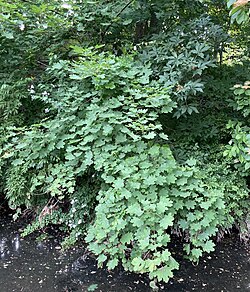
While beneficial in controlled urban settings, the Norway maple is considered an invasive species in parts of North America, including New York, New Hampshire, New Jersey, and Massachusetts. Several factors contribute to its ability to dominate ecosystems:
- Shallow Root Systems: Its roots grow close to the surface, competing aggressively with native plants for moisture and nutrients.
- Dense Canopy: The thick shade prevents the growth of native understory vegetation.
- Prolific Seeding: The tree produces large quantities of viable seeds and has a high germination rate.
- Extended Growing Season: In North America, it often leafs out earlier and stays active longer than native species.
Summary of Species Characteristics
| Feature | Norway Maple (*A. platanoides*) | Sugar Maple (*A. saccharum*) |
|---|---|---|
| Petiole Sap | Milky white | Clear |
| Leaf Tip | Fine, hair-like point | Rounded |
| Seed Shape | Flattened disc | Globose (rounded) |
| Autumn Color | Primarily yellow | Bright orange/red |
| Bark (Mature) | Shallowly grooved | Shaggy |
Frequently Asked Questions
How long do Norway maples live?
Under ideal conditions in their native range, they can live up to 250 years. However, in North America, they often have a shorter life expectancy, sometimes only around 60 years, due to factors like limited root space in urban environments.
Is the Norway maple used for maple syrup?
No, Norway maples are not typically used for syrup production because their sap has a much lower sugar content compared to the sugar maple.
What are the main threats to the Norway maple?
While generally hardy, they can be attacked by powdery mildew, verticillium wilt, and "tar spots" caused by Rhytisma acerinum. They can also be affected by the Norway maple seedminer moth.
Why is it considered invasive in North America?
It is considered invasive because it forms dense, single-species stands that choke out native vegetation, has a high germination rate, and can thrive in low-light conditions where other trees struggle.
What is the best climate for growing Norway maples?
They are most recommended for USDA Hardiness Zones 4 to 7. They prefer wetter, oceanic climates and do not perform well when planted south of the 37th parallel.