Northern Command of the Indian Army
The Northern Command, also known by its nickname Dhruva Command, is a critical operational command of the Indian Army. Headquartered in Udhampur, Jammu & Kashmir, it is tasked with the strategic defense of India's northern borders, specifically overseeing operations along the frontiers with Pakistan and China. Guided by the motto "Always in Combat," the command ensures the security of some of the most challenging terrains in the world.
Currently led by Lieutenant General Pratik Sharma, the Northern Command manages several key corps to maintain regional stability and national security.
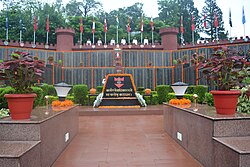
Key Facts
- Headquarters: Udhampur, Jammu & Kashmir.
- Nickname: Dhruva Command.
- Motto: "Always in Combat".
- Current Commander: Lt Gen Pratik Sharma.
- Primary Responsibility: Northern borders with Pakistan and China.
- Key Corps: I Corps, XIV Corps, XV Corps, and XVI Corps.
Historical Evolution
The lineage of the Northern Command dates back to the late 19th century. Following the abolition of the Presidency armies on April 1, 1895, the Indian Army was initially divided into four commands: Bengal, Bombay, Madras, and Punjab. In 1908, these were merged into two larger entities: the Northern Army and the Southern Army.
The organizational structure shifted frequently between 1920 and 1947. By April 1942, the command was re-designated as the North Western Army to secure the North West Frontier during World War II, controlling districts such as Peshawar, Rawalpindi, and Baluchistan. Following the partition of India in 1947, the headquarters at Rawalpindi became the GHQ of the Pakistan Army, and the command was effectively scrapped within the Indian Army.
Recognizing the need for a dedicated oversight body for the northern frontiers, the Government of India re-raised the Northern Command in 1972. Lt. Gen. P. S. Bhagat was appointed as the first General Officer Commanding-in-Chief (GOC-in-C) in June 1972, focusing on improving troop conditions and defensive infrastructure.
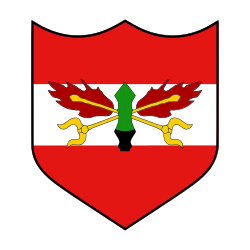
Organizational Structure
The Northern Command operates through a sophisticated hierarchy of corps and divisions, each tailored to the specific geography of their assigned sector.
Operational Corps
- XIV Corps (Fire and Fury Corps): Based in Leh, Ladakh, focusing on the high-altitude frontiers.
- XV Corps (Chinar Corps): Based in Srinagar, Jammu & Kashmir.
- XVI Corps (White Knight Corps): Based in Nagrota, Jammu & Kashmir.
- I Corps (Strike One Corps): Based in Mathura, Uttar Pradesh.
In a significant administrative milestone on June 1, 2025, the Northern Command became the first in the Indian Army to establish the position of Command Subedar Major. Subedar Major Ojit Singh was appointed to this role to serve as a vital communication channel between senior leadership and junior commissioned officers (JCOs) and other ranks.
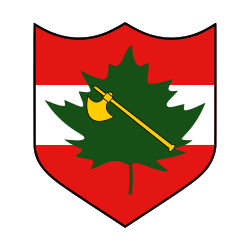
Command Summary Table
| Corps Name | Nickname | Headquarters | Primary Focus Area |
|---|---|---|---|
| XIV Corps | Fire and Fury Corps | Leh, Ladakh | Ladakh Sector |
| XV Corps | Chinar Corps | Srinagar, J&K | Kashmir Valley |
| XVI Corps | White Knight Corps | Nagrota, J&K | Jammu Sector |
| I Corps | Strike One Corps | Mathura, UP | Strategic Reserve/Strike |
Frequently Asked Questions
Where is the headquarters of the Northern Command located?
The headquarters of the Northern Command is located in Udhampur, Jammu & Kashmir.
What is the significance of the "Dhruva Command" nickname?
Dhruva Command is the official nickname for the Northern Command of the Indian Army.
When was the modern Northern Command established?
While it had precursors in the British era, the modern Northern Command was re-raised by the Government of India in 1972 to oversee the northern borders.
What is the role of the Command Subedar Major?
The Command Subedar Major acts as an advisory figure and a communication link between the Army's senior leadership and the junior commissioned officers and other ranks.
Which corps fall under the Northern Command's control?
The command currently controls the I Corps (Mathura), XIV Corps (Leh), XV Corps (Srinagar), and XVI Corps (Nagrota).