North Korea's Olympic History and Participation
North Korea's journey in the Olympic Games is a complex narrative of athletic ambition, geopolitical tension, and rare moments of diplomatic unity. From its debut in the mid-20th century to its recent absences from the world stage, the nation's participation has often mirrored its shifting relationship with the global community.
The Evolution of Olympic Participation
North Korea first entered the Olympic arena at the 1964 Winter Olympics held in Innsbruck, Austria. It took another eight years for the nation to make its debut at the Summer Games, appearing for the first time at the 1972 Munich Olympics.
While the nation has been a regular fixture in the Summer Games, its attendance has been interrupted by political boycotts and health concerns. North Korea joined the Soviet-led boycott of the 1984 Summer Olympics and later led the boycott of the 1988 Summer Olympics, which were hosted in Seoul, South Korea. More recently, the nation opted out of the 2020 Summer Olympics, citing concerns over the COVID-19 pandemic.
Participation in the Winter Games has been more inconsistent. Out of the last thirteen Winter Olympics, North Korea has sent a team to only eight of them.
Moments of Inter-Korean Unity
Despite the deep political divide between the two Koreas, the Olympics have occasionally served as a platform for symbolic unity. During the Sunshine Policy era (1998–2007)—a period of diplomatic effort to improve relations—North and South Korea marched together as a single team during the opening ceremonies of the 2000, 2004, and 2006 Olympics, though they continued to compete as separate entities.
This spirit of cooperation resurfaced at the 2018 Winter Olympics in Pyeongchang, South Korea. Once again, athletes from both nations marched together at the opening ceremony.
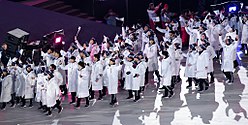
The 2018 Games were particularly notable for the creation of a unified women's ice hockey team featuring players from both North and South Korea. In addition to hockey, North Korean athletes competed in figure skating, alpine skiing, short track speed skating, and cross-country skiing.
The 2018 Delegation
Beyond the 22 competing athletes, North Korea sent a massive delegation of 400 supporters to Pyeongchang. Led by Kim Yong-nam, the ceremonial head of state, this group included an orchestra, taekwondo practitioners, and cheerleaders.
Athletic Performance and State Support
To date, North Korean athletes have secured a total of 63 Olympic medals, with two of those coming from the Winter Games. This success is heavily driven by government funding. Elite athletes in North Korea often have access to highly developed training facilities and enjoy luxurious lifestyles that stand in stark contrast to those of their general peers.
| Category | Details |
|---|---|
| First Winter Appearance | 1964 (Innsbruck) |
| First Summer Appearance | 1972 (Munich) |
| Total Medal Count | 63 (61 Summer, 2 Winter) |
| Major Boycotts | 1984, 1988, 2020 |
| Unified Team Events | 2018 Women's Ice Hockey |
Sanctions and Recent Suspensions
International politics have frequently hindered North Korea's athletic preparations. In 2018, the United Nations rejected a request for an exemption to sanctions regarding sporting equipment, which limited the athletes' ability to prepare for the 2020 Summer Olympics.
The situation escalated on April 6, 2021, when North Korea officially announced it would skip the 2020 Summer Olympics due to COVID-19. This decision triggered a response from the International Olympic Committee (IOC). Because the Olympic Charter—the codification of the fundamental principles of Olympism—mandates the participation of member nations, the IOC suspended North Korea from all activities until the end of 2022. Consequently, the nation was prohibited from participating in the 2022 Winter Olympics in Beijing.
Key Facts
- Total Medals: 63 Olympic medals won overall.
- First Appearance: 1964 Winter Olympics.
- Unified Efforts: Marched jointly with South Korea in 2000, 2004, 2006, and 2018.
- Recent Absence: Suspended by the IOC through 2022 after skipping the 2020 Summer Games.
- State Support: Elite athletes receive significant government funding and luxury facilities.
Frequently Asked Questions
Why did North Korea miss the 2020 Summer Olympics?
North Korea announced it would not participate due to concerns regarding the COVID-19 pandemic.
What happened as a result of North Korea skipping the 2020 Games?
The International Olympic Committee suspended North Korea from its activities until the end of 2022 because the Olympic Charter requires member participation.
Did North Korea ever compete as one team with South Korea?
While they marched together at opening ceremonies in 2000, 2004, 2006, and 2018, they only competed as a unified team in women's ice hockey during the 2018 Winter Olympics.
How many medals has North Korea won in the Winter Olympics?
Out of their 63 total Olympic medals, two were won at the Winter Games.
How do North Korean athletes prepare for the Olympics?
Preparation is heavily supported by government funding, providing elite athletes with access to luxurious lifestyles and highly developed training facilities.