Niobium: The High-Performance Metal of Superconductors and Superalloys
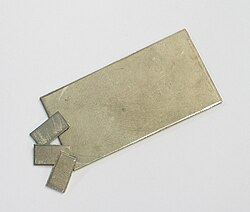
Niobium is a versatile transition metal known for its exceptional strength, heat resistance, and unique electrical properties. Often appearing as a gray metallic solid that turns bluish when oxidized, this element plays a critical role in modern technology—from the depths of medical imaging to the frontiers of space exploration.
Historically, niobium was once known as columbium. This dual identity stems from its discovery in 1801 by English chemist Charles Hatchett, who identified it within a mineral found in Connecticut, USA.

Key Facts

- Atomic Number: 41
- Symbol: Nb
- Standard Atomic Weight: 92.906
- Primary Use: Steel alloying, superconducting magnets, and aerospace components.
- Key Property: High melting point (2477 °C) and superconductivity.
- Main Producer: Brazil is the dominant global producer.
Discovery and Naming
The journey of niobium began in 1801 with Charles Hatchett. However, it was not until 1844 that Heinrich Rose recognized it as a distinct element. The final isolation of the metal was achieved by Christian Wilhelm Blomstrand in 1864.
The name "niobium" is derived from Greek mythology. It is named after Niobe, the daughter of Tantalus. This is a scientific nod to the element's close chemical relationship with tantalum, as the two often occur together in nature and share similar properties.

Physical and Chemical Properties
Niobium is located in Group 5 and Period 5 of the periodic table, belonging to the d-block. It possesses a body-centered cubic (bcc) crystal structure and is paramagnetic in its natural state.
Physical Characteristics
Niobium is highly refractory, meaning it can withstand extreme temperatures. With a melting point of 2750 K (2477 °C) and a boiling point of 5017 K (4744 °C), it is ideal for high-heat environments. It has a density of 8.582 g/cm³ and a Mohs hardness of 6.0.
Chemical Behavior
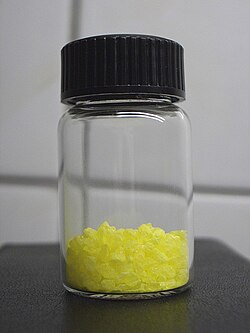
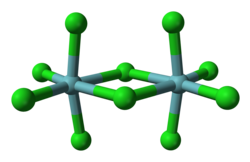
The most common oxidation state for niobium is +5, though it can exhibit states ranging from -3 to +5. It reacts with halogens to form compounds such as niobium pentachloride (NbCl₅), which exists as a dimer.
Production and Global Occurrence
Niobium is a primordial element found in various minerals. The extraction process typically involves treating oxides with hydrofluoric acid (HF) to separate niobium from tantalum, followed by reduction using aluminum and iron oxide.
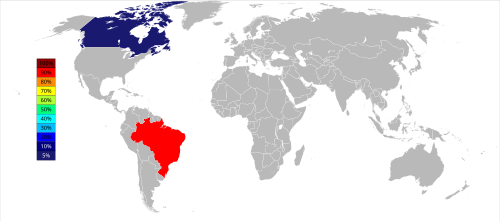
Global production is heavily concentrated. Brazil is the leading producer by a significant margin, followed by Canada, Australia, and several African nations including Nigeria, Rwanda, Mozambique, and the Democratic Republic of the Congo.
| Property | Value |
|---|---|
| Atomic Number | 41 |
| Atomic Weight | 92.906 u |
| Melting Point | 2477 °C |
| Boiling Point | 4744 °C |
| Density | 8.582 g/cm³ |
| Crystal Structure | Body-centered cubic |
Industrial Applications
Because of its unique properties, niobium is utilized across several high-tech industries.
Steel and Superalloys
Niobium is frequently used in the production of high-strength low-alloy (HSLA) steels. It is also a key component in superalloys—materials designed to maintain strength at high temperatures. For example, Inconel 718 contains approximately 5% niobium, making it suitable for extreme environments.
Aerospace and Propulsion
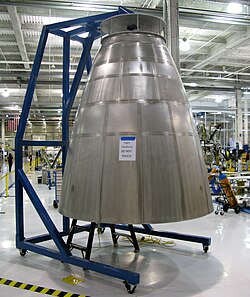
Due to its heat resistance, niobium alloys are used in rocket engine nozzles. Notable examples include the service propulsion system of the Apollo 15 Command and Service Module (CSM) and the Merlin Vacuum nozzle.

Superconductivity and Medicine
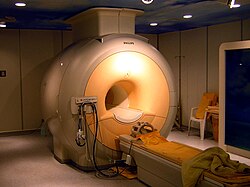
One of the most critical uses of niobium is in superconductors (materials that conduct electricity with zero resistance at very low temperatures). Niobium-titanium alloys are used to create the powerful magnetic fields required for clinical Magnetic Resonance Imaging (MRI) scanners.
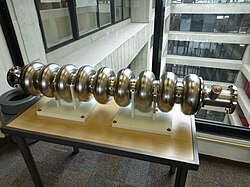
Additionally, niobium is used in superconducting radio frequency cavities for particle accelerators, such as those at Fermilab.
Specialized Uses
- Medicine and Jewelry: Niobium is hypoallergenic, making it safe for medical implants and jewelry.
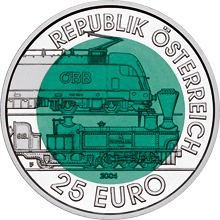
- Numismatics: Its ability to be anodized into various colors allows it to be used in specialty coinage, such as the Semmering Alpine Railway coin.
- Electroceramics: Used in the production of specialized electronic components.
Safety and Precautions
Niobium is generally considered stable. According to the NFPA 704 fire diamond, it is rated 0 across its categories, indicating minimal hazard under standard conditions.

Frequently Asked Questions
What is the difference between niobium and columbium?
There is no chemical difference; they are two names for the same element (atomic number 41). Columbium was the original name used in the US, while niobium became the internationally accepted name.
Why is niobium used in MRI machines?
Niobium, when alloyed with titanium, becomes a superconductor at low temperatures. This allows the creation of extremely strong and stable magnetic fields necessary for high-resolution medical imaging.
Is niobium safe for people with metal allergies?
Yes, niobium is highly biocompatible and hypoallergenic, which is why it is frequently used in surgical implants and hypoallergenic jewelry.
Where is most of the world's niobium found?
The vast majority of the world's niobium production comes from Brazil, though it is also mined in Canada and several African countries.
What makes niobium useful for rocket nozzles?
Its exceptionally high melting point and ability to maintain structural integrity under extreme thermal stress make it ideal for the high-temperature environment of rocket propulsion.