Silver: Properties, Chemistry, and Global Applications
Silver is a lustrous white metal renowned for its exceptional physical properties and historical value. As a transition metal located in group 11 of the periodic table, it shares close similarities with its neighbors, copper and gold. Its unique electron configuration—featuring a single electron in the highest occupied s subshell over a filled d subshell—is the foundation for its singular electrical, thermal, and chemical characteristics.
From its use in ancient coinage to its critical role in modern electronics and medicine, silver remains one of the most versatile elements known to science.

Key Facts
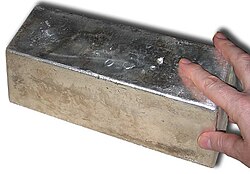
- Atomic Number: 47 (Symbol: Ag)
- Standard Atomic Weight: 107.8682 ± 0.0002 Da
- Physical State: Solid at standard temperature and pressure (STP)
- Key Property: Highest electrical and thermal conductivity of all metals
- Natural Occurrence: Primordial element produced in stars and supernovas
- Major Producers: Mexico, Peru, and China
Physical and Atomic Properties
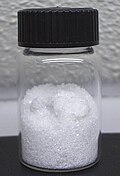
Silver is characterized by its high reflectivity and ductility. It is so malleable that it can be drawn into a wire only one atom wide. In its pure form, it possesses a face-centred cubic (fcc) crystal structure.
![Silver is extremely ductile and, like gold, can be drawn into a wire one atom wide.[14]](/images/1a/8a/1a8a6cd6a9c762010cb76749af7c3a1aa61e6e7cd6665c903b5437142c8db96f.jpg)
The element's thermal and electrical properties are unmatched. With a thermal conductivity of 429 W/(m·K) and an electrical resistivity of 15.87 nΩ·m at 20 °C, silver is the gold standard for conductivity in industrial applications.
Isotopes and Atomic Structure
Naturally occurring silver consists of two stable isotopes: 107Ag and 109Ag. These isotopes exist in nearly equal abundance, with 107Ag making up approximately 51.8% of natural silver. This balance is rare within the periodic table. While these stable forms are produced via the s-process (slow neutron capture) in stars and the r-process (rapid neutron capture) in supernovas, scientists have also characterized 28 radioisotopes, the most stable being 105Ag with a half-life of 41.29 days.
Chemistry and Compounds
Silver primarily exhibits a +1 oxidation state, though states ranging from -2 to +3 have been observed. Its chemistry is diverse, forming a wide array of inorganic and organometallic compounds.
Silver Halides
Silver halides—compounds formed between silver and halogens—are particularly significant due to their sensitivity to light. This property is the basis for traditional photography, where light excitation releases electrons that liberate silver ions, eventually forming metallic silver atoms.
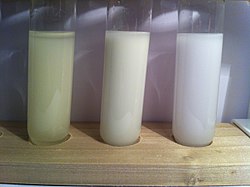
Oxides, Chalcogenides, and Complexes
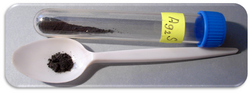
Silver reacts with sulfur to form silver(I) sulfide, which is responsible for the characteristic black tarnish seen on silver objects. It also forms various coordination complexes, such as the diamminesilver(I) complex.
![Structure of the diamminesilver(I) complex, [Ag(NH3)2]+](/images/fb/f2/fbf2fc2cc340daa28b921479b84b673762aa3ed94e127f65f4edf9af97e7d71b.png)
Alloys and Miscibility
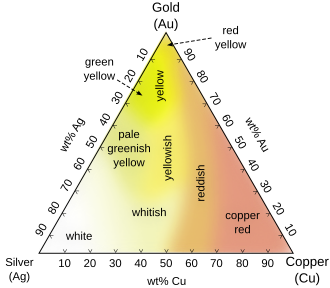
Silver is highly miscible with elements from groups 1–3 (excluding hydrogen, lithium, and beryllium) and groups 10–14. The most commercially vital alloys are those created with copper. Because silver and copper are completely miscible as liquids but not as solids, they form a eutectic mixture (approximately 71.9% silver and 28.1% copper by weight) frequently used in vacuum brazing, jewelry, and coinage.
History and Cultural Significance
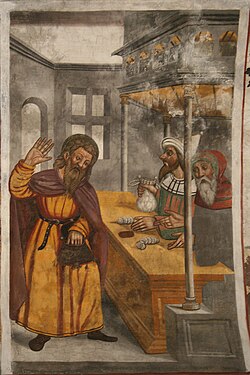
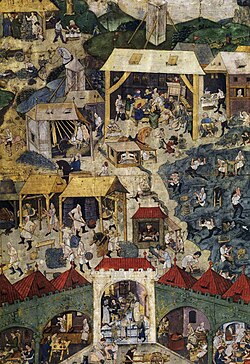
Silver has been utilized by humans since before 5000 BC. Its name is derived from the Latin argentum. Throughout history, it has served as a primary medium for currency, a symbol of wealth, and a medium for high art.
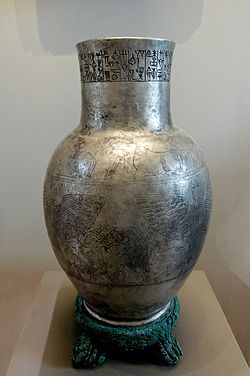
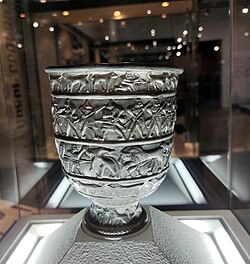
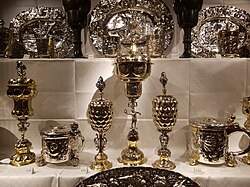
From the ancient Greek tetradrachms and Roman plates to the elaborate French Rococo silverware of the 18th century, silver has been a staple of craftsmanship. It has also appeared in religious artifacts, such as the embossed silver sarcophagus of Saint Stanislaus in the Wawel Cathedral.
![Embossed silver sarcophagus of Saint Stanislaus in the Wawel Cathedral was created in main centres of the 17th century European silversmithery – Augsburg and Gdańsk[108]](/images/d5/b2/d5b2bf2b0e075f351549559023198eae15c205ec576ef0b565ac1162567c71f7.jpg)
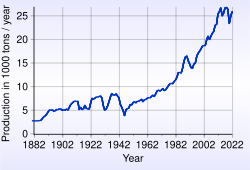
Production and Global Market
Commercial-grade fine silver is defined as being at least 99.9% pure. In 2025, world mine production was estimated at 26,000 tonnes, with total world reserves estimated at 610,000 tonnes.
| Country | Estimated Production (Tonnes) |
|---|---|
| Mexico | 6,300 |
| Peru | 3,600 |
| China | 3,400 |
| Bolivia | 1,500 |
| Chile | 1,400 |
| Poland | 1,300 |
| Russia | 1,200 |
| United States | 1,100 |
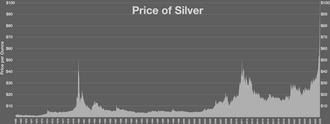
Modern Applications
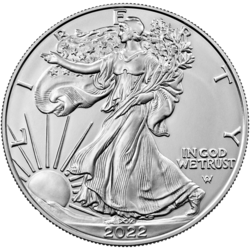
Beyond its role as a monetary asset and investment (such as the American Silver Eagle coin), silver is indispensable in several technical fields:
- Electronics: Used in conductive inks, RFID tag antennas, and high-end electrical contacts due to its low resistivity.
- Medicine: Utilized for its antimicrobial properties in urinary catheters and dental treatments (silver diamine fluoride).
- Industry: Employed in catalysis, chemical equipment, and brazing alloys.
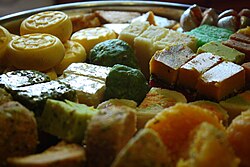
- Food: In some cultures, shiny silver vark (thin foil) is used as a decorative covering for sweets.
Safety and Precautions
While silver is generally stable, certain silver compounds can be hazardous. Silver is classified as hazardous to the aquatic environment (H410). Safety guidelines recommend avoiding release into the environment and proper disposal of silver waste.

Frequently Asked Questions
Why does silver tarnish?
Silver tarnishes when it reacts with sulfur compounds in the air to form silver(I) sulfide, which appears as a black layer on the surface of the metal.
What makes silver the best conductor?
Silver's unique electron configuration, specifically the single electron in its outermost s subshell, allows electrons to move more freely than in any other element, resulting in the highest electrical and thermal conductivity.
Is silver used in modern medicine?
Yes, silver is used for its antimicrobial properties. Examples include silver-alloy urinary catheters to prevent infection and silver diamine fluoride used in dentistry to treat caries.
Which countries produce the most silver?
Mexico is the leading producer, followed by Peru and China.
What is the difference between fine silver and sterling silver?
Fine silver is at least 99.9% pure. While not explicitly detailed as "sterling" in the source, the text notes that most jewelry and coinage are silver-copper alloys to increase durability.