Chemistry: The Central Science of Matter and Change
Chemistry is the scientific study of the properties and behavior of matter. As a physical science within the natural sciences, it examines the composition, structure, and properties of substances, as well as the changes they undergo during reactions. By addressing the nature of chemical bonds, chemistry provides the essential framework for understanding how the physical world is constructed.
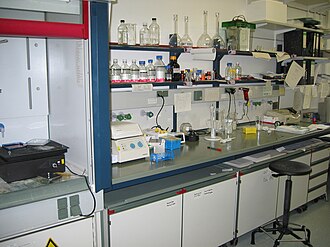
Often referred to as the "central science," chemistry occupies a critical intermediate position between physics and biology. It provides the fundamental knowledge required for various applied disciplines. For instance, it explains plant growth in botany, the formation of igneous rocks in geology, the degradation of pollutants in ecology, and the functionality of medications in pharmacology. It even extends to cosmochemistry, studying lunar soil, and forensics, where it is used to collect DNA evidence.
Key Facts
- Scope: Studies the composition, structure, and behavior of matter and its reactions.
- Centrality: Bridges the gap between physics and biology, supporting fields from geology to pharmacology.
- The Mole: A standard unit containing exactly 6.022 140 76 × 1023 particles.
- Economic Impact: The global chemical industry is a massive economic driver, with the top 50 producers recording sales of US$ 980.5 billion in 2013.
- Foundational Laws: Governed by principles such as Boyle's Law, Charles's Law, and Le Chatelier's principle.
The Building Blocks of Matter
Atoms and Elements
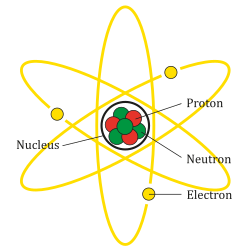
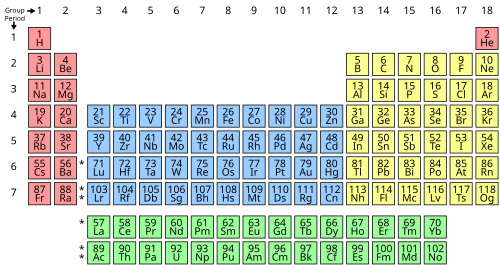
At the most basic level, chemistry focuses on the atom, the smallest unit of matter. Elements are substances consisting of only one type of atom, organized systematically in the periodic table.
Compounds and Molecules
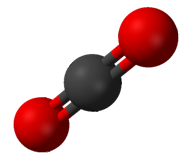
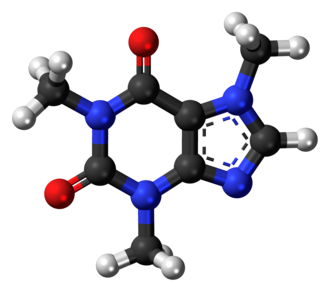
When atoms bond together, they form chemical compounds—substances composed of two or more different elements. A molecule is the smallest particle of a compound that retains its chemical properties. For example, carbon dioxide (CO2) is a common compound, while more complex structures like caffeine (C8H10N4O2) demonstrate the intricate ways atoms can arrange themselves.

Substances, Mixtures, and the Mole
Chemistry distinguishes between pure substances and mixtures. To quantify these substances, scientists use the mole, a unit of measurement denoting a chemical amount. One mole contains exactly 6.022 140 76 × 1023 particles (atoms, molecules, ions, or electrons), a value known as the Avogadro constant. Molar concentration is typically reported as the amount of substance per volume of solution (mol/dm3).
Chemical Bonding and Reactions
Types of Bonding
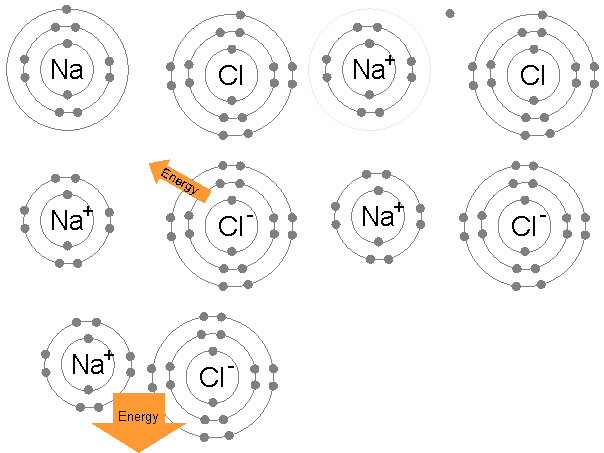
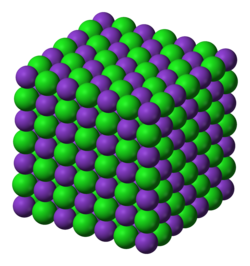
Chemical bonds are the forces that hold atoms together. Ionic bonding occurs when one atom takes valence electrons from another, creating ions that attract each other, such as in sodium chloride (table salt). In contrast, covalent bonding involves the sharing of electron pairs, as seen in methane (CH4), where carbon shares electrons with four hydrogen atoms to satisfy the octet rule.

Phases and Reactions
Matter exists in different phases, and changes between these phases are governed by energy. During a chemical reaction, existing bonds break and new ones form, resulting in substances with entirely different properties. A practical example is the blast furnace, where iron oxide reacts with carbon monoxide to produce pure iron and carbon dioxide.


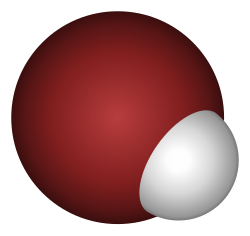
The Evolution of Chemical Science
From Alchemy to Modern Chemistry
Chemistry has evolved from ancient philosophies and alchemy. Early thinkers like Democritus proposed atomist philosophies, which were later adopted by Epicurus. Pioneers such as Jābir ibn Hayyān (Geber) laid the groundwork for organic chemistry. The modern name "chemistry" is attributed to Georgius Agricola, who dropped the Arabic prefix "al-".
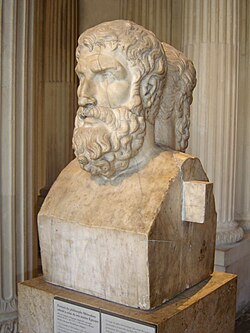

![Georgius Agricola, author of De re metallica, was the first to drop the Arabic definite article al-, exclusively writing chymia and chymista, giving chemistry its modern name.[63][64][65]](/images/06/96/06966ca1b3f2f3b9fd2e246fce23b9c1bf3c1025acf18500fbd47a153038fbc6.jpg)
Defining the Science
The definition of chemistry has shifted over centuries. In 1730, Georg Ernst Stahl viewed it as the art of resolving and composing bodies. By 1837, Jean-Baptiste Dumas focused on molecular forces. In 1947, Linus Pauling defined it as the science of substances, their structure, and their reactions. Today, as noted by Professor Raymond Chang, it is broadly the study of matter and the changes it undergoes.
![Antoine-Laurent de Lavoisier is considered the "Father of Modern Chemistry".[68]](/images/8d/ec/8dec76da37dc289982b78ff3eef1a83f49be619c6fa868af8d5909b52f44f291.jpg)
Key Historical Milestones
The 19th century saw rapid advancement, including Friedrich Wöhler's synthesis of urea, which helped develop organic chemistry. Edward Frankland introduced valence bonding in 1852, and J.W. Gibbs and Svante Arrhenius applied thermodynamics to the field in the 1870s. Dmitri Mendeleev's creation of the periodic table was a watershed moment, as he correctly placed 60 known elements and predicted seven new ones.
![In his periodic table, Dmitri Mendeleev predicted the existence of 7 new elements,[71] and placed all 60 elements known at the time in their correct places.[72]](/images/cf/fd/cffd43b9112c1752203fbd3eb2c34961f7609ff6427bd2a7e3d6532fd4d955ca.gif)
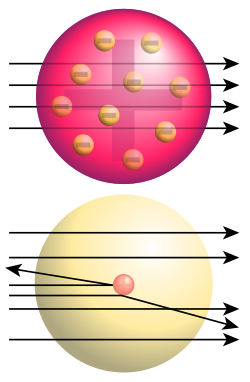
Chemical Laws and Analysis
Chemical reactions are governed by fundamental laws that allow scientists to predict behavior. These include Boyle's law (pressure and volume), Charles's law (volume and temperature), and the Ideal Gas Law. In the lab, spectroscopy—the study of interactions between light and matter—is used to analyze substances using tools like spectrophotometers.

![In analytical chemistry, spectroscopy studies interactions between electromagnetic radiation (light) and matter.[82] A spectrophotometer is a machine used to measure the effect light has on matter. The model pictured is the Beckman DU-640](/images/31/34/3134ffa3d32661bae2029a89ad2303d0fad2884a4a75b3eba7b94a06128bc269.jpg)
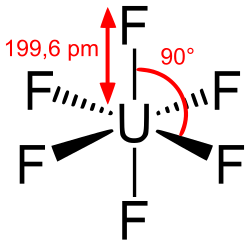
| Law/Principle | Primary Relationship | Key Focus |
|---|---|---|
| Boyle's Law | Pressure & Volume | Gas behavior at constant temperature |
| Charles's Law | Volume & Temperature | Gas expansion/contraction | Gay-Lussac's Law | Pressure & Temperature | Gas pressure changes |
| Avogadro's Law | Volume & Amount | Molar volume of gases |
| Le Chatelier's Principle | Equilibrium & Stress | System response to change |
Frequently Asked Questions
Why is chemistry called the central science?
It is called the central science because it provides a foundational understanding of matter that connects physics (the study of energy and forces) with biology (the study of living organisms), supporting numerous other scientific disciplines.
What is the difference between an element and a compound?
An element consists of only one type of atom and cannot be broken down into simpler substances by chemical means. A compound consists of two or more different elements chemically bonded together.
What is the significance of the Avogadro constant?
The Avogadro constant (6.022 140 76 × 1023) defines the number of particles in one mole of a substance, allowing chemists to bridge the gap between the microscopic world of atoms and the macroscopic world of grams and liters.
How does ionic bonding differ from covalent bonding?
Ionic bonding occurs when electrons are transferred from one atom to another, creating oppositely charged ions that attract. Covalent bonding occurs when atoms share pairs of valence electrons to achieve stability.
Who is considered the Father of Modern Chemistry?
Antoine-Laurent de Lavoisier is widely regarded as the "Father of Modern Chemistry" for his contributions to the science.