Homogeneity and Heterogeneity Across Scientific Disciplines
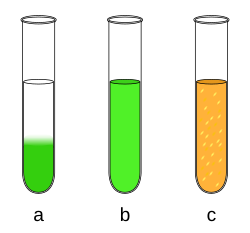
At its most basic level, the distinction between homogeneity and heterogeneity describes the uniformity of a substance, process, or image. A feature is considered homogeneous when it is uniform in composition or character—whether that refers to color, shape, size, texture, or temperature. Conversely, a feature is heterogeneous if it is distinctly nonuniform in at least one of these qualities.
These concepts are not static; they scale across every level of complexity. From the behavior of atoms to the structure of galaxies, an element may appear homogeneous on a large scale while remaining heterogeneous on a smaller scale. This phenomenon is known in science as an effective medium approximation.
Key Facts
- Homogeneous: Uniform in composition, character, or distribution.
- Heterogeneous: Nonuniform in one or more qualities.
- Etymology: Derived from Ancient Greek homos (same) and heteros (other/different), combined with genos (kind).
- Scaling: A substance can be homogeneous at a macro level but heterogeneous at a micro level.
- Cross-Disciplinary: These terms are applied in chemistry, biology, physics, linguistics, IT, and sociology.
Etymology and Linguistic Nuances
The terms originate from Medieval Latin homogeneus and heterogeneus. While "homogenous" is often used interchangeably with "homogeneous" in modern English and is now considered an established variant, it was strictly a biological or pathological term (largely replaced by homologous). Similarly, "heterogenous" was traditionally reserved for biology and pathology to describe objects in the body originating from outside the body.
Applications in Chemistry and Physics
In chemistry, the distinction is critical when discussing mixtures and reactions. A heterogeneous mixture consists of multiple states of matter or a combination of hydrophilic (water-attracting) and hydrophobic (water-repelling) substances, such as a mix of water, octane, and silicone grease. Common examples include sand and water, oil and water, or concrete.
Over time, entropy—the natural tendency toward disorder—can allow heterogeneous substances to become homogeneous through diffusion, stirring, or melting. For instance, dye added to water is initially heterogeneous but becomes homogeneous as it spreads.
Chemical Reactions
- Homogeneous Reactions: Reactants and products exist in the same phase (e.g., two gases reacting).
- Heterogeneous Reactions: Reactants exist in two or more phases (e.g., a gas reacting with a solid catalyst).
In physics, heterogeneity is specifically defined as having physical properties that vary within the medium.
Biological and Environmental Perspectives
In ecology, environmental heterogeneity refers to the variety of environmental factors—such as topography, climate, and land cover—that contribute to species diversity. This is often used synonymously with habitat diversity. Generally, heterogeneous systems support higher biodiversity, making them a primary target for landscape restoration efforts.
In medicine and genetics, allelic heterogeneity occurs when a single disease or condition is caused by different genes or alleles. A critical challenge in oncology is cancer cell heterogeneity, which is believed to be one of the primary reasons why treating cancer is so difficult.
Homogeneity in Other Fields
Information Technology and Mathematics
In IT, heterogeneous computing refers to networks comprising different types of computers with varying architectures, processing power, and memory sizes. In mathematics, homogeneous polynomials share the same number of factors of a given kind, while in binary relations, a homogeneous relation exists on a single set.
Linguistics and Sociology
In formal semantics, homogeneity is a phenomenon where plural expressions imply "all" in positive assertions but "none" in negations. For example, "Robin read the books" implies all were read, while "Robin didn't read the books" implies none were read.
In sociology, a heterogeneous group is one that includes individuals of differing ages, sexes, cultural backgrounds, or ethnicities, though the term "diverse" is more commonly used in this context.
Summary Table: Homogeneity vs. Heterogeneity
| Field | Homogeneous Characteristic | Heterogeneous Characteristic |
|---|---|---|
| Chemistry | Uniform composition; single phase | Multiple phases; distinct components |
| Biology/Ecology | Uniform environment/genetics | High biodiversity; varying alleles |
| Computing | Identical hardware/architecture | Mixed hardware and architectures |
| Sociology | Similar demographics | Diverse ethnicities, ages, and cultures |
| Physics | Constant physical properties | Varying physical properties in medium |
Frequently Asked Questions
What is the difference between a homogeneous and heterogeneous mixture?
A homogeneous mixture is uniform throughout, meaning its components are evenly distributed and often indistinguishable. A heterogeneous mixture has visibly different substances, different states of matter, or components that do not mix, such as oil and water.
Can a substance be both homogeneous and heterogeneous?
Yes, depending on the scale of observation. Through the effective medium approximation, a material may appear homogeneous on a large scale but reveal a heterogeneous structure when viewed under a microscope or at an atomic level.
How does heterogeneity affect cancer treatment?
Cancer cell heterogeneity means that cells within a single tumor can have different genetic mutations and properties. This diversity makes it difficult for a single treatment to eliminate all cancer cells, as some may be resistant to the therapy.
What is homogeneity in the context of linguistics?
In formal semantics, it refers to how plural nouns function differently in positive and negative sentences—implying "all" when asserted and "none" when negated.
Why is environmental heterogeneity important for biodiversity?
Environmental heterogeneity provides a wider variety of niches, climates, and land covers, which allows a greater number of different species to coexist and thrive in a given region.