Iron: Properties, Chemistry, and Industrial Significance
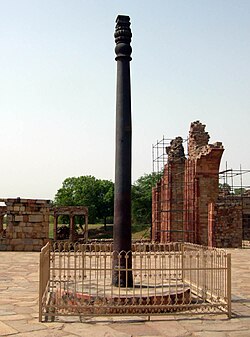
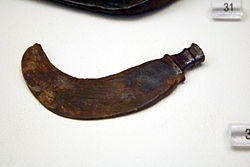
Iron is a lustrous metallic element with a grayish tinge, recognized as one of the most essential materials in human civilization. From the early tools of antiquity to the skyscrapers of modern cities, iron and its alloys have shaped the trajectory of technological progress. Chemically represented by the symbol Fe (from the Latin ferrum), it is a transition metal located in group 8, period 4 of the periodic table.
Beyond its industrial utility, iron is a fundamental biological element, playing a critical role in oxygen transport and cellular metabolism. Its versatility stems from its unique physical properties and its ability to exist in multiple oxidation states.

Key Facts

- Atomic Number: 26
- Standard Atomic Weight: 55.845 ± 0.002
- Phase at STP: Solid
- Melting Point: 1538 °C (1811 K)
- Boiling Point: 2861 °C (3134 K)
- Magnetic Ordering: Ferromagnetic
- Common Oxidation States: +2 and +3
Physical and Atomic Properties
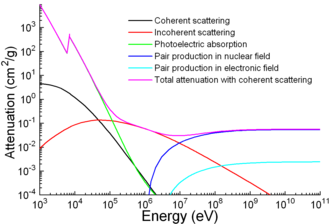
Iron is characterized by its high density (7.874 g/cm³ at 20 °C) and significant mechanical strength. One of its most notable physical characteristics is its ferromagnetism, the property that allows it to be strongly attracted to magnets and to be magnetized itself.
Allotropes and Crystal Structure
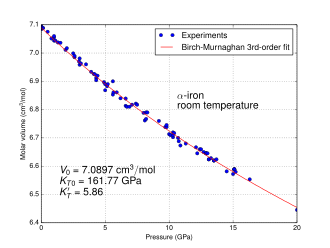
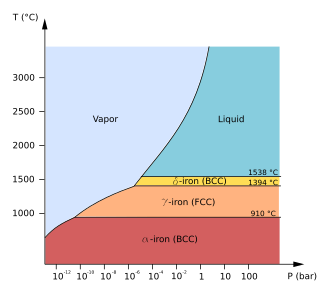
Iron exhibits allotropy, meaning it can exist in different structural forms depending on temperature and pressure. At room temperature, it exists as α-Fe, which has a body-centered cubic (bcc) structure. When heated between 912 °C and 1394 °C, it transforms into γ-Fe, which possesses a face-centered cubic (fcc) structure.
Magnetism and Hardness
The magnetic properties of iron are central to its use in electrical machinery. The Curie point—the temperature above which a material loses its permanent magnetic properties—for iron is 1043 K. In terms of hardness, pure iron is relatively soft (Mohs hardness of 4), but its hardness increases dramatically when alloyed with carbon to create steel.
![Magnetization curves of 9 ferromagnetic materials, showing saturation. 1. Sheet steel, 2. Silicon steel, 3. Cast steel, 4. Tungsten steel, 5. Magnet steel, 6. Cast iron, 7. Nickel, 8. Cobalt, 9. Magnetite[19]](/images/87/c3/87c37192ba6ede5cddaea388402d414df9e3a0eb79e787274a66aa5ad1d88180.webp)
Chemistry and Compounds

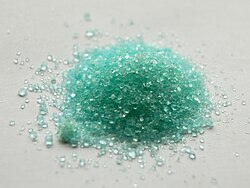
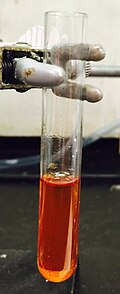
Iron is chemically active and readily forms compounds. Its most common oxidation states are +2 (ferrous) and +3 (ferric), though it can range from -2 to +7 in specialized environments.
Oxides and Halides
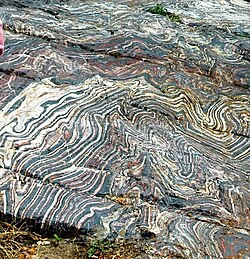
Iron reacts with oxygen to form several oxides, most notably iron(II) oxide (FeO), iron(III) oxide (Fe₂O₃), and the mixed-valence iron(II,III) oxide (Fe₃O₄). These oxides are responsible for the characteristic reddish-brown color of rust.

Coordination and Organometallic Chemistry
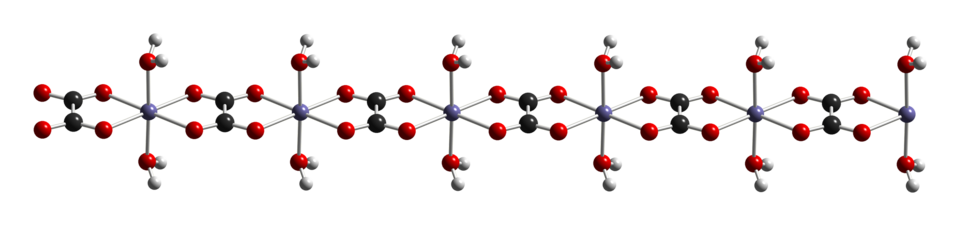
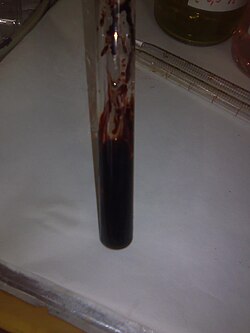
Iron forms a wide array of coordination compounds. A famous example is ferrocene, an organometallic compound where an iron atom is sandwiched between two cyclopentadienyl rings. In biological systems, iron is the central atom in the heme group, which allows hemoglobin to bind and transport oxygen in the blood.

![A heme unit of human carboxyhemoglobin, showing the carbonyl ligand at the apical position, trans to the histidine residue[164]](/images/a3/75/a3758104d938d63d3eb1a96d3808b499ea6c1b5b1c788f45a84bb0162b22c0f5.png)
Industrial Production and Metallurgy
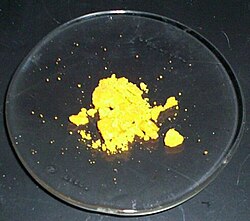
The extraction of iron from its ores is a cornerstone of global industry. The primary source of iron is iron ore, which is processed through several distinct methodologies.
The Blast Furnace Process
In a blast furnace, iron ore (such as Fe₂O₃) is reduced using carbon monoxide (CO) and coke. The reaction occurs at temperatures reaching approximately 2000 °C, resulting in the production of pig iron.
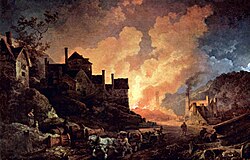
Steelmaking and Direct Reduction
Steel is an alloy of iron and carbon. By controlling the carbon content and adding other elements, engineers can create materials with varying tensile strengths and hardness. Alternatively, direct iron reduction uses natural gas to produce sponge iron, a more energy-efficient route than the traditional blast furnace.
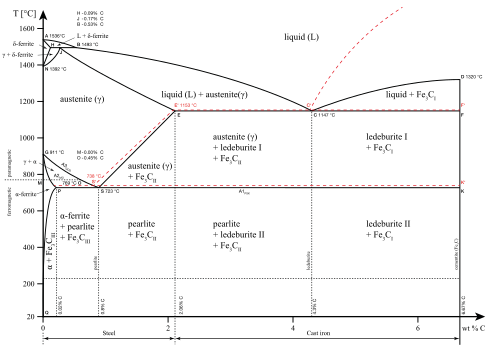
The Thermite Reaction
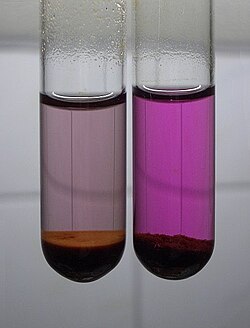
For specialized applications, such as welding railway tracks, the thermite process is used. This involves a highly exothermic reaction between aluminum powder and iron oxide, producing molten metallic iron.
Occurrence in Nature
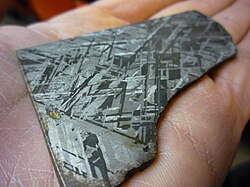
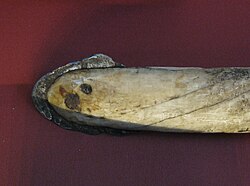
Iron is primordial and abundant. It is a major component of the Earth's metallic core and is found throughout the crust in various mineral forms. It also arrives on Earth via meteorites, which often contain iron-nickel alloys exhibiting the unique Widmanstatten pattern.
| Material Type | Tensile Strength (MPa) | Brinell Hardness (BH) |
|---|---|---|
| Iron Whiskers | 11,000 | N/A |
| Ausformed Steel | 2,930 | 850–1200 |
| Martensitic Steel | 2,070 | 600 |
| Pearlitic Steel | 1,200 | 350 |
| Pure Single-Crystal Iron | 10 | 3 |
Frequently Asked Questions


What is the difference between iron and steel?
Iron is a pure chemical element (Fe), while steel is an alloy consisting primarily of iron with a small percentage of carbon and other elements to enhance strength and durability.
Why is iron important for human health?
Iron is essential for the production of hemoglobin, the protein in red blood cells that carries oxygen from the lungs to the rest of the body. A deficiency can lead to anemia.
What is the Curie point of iron?
The Curie point of iron is 1043 K. At this temperature, iron transitions from being ferromagnetic to paramagnetic, losing its permanent magnetic properties.
How is iron extracted from ore?
Iron is most commonly extracted in a blast furnace, where iron oxides are reduced to metallic iron using carbon monoxide and coke at very high temperatures.
What are the common oxidation states of iron?
The most common oxidation states are +2 (ferrous) and +3 (ferric), although iron can exhibit states ranging from -2 to +7 depending on the compound.