Articles/New Year's Day: History, Traditions, and Global Celebrations
New Year's DayGregorian calendarJulian calendarNew Year traditionsJanuary 1
New Year's Day: History, Traditions, and Global Celebrations
New Year's Day: History, Traditions, and Global Celebrations Every year on 1 January, millions of people around the world celebrate New Year's Day, marking the first day of the Gregorian ...
New Year's Day: History, Traditions, and Global Celebrations
Every year on 1 January, millions of people around the world celebrate New Year's Day, marking the first day of the Gregorian calendar. While it is now a global standard for the start of the civil year, the way humanity tracks the passage of time has evolved through centuries of political reform, religious observance, and cultural shifts.
From the flashing lights of modern drone shows to the quiet reflection of a church service, New Year's Day is more than just a date; it is a universal moment of transition, renewal, and celebration.
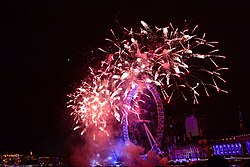
Fireworks in London at the stroke of midnight on New Year's Day 2014
Key Facts
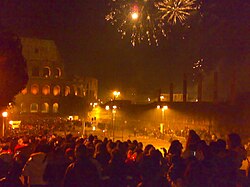
Fireworks in Rome at the stroke of midnight on New Year's Day 2012
Date: Observed annually on 1 January by users of the Gregorian calendar.
Origin: The Roman calendar began the year on 1 January, a practice maintained by the Julian reform in 45 BC.
Global Adoption: Most European nations adopted 1 January as the official start of the year between the 16th and 18th centuries.
British Transition: Great Britain and its colonies formally shifted to 1 January in 1752 via the Calendar (New Style) Act 1750.
Diverse Observances: Celebrations range from sporting events like the Rose Bowl to religious feasts and traditional family meals.
The Evolution of the Calendar
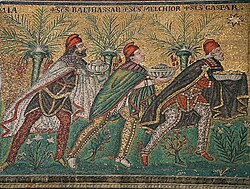
The Three Magi, Byzantine mosaic, c. 565, Basilica of Sant'Apollinare Nuovo, Ravenna, Italy (restored during the 19th century). As here, Byzantine art usually depicts the Magi in Persian clothing, which includes breeches, capes, and Phrygian caps.
The Julian Calendar
Proposed by Julius Caesar in 46 BC, the Julian calendar was a major reform of the Roman system. It officially took effect on 1 January 45 BC. For over 1,600 years, it served as the predominant calendar for the Roman Empire and much of the Western world.
Despite the Julian standard, various regions maintained different start dates. For example, the Alexandrian calendar in Egypt began on 29 August, while the Byzantine year—which influenced the Eastern Orthodox Church's liturgical year—started on 1 September.
The Shift to the Gregorian Calendar
The transition to 1 January as the universal New Year's Day happened gradually across Europe. Germany began the shift around 1544, followed by Spain, Portugal, and the Netherlands in 1556, and France in 1564. Scandinavia adopted the date in 1599, and Russia transitioned between 1700 and 1725.
Great Britain and its American colonies were among the last to change. Until 1751, the official start of the year was 25 March. The Calendar (New Style) Act 1750 finally formalized 1 January as New Year's Day in 1752. This act also saw Britain discard the Julian calendar in September of that year to correct an eleven-day discrepancy with the more accurate Gregorian system.
Religious and Spiritual Observances
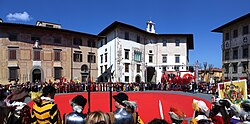
Pisan New Year's Day celebrations, Italy
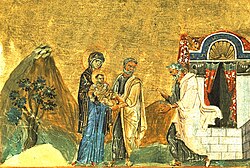
In Christendom, 1 January holds specific spiritual significance. It traditionally marks the Feast of the Circumcision of Christ and the Feast of the Holy Name.
In Christendom, 1 January traditionally marks the Feast of the Circumcision of Christ
Many denominations hold Watchnight services—nocturnal worship involving prayer, singing, and preaching. These services, popularized by figures like John Wesley in the 18th century, were designed as godly alternatives to revelry, providing a space for penitence and fresh resolve as the old year ends and the new begins.
A Watchnight Mass at a Lutheran Christian church on New Year's Eve (2014)
Global New Year Traditions
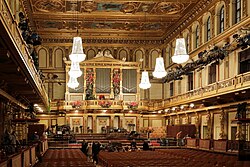
The Golden Hall of the Wiener Musikverein, traditional site of the Vienna New Year's Concert.
While 1 January is the Gregorian standard, many cultures celebrate their own New Year based on lunar, solar, or religious calendars.
East and Southeast Asia
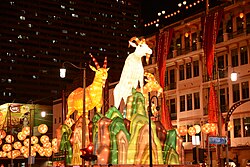
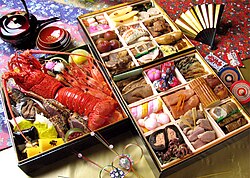
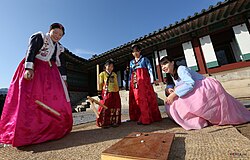
Celebrations vary widely across Asia. In China, decorations and festivities mark the lunar transition, while in Japan, families enjoy Osechi-ryōri, traditional New Year's dishes. In Korea, the New Year is celebrated with traditional hanbok clothing and games like yut.
Chinese New Year decorations along New Bridge Road in SingaporeOsechi-ryōri, typical Japanese New Year's dishesKoreans wearing hanbok and playing yut during the Korean New Year.
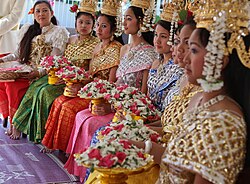
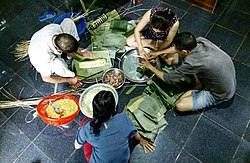
In Southeast Asia, the Burmese New Year (Thingyan) typically begins in mid-April, and Vietnamese celebrations often involve families gathering to make bánh tét.
Khmer women at a Cambodian New Year celebration in Lithonia, Georgia, U.S., 2010.A family gathering to make bánh tét for the Vietnamese New Year celebrations
Other Cultural Markers
Sri Lanka: The blossoming of Yak Erabadu flowers signals the Sinhalese New Year. The blossoming flowers of the Yak Erabadu is associated with the advent of the Sinhalese New Year
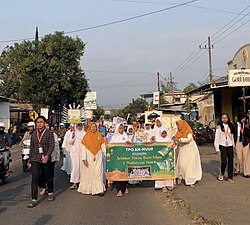
Islamic Tradition: The Islamic New Year is marked by parades and religious education, such as those held by TPQ schools in Indonesia. The parade celebrating the 1446th Hijriah Islamic New Year was carried out by several TPQ (a Quran education school in Indonesia) in Nampes Hamlet
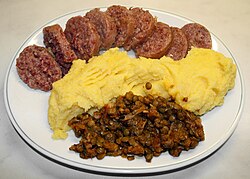
Europe: Italy celebrates with traditional dishes like cotechino, polenta, and lentils. Cotechino, polenta and lentils, traditionally eaten in Italy on New Year's Eve dinner In Spain, a popular custom involves eating twelve grapes at midnight, one for each strike of the clock at Madrid's Puerta del Sol. A Spanish tradition consists of eating Twelve Grapes at midnight on New Year's Day, one at each of the twelve strikes of the clock bell ringing at the Puerta del Sol in Madrid.
Modern Customs and Sporting Events
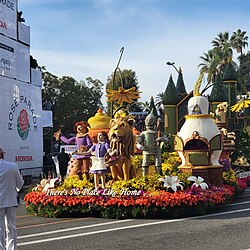
In the modern era, New Year's Day is synonymous with major public events and sporting traditions. In the United States, the day is dominated by college football bowl games, including the Citrus, Outback, and Sugar Bowls. The Rose Bowl Game in Pasadena remains one of the most iconic fixtures of the day.
A The Wizard of Oz-themed float at the 2023 Rose Parade in Pasadena, California.
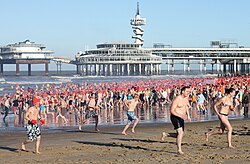
Other traditions include the Winter Classic, an outdoor NHL hockey game (though its date has shifted in recent years to avoid scheduling conflicts), and the "polar bear plunge" (Nieuwjaarsduik) in the Netherlands, where participants dive into freezing waters to ring in the year.
A scene of the "polar bear plunge", or Nieuwjaarsduik, at Scheveningen, Netherlands.
New Year's Across the Solar System
Interestingly, New Year's Day is not limited to Earth. NASA has established a convention for the Martian year, which begins on the Northward (spring) equinox of Mars' northern hemisphere. Because Mars has a longer orbit, its New Year falls on different Gregorian dates; for instance, the start of Martian Year 38 coincided with 12 November 2024.
Calendar/Culture
Key Date/Marker
Primary Tradition
Gregorian
1 January
Resolutions, Fireworks, Parades
Julian (Orthodox)
Various/1 September
Liturgical year start
Spanish
1 January
Twelve Grapes at midnight
Japanese
1 January
Osechi-ryōri dishes
Martian (NASA)
Northward Equinox
Scientific tracking of Mars orbit
Frequently Asked Questions
Why did Great Britain change its New Year's date in 1752?
Great Britain adopted the Calendar (New Style) Act 1750 to align with the more accurate Gregorian calendar and to standardize the start of the year as 1 January, moving away from the traditional date of 25 March.
What is a Watchnight service?
A Watchnight service is a religious gathering held on New Year's Eve or New Year's Day. It typically involves singing, prayer, and reflection, serving as a spiritual alternative to secular celebrations.
How is the Martian New Year determined?
According to NASA, the Martian year begins on the Northward equinox, which is the spring equinox for the planet's northern hemisphere.
What are some traditional foods eaten on New Year's Day?
Traditions vary by country: Italy often features cotechino and lentils, Japan prepares Osechi-ryōri, and Vietnam makes bánh tét.
What is the significance of the twelve grapes in Spain?
In Spain, it is traditional to eat one grape for each of the twelve strikes of the clock bell at the Puerta del Sol in Madrid at midnight on New Year's Day.