EpiphanyThree Kings DayTheophanyChristian holidaysBaptism of Jesus

Epiphany: Traditions, Dates, and Global Celebrations

Epiphany: Traditions, Dates, and Global Celebrations Epiphany is a significant annual feast observed by Christians and Alawites, marking a pivotal moment of revelation in the Christian na...

Epiphany: Traditions, Dates, and Global Celebrations

Epiphany is a significant annual feast observed by Christians and Alawites, marking a pivotal moment of revelation in the Christian narrative. While many associate the day with the visit of the Three Wise Men to the infant Jesus, its meaning varies deeply across different denominations and cultures, ranging from the commemoration of Christ's baptism to vibrant community festivals involving ice-cold waters and traditional cakes.

In the Western tradition, the feast is often called Three Kings Day, focusing on the Adoration of the Magi—the moment the Magi (Balthasar, Melchior, and Gaspar) recognized the divinity of Jesus. In Eastern Christianity, the focus shifts toward Theophany, a term referring to the manifestation of God, specifically commemorating the Baptism of Jesus in the River Jordan.
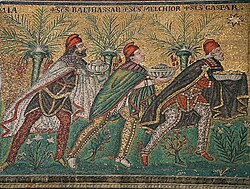
The Three Magi: Balthasar, Melchior, and Gaspar, from a late-6th-century mosaic at the Basilica of Sant'Apollinare Nuovo in Ravenna, Italy

Key Facts

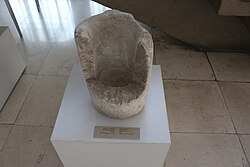
Holy (Epiphany) water vessel from the 15th–16th centuries, found on Hisar Hill near the town of Leskovac, Serbia. Photographed in the National Museum of Leskovac.
  • Primary Dates: Traditionally January 6, though some observe it on the first Sunday after New Year's Day or January 19.
  • Core Significance: Commemorates the visit of the Magi (West) or the Baptism of Christ (East).
  • Observing Groups: Christians (Catholic, Protestant, Orthodox) and Alawites.
  • Common Customs: House blessings, star singing, winter swimming, and eating specialized "King Cakes."
  • Liturgical Context: In the Roman Catholic Church, it is part of Christmastide, extending from December 24 to the Sunday after Epiphany.

Timing and Calendar Variations
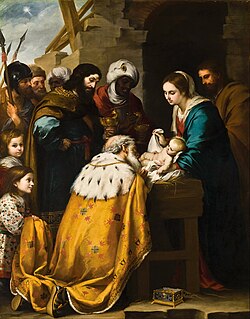
Adoration of the Magi by Bartolomé Esteban Murillo (17th century)

The date of Epiphany depends largely on the calendar used by the specific church or region:

  • Gregorian Calendar: The traditional date is January 6. Since 1970, some countries celebrate it on the Sunday following January 1.
  • Julian Calendar: Eastern Churches following the Julian calendar observe the feast on January 19 (which corresponds to January 6 on the Julian system). This date is also observed by Alawites and many Middle Eastern Christians.
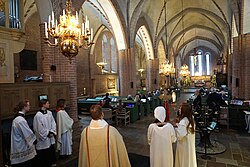
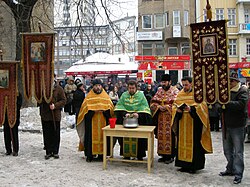
Lutheran priest and altar servers at Saint Mary's Church in Sigtuna, Sweden, standing in the narthex during recessional hymn at the end of Epiphany Day Mass

Denominational Perspectives

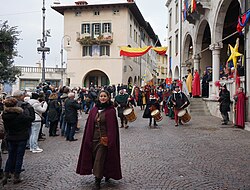
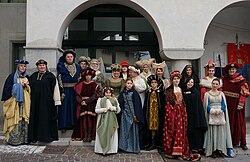
Epiphany celebration in Gemona del Friuli, Italy

Catholic and Protestant Traditions

In the West, the feast is closely tied to the narrative of the Three Kings. In 1955, Pope Pius XII modified the liturgical octaves, and a 1969 revision made the date more variable. The Catholic Church also instituted a separate feast for the Baptism of the Lord, which decoupled that event from the Epiphany celebration in Western liturgy.
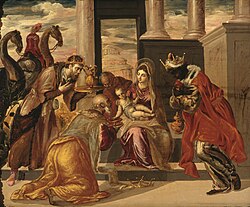
Adoration of the Magi by El Greco (1568, Museo Soumaya, Mexico City)

Eastern Orthodox and Oriental Orthodox

For Eastern traditions, the event is primarily the Theophany. The focus is on the baptism of Jesus, symbolizing the revelation of the Holy Trinity. This is often celebrated with the "Great Blessing of Waters," where priests bless water sources to signify spiritual purification.
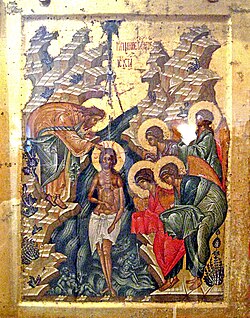
Russian icon of the Theophany (Kirillo-Belozersky Monastery, 1497)

Global Customs and Cultural Practices
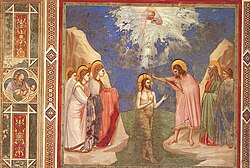
Baptism of Christ fresco by Giotto di Bondone, c. 1305 (Cappella Scrovegni, Padua, Italy)

Epiphany is celebrated with a diverse array of local customs that blend religious devotion with folk tradition.

Blessings and Symbols

In several European countries, such as the Czech Republic, the practice of chalking the door is common. This involves writing "K † M † B †" followed by the year on the door beam to bless the home. In Germany and other regions, star singers (Sternsinger) visit homes, singing carols and collecting donations for charity.
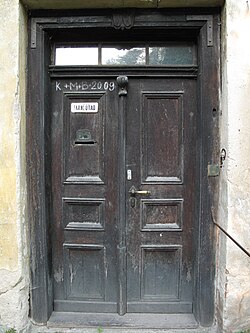
K † M † B † 2009 written on a door of a rectory in a Czech village, to bless the house by Christ. Christians of various denominations, including Catholics, Lutherans and Anglicans practice the chalking the door on Epiphanytide.

Water Rituals and Winter Swimming

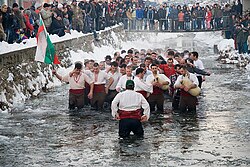
In Bulgaria, Russia, and Greece, the celebration involves daring plunges into icy waters. In Bulgaria, priests throw a wooden cross into rivers; believers jump in to retrieve it, believing the first person to do so will enjoy a year of good health.
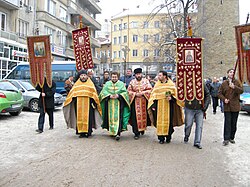
Theophany Crucession in Bulgaria. The priests are going to throw a wooden cross in the Yantra river. Believers will then jump into the icy waters to recover the cross.

Culinary Traditions

Many cultures bake a special "King Cake" (such as the Rosca de Reyes in Mexico or the Ciasto Trzech Króli in Poland). These cakes often contain a hidden token or bean; the person who finds it is crowned the "monarch" for the day.
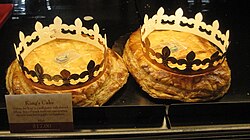
King cakes of the type locally called "French style" on display at the chain bakery/restaurant "La Madeline" branch in Carrollton, New Orleans. They come with cardboard "crowns" to be worn by whoever gets the slice with the token and becomes monarch of the event.

Summary of Epiphany Observations

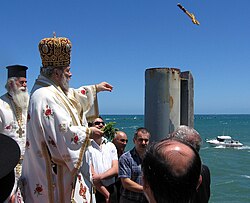
Greek Orthodox bishop at the Great Blessing of Waters on Theophany, releasing the cross off the Glenelg Jetty, South Australia, for one of the swimmers below to retrieve
Region/Tradition Primary Focus Common Date Key Custom
Western Christianity Adoration of the Magi Jan 6 / Sunday after Jan 1 King Cakes, Star Singing
Eastern Orthodoxy Baptism of Christ Jan 19 (Gregorian) Blessing of Waters, Ice Swimming
Finland (Lutheran) Missionary Work / Magi Jan 6 National Public Holiday
Spain/Latin America Three Kings' Gifts Jan 6 Cavalcade of Magi, Rosca de Reyes

Frequently Asked Questions
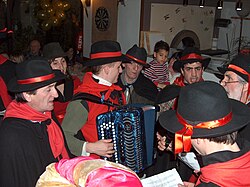
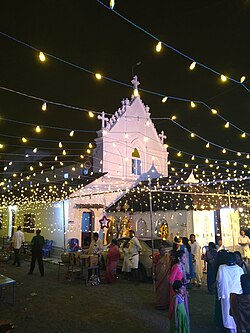
Epiphany in Kerala, India
A traditional Bulgarian all-male horo dance in ice-cold water on Theophany
Epiphany celebration in Gabrovo, Bulgaria
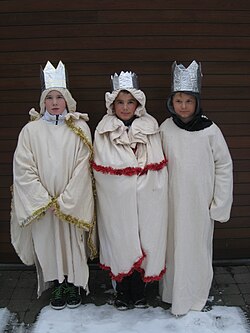
Children in Flanders celebrating Driekoningen
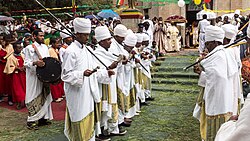
Orthodox priests dancing during the celebration of Timkat
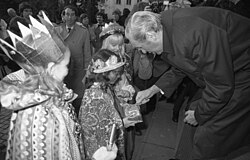
Star singers visit President Karl Carstens (1982)
Traditional house blessing in chalk, written by Sternsinger on the door beam of the home
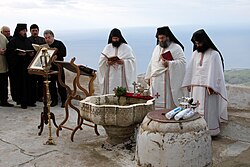
Epiphany Mass in Santorini, Greece
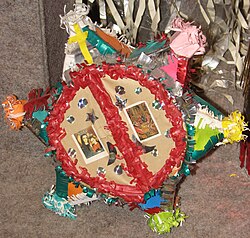
Csillagozás
A Christmas star, the main part of a Hungarian Christmas tradition called csillagozás (star-play). Unlike other Christmas traditions the csillagozás is not performed in a group. Usually it is performed by children younger than 10 years. The play itself is a string of Christmas carols that tells the story of Jesus' birth. In the end of the performance the child asks the Lord's blessings for the house and its inhabitants and wishes them merry Christmas. In return the child usually gets some sweets or money.
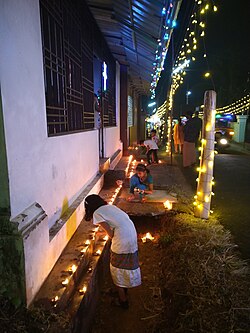
Diyas (lights) are used to celebrate Epiphany in some Kerala Christian households
Epiphany celebration in Gemona del Friuli, Friuli-Venezia Giulia, Italy
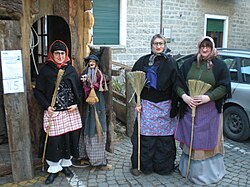
Befana feast in Locana, Piedmont, Italy
Befana feast in Santa Sofia, Emilia–Romagna, Italy
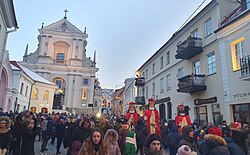
Epiphany (Three Kings' Day) procession near the Church of St. Theresa and Gate of Dawn in the capital of Lithuania Vilnius
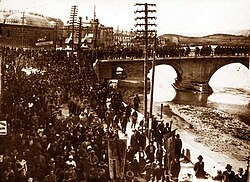
Epiphany procession in the capital of North Macedonia Skopje near Stone Bridge on the Vardar river in the early 1920s
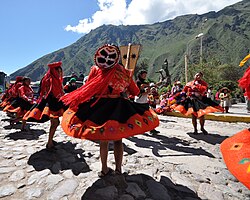
Feast of Día de Reyes in Peru
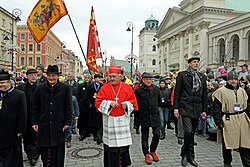
Epiphany celebration in Warsaw, Poland
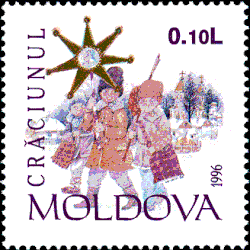
Star boys. Postage stamp depicting traditional Christmas and Epiphany star singing in Moldova.
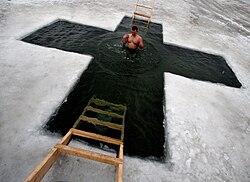
An ice hole is cut in the form of a cross in Russia to celebrate the Epiphany.
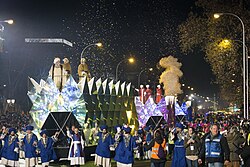
Cavalcade of Magi in Madrid.

Why is Epiphany celebrated on different dates?

The variation is due to the use of different calendars. While the Gregorian calendar sets the date as January 6, those using the Julian calendar observe it on January 19 to account for the 13-day difference between the two systems.

What does "K M B" on a door mean?

These letters represent the names of the Three Magi (Caspar, Melchior, and Balthasar) and are used during house blessings to invoke the protection of Christ over the home.

What is the difference between Epiphany and Theophany?

While often used interchangeably, Epiphany typically refers to the manifestation of Christ to the Gentiles (the Magi) in Western tradition, whereas Theophany refers to the manifestation of God during the Baptism of Jesus in Eastern tradition.

What is the significance of the King Cake?

The cake symbolizes the celebration of the Three Kings. The hidden token inside represents the crown, and the person who finds it is traditionally designated as the king or queen of the feast.

How is Epiphany observed in Ethiopia?

In Ethiopia, the celebration is known as Timkat, a vibrant festival where Orthodox priests and believers gather for the baptismal commemoration.