New Orleans Music: The Birthplace of Jazz and Global Rhythms
New Orleans is more than just a city; it is a sonic laboratory where diverse cultural currents converged to create some of the most influential sounds in human history. Most famously recognized as the birthplace of jazz, the city's musical identity is a rich tapestry woven from African, European, Caribbean, and Indigenous American traditions. From the spirituals of Congo Square to the heavy riffs of modern metal, New Orleans has consistently pushed the boundaries of rhythm and melody.
While jazz remains its most iconic export, the city has also served as a primary hub for funk—home to pioneering groups like the Meters—and a breeding ground for the evolution of rhythm and blues (R&B) and hip-hop.
Key Facts
- Birthplace of Jazz: New Orleans is universally considered the origin of jazz music.
- Congo Square: A pivotal site since 1835 where enslaved people preserved African musical traditions.
- The "Spanish Tinge": The integration of Cuban rhythms, specifically the habanera and tresillo, into early jazz.
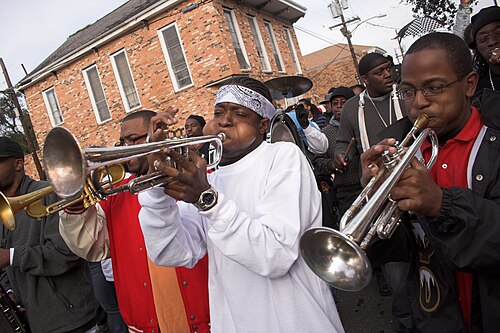
- Brass Band Legacy: A deep-rooted tradition of marching bands used for both celebratory parades and jazz funerals.
- Global Influence: New Orleans styles evolved into Dixieland, R&B, Rock 'n' Roll, and the unique "Bounce" hip-hop style.
The Foundations: Congo Square and Cultural Fusion
The roots of the New Orleans sound can be traced back to 1835 at Congo Square. On Sundays, enslaved people gathered here to play music and dance, blending African rhythms with adapted work songs, spirituals, and field hollers. This environment created a cultural melting pot where African, Indigenous American, Cuban, and European forms merged.
By 1838, the influence of brass bands was already so pervasive that the local newspaper, the daily Picayune, complained that these ensembles could be found on every street corner.
The Evolution of Jazz
The term "jazz" (originally often spelled "jass") didn't gain widespread popularity until the mid-to-late 1910s. Before this, the style was often referred to as "ragtime," "hot music," or "ratty music." Historians generally agree that the distinct New Orleans style developed between the 1890s and the mid-1910s.
One of the most pivotal figures was cornetist Buddy Bolden, whom many consider the first prominent jazz musician. Bolden is credited by many as the first to play the blues on a brass instrument. While the Storyville prostitution district is often cited in jazz lore, historians note it was simply one of many neighborhoods that helped expose the music to visitors.
![A caricature of an African-American band playing in New Orleans in 1890. New Orleans writer Al Rose has called this "The earliest known illustration of a jazz band".[2] While the instrumentation of cornet or trumpet, trombone, clarinet, and drums is suggestive of the early jazz bands of some 15 years later, how close this music was to what would be known as "jazz" is speculative.](/images/70/4d/704da541d3d7f8b38d7c7e911446acb795682c979b7195e2518bee2b0816d657.jpg)
The Sicilian Connection
Between the late 1800s and early 1900s, a significant wave of migration from Sicily, Italy, reached New Orleans due to established trade lines between Palermo and the Crescent City. This migration influenced early jazz, most notably through the Original Dixieland Jass Band. Bandleader Nick LaRocca and drummer Tony Sbarbaro were children of Sicilian migrants, and their track "Livery Stable Blues" became the first jazz record ever issued.
The Cuban Influence and the "Spanish Tinge"
The proximity of Havana allowed for a constant exchange of musicians via ferry. The habanera (a Cuban dance rhythm) took root in New Orleans long before ragtime became popular. Composer Louis Moreau Gottschalk integrated Afro-Caribbean elements, such as the tresillo (a rhythmic cell), into his symphonic works.
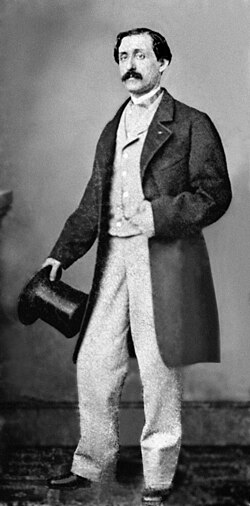
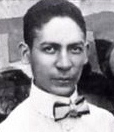
Jazz legend Jelly Roll Morton famously called this influence the "Spanish tinge," arguing that it was an essential seasoning for authentic jazz. Wynton Marsalis has observed that the tresillo serves as the New Orleans equivalent of the Cuban "clave," acting as the guide-pattern for the city's music.
From Brass Bands to Dixieland
The city's brass band tradition extends far beyond jazz, rooted in military music and the poignant tradition of jazz funeral processions. This legacy was carried forward by icons like Louis Armstrong, King Oliver, and Henry "Red" Allen.
Dixieland, a term derived from Dan Emmett's 1859 song "Dixie's Land," describes a style of jazz derived from early New Orleans traditions. While the term was often imposed by outsiders—most notably the all-white Original Dixieland Band—it became a global shorthand for the New Orleans sound as musicians migrated north to cities like Chicago.
Modern Eras: R&B, Hip-Hop, and Metal
The rhythmic innovations of the past continued into the 20th century. In 1949, producer Dave Bartholomew integrated the Cuban tresillo into early R&B on his track "Country Boy." This pattern became a cornerstone of 1950s rock 'n' roll, appearing frequently in the recordings of Fats Domino and Little Richard.
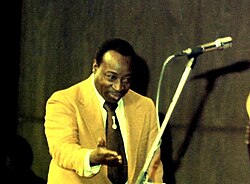
In the mid-1990s, New Orleans entered the mainstream hip-hop scene through labels like No Limit Records (featuring Master P and Mystikal) and Cash Money Records (featuring Lil' Wayne and Juvenile). The city also birthed Bounce music, a high-energy style popularized globally by producers like Mannie Fresh and Blaqnmild.
Beyond hip-hop, the city developed a potent heavy metal scene in the late 1980s, with bands such as Eyehategod, Down, and Crowbar establishing a gritty, local sound.
Summary of New Orleans Musical Influences
| Influence Source | Key Elements/Genres | Notable Figures/Groups |
|---|---|---|
| African | Spirituals, Field Hollers, Congo Square rhythms | Enslaved communities of Congo Square |
| Cuban | Habanera, Tresillo ("Spanish Tinge") | Jelly Roll Morton, Louis Moreau Gottschalk |
| Sicilian | Italian folk traditions | Original Dixieland Jass Band |
| Military/European | Brass bands, Marching music | Louis Armstrong, King Oliver |
| Modern Urban | Bounce, Hip-Hop, Sludge Metal | Cash Money Records, No Limit Records |
Frequently Asked Questions
Is New Orleans really the birthplace of jazz?
Yes, it is universally considered the birthplace of the genre due to the unique convergence of African, Caribbean, and European musical traditions in the city during the late 19th and early 20th centuries.
What is the "Spanish Tinge"?
The "Spanish Tinge" is a term coined by Jelly Roll Morton to describe the essential Afro-Cuban rhythmic elements, specifically the habanera and tresillo, that provide the characteristic "seasoning" of New Orleans jazz.
What is the difference between New Orleans Jazz and Dixieland?
While often used interchangeably, Dixieland is a broader term for jazz derived from the early New Orleans style. Many local musicians avoid the term "Dixieland" as it was often imposed by outside groups, such as the all-white Original Dixieland Band.
What is Bounce music?
Bounce is a high-energy style of hip-hop originating in New Orleans. It has gained international popularity through artists signed to Cash Money Records and producers like Mannie Fresh.
Who was Buddy Bolden?
Buddy Bolden was a cornetist in the 1890s who is regarded by many historians and contemporaries as the first prominent jazz musician and the first to play the blues on a brass instrument.