New Orleans Downtown: History, Geography, and Cultural Evolution
In most American cities, the term "downtown" refers to the central hub of commerce and skyscrapers. However, in New Orleans, Louisiana, the word carries a unique historical weight that differs significantly from standard usage. Traditionally, downtown referred to the neighborhoods situated along the Mississippi River, extending downriver (roughly northeast) from Canal Street.
This historic definition encompasses iconic areas such as the French Quarter, Tremé, Faubourg Marigny, Bywater, and the 9th Ward. Interestingly, this traditional application of the term specifically excluded the New Orleans Central Business District (CBD). While younger residents and newcomers often use "downtown" to describe the CBD or Warehouse District, the city's deep-rooted history maintains a different geographic logic.
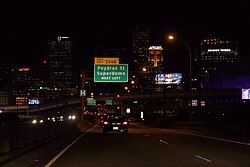
The Cultural Divide: Downtown vs. Uptown
During the 19th century, the division of the city was as much about language and culture as it was about geography. The downtown area was predominantly Francophone, serving as the heart of the city's French-speaking Creole communities. In contrast, the area known as "uptown" was predominantly Anglophone (English-speaking).
This cultural split created a traditional rivalry between the two sections of the city. To facilitate interaction, the broad median of Canal Street became known as the neutral ground. This space allowed partisans from both the downtown and uptown sectors to meet for business and discussion without entering the other's territory. Over time, the term "neutral ground" evolved in the local lexicon to refer to any street median in general.
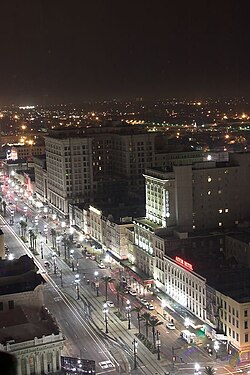
The Legacy of the Divide
While the strict linguistic divide blurred by the late 19th century—with English speakers moving downtown and French speakers moving uptown—the distinction remained a cultural touchstone. Even in the 21st century, this legacy persists in traditions such as the Mardi Gras Indians, who are still divided into Downtown and Uptown tribes.
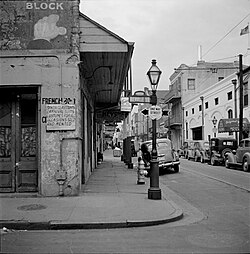
Urban Expansion and Modern Definitions
For many years, the area north of the developed city—a region of swamps and marshes extending toward Lake Pontchartrain—was known as the "Back of Town." Development in this low-lying area only became viable after 1900, once longstanding drainage issues were resolved.
Following World War II, the growth of districts like Lakeview and Gentilly, along with the expansion of New Orleans East and suburban Jefferson Parish, made the simple "Downtown vs. Uptown" binary difficult to maintain. By the 1990s, these terms had largely fallen out of common use for general navigation.
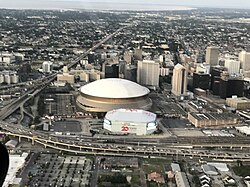
Today, the term "downtown" is most frequently associated with the Central Business District and Warehouse District, specifically the area managed by the Downtown Development District. While "uptown" is still used, its boundary has shifted from Canal Street to the Pontchartrain Expressway.
Key Facts
- Historic Downtown: Originally referred to neighborhoods downriver from Canal Street, including the French Quarter and Bywater.
- The Neutral Ground: Originally the median of Canal Street where Francophone and Anglophone residents met; now a local term for any street median.
- Cultural Split: Historically, downtown was Francophone (Creole) and uptown was Anglophone.
- Modern Usage: "Downtown" now commonly refers to the Central Business District (CBD) and Warehouse District.
- Back of Town: The marshy areas north of the city that were developed after 1900 following drainage improvements.
| Term | Historic Meaning | Modern Meaning |
|---|---|---|
| Downtown | Downriver from Canal St. (French Quarter, etc.) | Central Business District / Warehouse District |
| Uptown | Upriver from Canal St. (Anglophone areas) | Areas stretching from the Pontchartrain Expressway upriver |
| Neutral Ground | The median of Canal Street (meeting point) | Any street median |
| Back of Town | Swamps/marshes north of development | Developed districts like Lakeview and Gentilly |
Frequently Asked Questions
Why is the term "downtown" confusing in New Orleans?
It is confusing because the historic definition (neighborhoods downriver from Canal Street) differs from the modern, common usage (the Central Business District), which is how most other American cities define their downtown.
What is the "neutral ground" in New Orleans?
Historically, it was the median of Canal Street where French-speaking and English-speaking residents could meet neutrally. Today, locals use the term to describe any street median.
Which neighborhoods were historically considered part of downtown?
Historic downtown included the French Quarter, Tremé, Faubourg Marigny, Bywater, and the 9th Ward.
How did the "Back of Town" become habitable?
The Back of Town, consisting of swamps and marshes, only began to be developed after 1900 once the city solved significant drainage issues.
Does the Downtown/Uptown divide still affect local culture?
Yes, it continues to be a factor in certain cultural traditions, most notably in the division of Mardi Gras Indians into Downtown and Uptown tribes.