New Kingdom of Egypt: The Golden Age of the Egyptian Empire
The New Kingdom, frequently referred to as the Egyptian Empire, represents the pinnacle of ancient Egypt's power, wealth, and international influence. Spanning from approximately 1570 BC to 1069 BC, this era encompasses the Eighteenth, Nineteenth, and Twentieth dynasties. Following the Second Intermediate Period, the New Kingdom transformed Egypt from a regional power into a dominant imperial force, leaving behind some of the most iconic monuments in human history.
This era is often characterized as one of Egypt's "golden ages," a term coined by scholar Christian Charles Josias von Bunsen in 1845. The latter portion of this period, specifically under the Nineteenth and Twentieth dynasties, is known as the Ramesside period, named after the succession of pharaohs who adopted the name Ramesses.
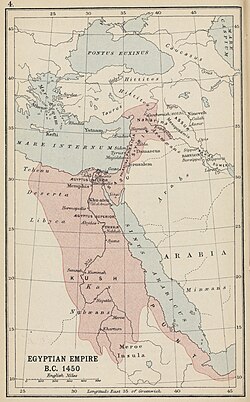
Key Facts
- Timeline: Approximately 1570 BC to 1069 BC.
- Dynasties: Eighteenth, Nineteenth, and Twentieth.
- Peak Population: Estimated between 3 to 5 million people by the 13th century BC.
- Government: Divine absolute monarchy led by a Pharaoh.
- Major Capitals: Thebes, Amarna, Pi-Ramesses, and Memphis.
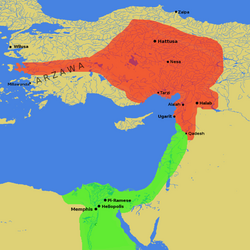
- Key Rivals: The Hittite Empire and the Sea Peoples.
The Rise of the Eighteenth Dynasty
The New Kingdom began with the reign of Ahmose I, who established the Eighteenth Dynasty. This period saw the emergence of some of Egypt's most legendary rulers, including Hatshepsut, Thutmose III, and Tutankhamun. During this time, the term pharaoh—originally referring to the royal palace—evolved into a formal title for the king himself.
Thutmose III is widely regarded by historians as a military genius. Over a 20-year span, he conducted at least 16 military campaigns, capturing 350 cities and extending Egyptian control from Nubia in the south to the Euphrates River in the north. His expansionist policies brought unprecedented wealth to Egypt, which reached its zenith under Amenhotep III. Amenhotep III utilized this prosperity to construct massive projects, including the Luxor Temple and the Malkata palace, the largest ever built in Egypt.
However, the dynasty faced internal shifts during the Amarna Period under Akhenaten, who shifted the capital to Amarna and promoted Atenism (the worship of the sun disc, Aten). This period of internal focus allowed the Hittites to expand their influence in the Levant, setting the stage for future conflicts.
The Ramesside Period and Imperial Height
The Nineteenth Dynasty was founded by Ramesses I, a former vizier. His successors, Seti I and Ramesses II, sought to reclaim the territories lost in the Levant. Ramesses II, the longest-reigning monarch of the dynasty, is perhaps the most famous figure of this era.
Ramesses II's reign was marked by the Battle of Kadesh against the Hittite king Muwatalli II. Although the battle ended in a stalemate and is noted as history's first recorded military ambush, it eventually led to a landmark peace treaty between the two empires. Ramesses II was also a prolific builder, constructing the Ramesseum and the rock temples of Abu Simbel, and establishing a new capital at Pi-Ramesses.
Despite these achievements, the later years of the Nineteenth Dynasty were marred by court instability and disputes over succession, including a temporary usurpation by Amenmesse.
The Final Years and Decline
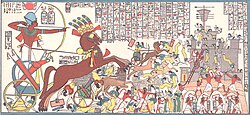
The Twentieth Dynasty's most significant ruler was Ramesses III. His reign was defined by the defense of Egypt against the Sea Peoples, whom he defeated in the Battle of Djahy and the Battle of the Delta. He also repelled invasions from Libyan tribes in the Western Delta.
Despite these military victories, the cost of constant warfare drained the royal treasury. This economic strain led to the first recorded labor strike in history during the 29th year of Ramesses III's reign, when royal tomb-builders at Deir el Medina were not provided with their food rations. Environmental factors may have also played a role; evidence suggests air pollution (possibly from the Hekla 3 volcanic eruption in Iceland) limited sunlight and hindered agricultural production until 1140 BC.
The end of Ramesses III's reign was marked by a conspiracy involving one of his secondary wives and palace officials. While early records suggested the coup failed, a 2012 CT scan of the pharaoh's mummy revealed a deep knife wound in his throat, confirming his assassination. Following his death, Egypt gradually declined, eventually transitioning into the Third Intermediate Period around 1069 BC.
New Kingdom Summary
| Category | Details |
|---|---|
| Time Period | c. 1570 – c. 1069 BC |
| Dynasties | 18th, 19th, and 20th |
| Key Pharaohs | Ahmose I, Thutmose III, Akhenaten, Ramesses II, Ramesses III |
| Major Languages | Egyptian, Nubian, Canaanite, Amorite |
| Religious Shifts | Traditional Egyptian religion; Atenism (Amarna Period) |
| Territorial Reach | From Nubia to the Euphrates River |
Frequently Asked Questions
Who was the most successful military leader of the New Kingdom?
Thutmose III is considered the most successful military leader, often called the "Napoleon of Egypt." He conducted 17 known campaigns and captured 350 cities, extending Egypt's borders to their greatest extent.
What was the significance of the Battle of Kadesh?
The Battle of Kadesh was a major conflict between Ramesses II and the Hittite Empire. It is notable for being the first recorded military ambush in history and for resulting in one of the world's earliest known peace treaties.
What caused the decline of the New Kingdom?
The decline was caused by a combination of factors: the high financial cost of defending against the Sea Peoples and Libyans, internal political instability (including assassination plots), and potential environmental crises that affected agriculture.
What was the first recorded labor strike in history?
The first recorded strike occurred during the 29th year of Ramesses III's reign. It involved elite royal tomb-builders and artisans at Deir el Medina who protested after their food rations were not delivered.
How did the capital city change during this period?
The capital shifted several times: starting in Thebes, moving to Amarna under Akhenaten, returning to Thebes, moving to Pi-Ramesses under Ramesses II, and finally settling in Memphis during the later dynasties.