Muwatalli II: The Hittite King Who Challenged Ramesses II
Muwatalli II, whose name means mighty, was a prominent ruler of the New Kingdom of the Hittite Empire. Reigning approximately between 1295 and 1272 BC (short chronology), he is remembered as a strategic leader who reshaped the Hittite administration and stood as the primary adversary to the Egyptian Pharaoh Ramesses II. His reign was marked by significant geopolitical shifts, religious reforms, and one of the most famous military confrontations in ancient history.
Key Facts
- Title: King of the Hittites.
- Major Conflict: Led the Hittite forces at the Battle of Kadesh against Ramesses II.
- Strategic Move: Relocated the Hittite capital from Hattusa to Tarhuntassa.
- Family: Son of Mursili II and Queen Gassulawiya; brother of Hattusili III.
- Legacy: Introduced the Umarmungsszene (protective embrace) motif in royal seals.
Early Life and Royal Lineage
Muwatalli II was the eldest son of King Mursili II and Queen Gassulawiya. He married Tanu-Ḫepa and fathered at least two children: Urhi-Teshup (who later reigned as Mursili III) and Kurunta. His family ties extended across the region, including his cousin Talmi-Sharruma, the King of Aleppo.
The royal succession following Muwatalli II's death was fraught with tension. His son, Mursili III, was eventually deposed by his uncle, Hattusili III, leading to a period of internal instability and civil war within the empire.
The Strategic Shift to Tarhuntassa
Early in his reign, Muwatalli II made the unconventional decision to move the Hittite capital from Hattusa, located in northern Anatolia, to a new city called Tarhuntassa. While official documentation for this move is scarce, historians propose two primary theories.
The first theory is political and military. Hattusa was located near the northern border, making it vulnerable to skirmishes with the Kaska people and rebellions by figures like Piyamaradu. Moving the capital south to Tarhuntassa provided a safer distance from northern threats and a more strategic base for operations against Egypt in Syria.
The second theory suggests a religious motivation. Scholar Itamar Singer argues that the move was part of a religious reform. This is evidenced by a change in royal seals: Muwatalli II replaced the traditional Storm God of Heaven (Teshub) with the Storm God of Lightning (Pihassassa). He introduced the Umarmungsszene, a motif depicting the king being embraced by a deity, a style adopted by all subsequent Hittite kings.
The Sirkeli Reliefs and Deification
Evidence of Muwatalli II's presence in the Çukurova (Cilician Plain) is preserved in the rock reliefs at Sirkeli Höyük, located on the west bank of the Ceyhan River. One relief depicts the king in a long robe holding a kalmus (lituus), a staff used by augurs.
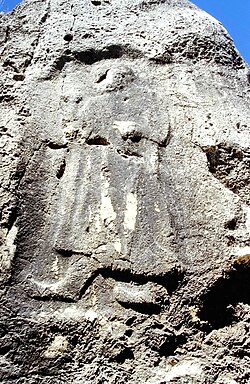
The iconography of this relief mirrors the portrayal of the Sun God of Heaven, suggesting that Muwatalli II was viewed as deified. A second, partially destroyed relief nearby is believed to represent his son, Urhi-Teshup. The deliberate nature of the damage to the second relief likely reflects the political erasure that occurred after Urhi-Teshup was overthrown by his uncle.
The Battle of Kadesh
Muwatalli II is most famous for the Battle of Kadesh, where he fought Ramesses II to a stalemate. To secure his position, Muwatalli allied with Talmi-Sharruma of Aleppo.
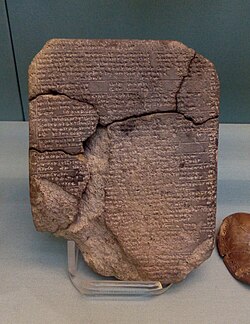
The battle is renowned for Muwatalli's use of deception. He employed spies who pretended to be deserters to mislead Ramesses II, convincing the Pharaoh that the Hittite army was far away in Aleppo. In reality, Muwatalli's forces were concealed near Kadesh. This ruse allowed the Hittites to launch a surprise attack on the Egyptian divisions.
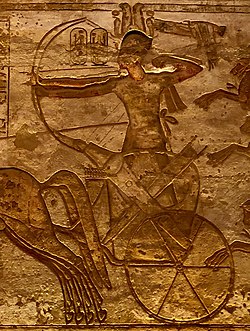
While Egyptian records, such as the Literary and Pictorial Records found in temples like the Ramesseum, depict Ramesses II as a heroic victor who slaughtered the "vile Chief of Khatti," modern scholars view the outcome differently. The battle resulted in heavy losses for both sides. However, because Muwatalli II continued to expand into Syria following the conflict, the battle is generally seen as a strategic success for the Hittites and a failure for Egyptian expansion.
Summary of Muwatalli II's Reign
| Category | Details |
|---|---|
| Capital City | Moved from Hattusa to Tarhuntassa |
| Major Adversary | Ramesses II of Egypt |
| Key Ally | Talmi-Sharruma (King of Aleppo) |
| Religious Innovation | Introduced the Umarmungsszene seal motif |
| Successor | Mursili III (Urhi-Teshup) |
Frequently Asked Questions
Why did Muwatalli II move the capital to Tarhuntassa?
Historians suggest two reasons: to escape border conflicts with the Kaska in the north and to be strategically closer to the Syrian front against Egypt. Some also believe it was tied to religious reforms involving the Storm God of Lightning.
Who won the Battle of Kadesh?
While both Ramesses II and Muwatalli II claimed victory, scholars believe it was a stalemate with heavy losses. Strategically, it favored the Hittites, as Muwatalli II was able to maintain and expand his influence in Syria.
What is the significance of the Sirkeli relief?
The relief serves as a historical marker of Hittite presence in the Cilician Plain and suggests the deification of Muwatalli II, as he is depicted using iconography typically reserved for the Sun God of Heaven.
How did Muwatalli II trick Ramesses II?
He used double agents—spies posing as deserters—to feed the Egyptian army false intelligence, claiming the Hittite forces were over a hundred miles away in Aleppo while they were actually positioned for an ambush at Kadesh.
What happened to Muwatalli II's successor?
His son, Urhi-Teshup (Mursili III), took the throne but was deposed seven years later by his uncle, Hattusili III, leading to a bitter civil war.