Neoclassical Architecture: The Legacy of Classical Order and Enlightenment
Neoclassical architecture emerged in the late 18th and early 19th centuries as a sophisticated return to the purity and logic of the ancient world. More than just a visual style, it was a physical manifestation of the Enlightenment—an intellectual movement emphasizing empiricism, reason, and the scientific study of antiquity. By drawing directly from the ruins of Ancient Greece and Rome, architects sought to replace the ornate excesses of the Baroque and Rococo periods with a sense of timeless order and civic virtue.
While the movement peaked between the 18th and mid-19th centuries, its influence persists. After 1840, the style evolved into various "revival" movements, such as the Greek and Renaissance revivals. Even in the 21st century, the principles of Neoclassicism continue to inform New Classical architecture and historicist design, proving the enduring appeal of classical proportions.
Key Facts
- Active Period: 18th century to the mid-19th century.
- Primary Influences: Ancient Greek and Ancient Roman architecture.
- Core Philosophy: Rooted in Enlightenment values, empiricism, and early archaeology.
- Key Offshoots: Influenced the Adam style, Empire style, Federal style, and Greek Revival.
- Global Reach: Spread across Europe, the Americas, the Ottoman Empire, and Asia.
The Foundations: Palladianism
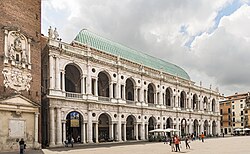
Before the broader Neoclassical movement took hold, Palladianism laid the groundwork, particularly in Great Britain. This style was inspired by the 16th-century Italian architect Andrea Palladio, whose work emphasized symmetry and perspective. The movement was fueled by the publication of influential texts, most notably Colen Campbell's Vitruvius Britannicus (1715), which showcased British buildings inspired by classical masters.
Leading figures like Richard Boyle, the 3rd Earl of Burlington, and William Kent championed a severe lack of ornamentation. A prime example is Chiswick House, a reinterpretation of Palladio's Villa Capra "La Rotonda," stripped of 16th-century flourishes to achieve a purer classical form.
The Rise of Neoclassicism
By the mid-18th century, the movement expanded beyond Palladianism to incorporate a wider array of classical influences, including direct studies of Ancient Greek sites. Italy served as an early epicenter; in Naples, architects like Luigi Vanvitelli and Ferdinando Fuga integrated classical forms into their work, while Giovanni Antonio Medrano began constructing truly neoclassical structures in the 1730s.
The style quickly spread across the Italian peninsula. In Florence, Gaspare Maria Paoletti developed an original neoclassical approach, while in Milan and Trieste, the sober aesthetic became associated with the reformist policies of the Habsburg enlightened monarchs.
Interior Design and the Adam Style
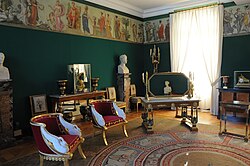
Neoclassicism also transformed the interiors of the home. Robert and James Adam, after studying ruins in Italy and Dalmatia, introduced the Adam style to Britain. Their goal was to simplify the heavy Baroque and Rococo styles, creating a lighter, more elegant atmosphere for Georgian houses.
The Adam brothers' work, documented in The Works in Architecture (1773–1779), integrated furniture and fittings into the overall architectural design, ensuring a cohesive aesthetic that influenced interiors across Europe.
The Greek Revival
As archaeological discoveries provided more accurate data on ancient structures, the Greek Revival emerged. This phase shifted focus from Roman interpretations toward the original Greek orders. This is evident in monumental public buildings, such as the Propylaea in Munich and various courthouses and museums across Europe and North America.

Global Regional Trends
France and Germany
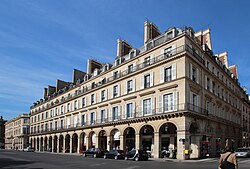
In France, Neoclassicism evolved into the Empire style under Napoleon, characterized by grandeur and imperial symbolism, as seen in the Arc de Triomphe du Carrousel. In Germany, architects like Karl Friedrich Schinkel and Leo von Klenze defined the era with masterpieces such as the Altes Museum and the Walhalla temple.
Great Britain, Ireland, and the United States
The English-speaking world adopted Neoclassicism for both private estates and civic identity. In the U.S., the style became synonymous with the new republic's democratic ideals, influencing the L'Enfant Plan for Washington, D.C., and the design of the White House.

Greece and Hungary
Following the establishment of the Kingdom of Greece in 1832, Neoclassicism was used to forge a modern national identity. Architects like Theophil Hansen created the "Athens Classical Trilogy." In Hungary, the style was championed by Mihály Pollack and József Hild, resulting in the Hungarian National Museum and several grand cathedrals.
The Ottoman Empire and Beyond
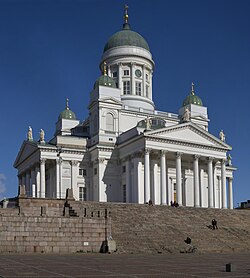
In Turkey, the style arrived in the 19th century via the Balyan family and Western architects. The result was often structural eclecticism, where neoclassical elements were layered over traditional Ottoman layouts, as seen in the Dolmabahçe Palace. Similarly, in Malta, British rule accelerated the popularity of the style, leading to the construction of the Rotunda of Mosta.
The Americas
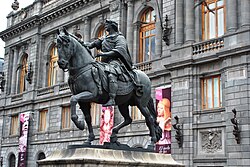
In Mexico, Manuel Tolsá was a pivotal figure, designing the Palacio de Minería. Across Latin America, the style was used to glorify political power, from the Imperial Palace of Petrópolis in Brazil to the Metropolitan Cathedrals of Bogotá and Buenos Aires.
Summary of Neoclassical Influence
| Style/Movement | Primary Influence | Key Characteristic | Notable Example |
|---|---|---|---|
| Palladianism | Andrea Palladio | Symmetry, purity, low ornamentation | Chiswick House |
| Adam Style | Classical Ruins | Light, elegant, integrated interiors | Syon House |
| Empire Style | Roman Imperialism | Grandeur, political power | Arc de Triomphe du Carrousel |
| Greek Revival | Ancient Greece | Strict adherence to Greek orders | Propylaea (Munich) |
| Federal Style | Neoclassicism | Civic order, republican ideals | The White House |
Frequently Asked Questions
What is the difference between Neoclassicism and Palladianism?
Palladianism is a specific precursor to Neoclassicism that focused strictly on the works of Andrea Palladio and the pursuit of symmetry and purity. Neoclassicism is a broader movement that incorporated a wider range of influences, including direct archaeological studies of Ancient Greek and Roman sites.
How did the Enlightenment influence this architectural style?
The Enlightenment promoted reason, logic, and empiricism. Architects applied these values by rejecting the "irrational" ornamentation of the Baroque and Rococo styles in favor of the mathematical proportions and structural clarity found in classical antiquity.
What is the "Athens Classical Trilogy"?
The Athens Classical Trilogy consists of three contiguous neoclassical buildings in central Athens: the Academy of Athens, the National Library of Greece, and the National and Capodistrian University of Athens.
Was Neoclassicism only popular in Europe?
No, it was a global phenomenon. It was widely adopted in the United States for government buildings, in Latin America for imperial and religious structures, and in the Ottoman Empire for palaces and municipal buildings.
What happened to Neoclassical architecture after 1840?
After 1840, it transitioned from a primary movement into a series of "revival" styles, such as the Greek Revival or Italianate. In the 20th century, it was largely superseded by Modernism, though it persists today through New Classical architecture.