Neo Soul: The Evolution of a Modern Soul Revival
Emerging from the creative hubs of the United States in the 1980s and early 1990s, neo soul arrived as a conscious revival of soul music. Developed by Black-American artists, the movement sought to reclaim the organic warmth of classic soul in an era increasingly dominated by producer-driven, digitally synthesized R&B. While it achieved massive mainstream success in the late 1990s, the genre has always been characterized by a tension between its commercial marketing and the bohemian spirit of the musicians who created it.
Key Facts
- Origins: Developed by Black-Americans in the U.S. during the 1980s and early 1990s.
- Core Philosophy: A soul revival movement emphasizing live instrumentation over synth-heavy production.
- Key Pioneers: D'Angelo, Erykah Badu, Maxwell, and Lauryn Hill.
- Influences: Heavily inspired by 1970s icons like Marvin Gaye, Stevie Wonder, and the collaborative work of Gil Scott-Heron and Brian Jackson.
- Terminology: The term was coined by Motown Records executive Kedar Massenburg for marketing purposes.
The Etymology and Definition of Neo Soul
The term "neo soul" was not created by the artists themselves, but by Kedar Massenburg of Motown Records in the late 1990s. Massenburg introduced the category to help listeners identify a specific sound following the commercial success of artists like Maxwell and D'Angelo—the latter's 1995 debut album, Brown Sugar, is often cited as the catalyst for the term's creation.
Massenburg acknowledged that genre labels can be unpopular among artists because they may suggest a passing trend. However, he argued that a classification was necessary to market these artists effectively. Many musicians within the movement remained ambivalent about the label, viewing their work as a challenge to musical orthodoxy rather than a marketing category.
Musical Characteristics and Influences
At its core, neo soul is a blend of older R&B styles and a bohemian approach to songwriting. It distinguishes itself from mainstream R&B by favoring a "digital-analog hybrid sound," a technique pioneered by groups like Tony! Toni! Toné! to refresh the digital landscape of the late 1980s.
The genre's lineage is deeply rooted in the 1970s. Artists frequently covered legends such as Al Green, Chaka Khan, and the Ohio Players to emphasize their connection to the past. Furthermore, the mellow instrumentation and eclectic sounds of Brian Jackson and Gil Scott-Heron served as a "musical Rosetta stone" for the movement's architects.
The History of the Movement
Early 1990s: Stylistic Foundations
The groundwork for neo soul was laid by acts such as Mint Condition, Terence Trent D'Arby, and Tony! Toni! Toné!. Raphael Saadiq, a member of the latter, became a pivotal figure both as a performer and a producer for other artists in the scene. Other early popularizers included Joi, Groove Theory, Zhané, Tony Rich, and Me'Shell NdegéOcello.
NdegéOcello's 1993 album Plantation Lullabies is frequently credited as the first true shot of the neo-soul movement. Similarly, Tony! Toni! Toné!'s 1993 release Sons of Soul is viewed as a precursor that opened the door for a new generation of singers to build upon the traditions of Stevie Wonder and Marvin Gaye.
Mid-to-Late 1990s: Mainstream Breakthrough
By 1999, neo soul had transitioned from a niche revival to a mainstream powerhouse. The commercial success of Lauryn Hill, Maxwell, Eric Benét, and Les Nubians brought the sound to mainstream radio. This shift influenced even the most prominent contemporary R&B stars; for example, R. Kelly incorporated soul-based textures and referenced Erykah Badu in his 1998 track "When a Woman's Fed Up."
![Although she rejects the term, Erykah Badu has been called "the first lady of neo soul" and "the queen of neo-soul".[43][44][45][36]](/images/95/6f/956fc8cd19cba481d2d44ea37fb05d8d90c696f68c588b6ae21cc411b6769077.jpg)
This era also saw the rise of powerful female voices. While Erykah Badu was often hailed as the "queen of neo-soul," Jill Scott emerged as a significant challenger. Scott first gained wide exposure through her collaboration with The Roots on the 1999 hit "You Got Me" before releasing her own acclaimed work.
Early 2000s: The Height of the Hype
The early 2000s marked the peak of the genre's visibility. Alicia Keys achieved broad popularity with her 2001 debut Songs in A Minor, while artists like India.Arie, Musiq Soulchild, and Bilal further defined the sound. Bilal's 2001 album 1st Born Second is regarded as an exemplary release of the era.
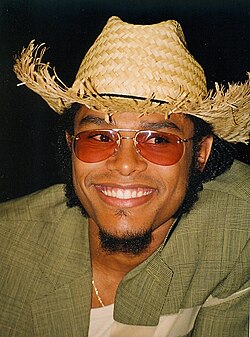
The movement also intersected with hip hop through the Soulquarians collective. The Roots and Common released influential albums such as Phrenology (2002) and Electric Circus (2003) that integrated neo soul elements.
![Common (shown in 2003) wore knit caps fashioned in the style of Marvin Gaye.[17]](/images/b9/fe/b9feaefda9146cd24e3339394a0968db4b5b040f8f2f4134a6aad4be5cbc3780.jpg)
2010s to Present: Diversification and Legacy
In the following decades, neo soul expanded globally and musically. D'Angelo's album Voodoo is often cited as the genre's crowning achievement, blending funk and Afrocentric rhetoric in a way that influenced subsequent artists like John Legend and Cee-Lo.
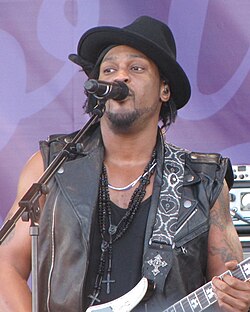
The 2010s saw a wave of "late-period" revelatory albums, including Maxwell's BLACKsummers'night (2009) and Frank Ocean's Channel Orange (2012). Modern artists such as Tyler, The Creator, Mayer Hawthorne, and Raheem DeVaughn continue to evolve the sound, with DeVaughn describing his eclectic style as an "R&B Hippy Neo-Soul Rock Star."
![Raheem DeVaughn performs socially conscious and love-themed songs, and has been compared to Donny Hathaway and Marvin Gaye.[52][53]](/images/6e/e9/6ee9d0bc5ef33ddc89fa710d45ed47c0dfc665413cc8b1eac61f3539988864f9.jpg)
Neo Soul Summary
| Category | Details |
|---|---|
| Primary Influences | Soul, R&B, Hip Hop, Jazz, Funk, Quiet Storm |
| Key Era | 1980s (Origins) $\rightarrow$ Late 1990s (Mainstream Peak) |
| Defining Artists | D'Angelo, Erykah Badu, Maxwell, Lauryn Hill, Jill Scott |
| Core Sound | Live instrumentation, organic vocals, digital-analog hybrid |
| Notable Albums | Brown Sugar, Voodoo, Songs in A Minor |
Frequently Asked Questions
Who coined the term "neo soul"?
The term was coined by Kedar Massenburg of Motown Records in the late 1990s as a marketing category to help listeners understand the style of artists like D'Angelo and Erykah Badu.
How does neo soul differ from contemporary R&B?
Neo soul generally rejects the synth-heavy, producer-driven approach of mainstream R&B in favor of live instrumentation, traditional songwriting values, and influences from 1970s soul.
Which album is considered the beginning of the movement?
Me'Shell NdegéOcello's 1993 debut album Plantation Lullabies is often credited as the first shot of the neo-soul movement, while Tony! Toni! Toné!'s Sons of Soul is also viewed as a key precursor.
Who are the Soulquarians?
The Soulquarians were a collective of artists and producers, including hip hop acts like The Roots and Common, who incorporated neo soul elements into their music during the early 2000s.
Is neo soul still relevant today?
Yes, the genre has diversified and expanded. Its influence can be heard in the works of modern artists like Frank Ocean, Tyler, The Creator, and various international acts who continue to blend soul with eclectic musical styles.