Nectarivores: The Specialized Animals That Feed on Floral Sugar
In the natural world, a nectarivore is an animal that derives its primary energy and nutrient requirements from nectar—the sugar-rich fluid produced by flowering plants. While nectar provides a high-energy fuel source, relying on it requires unique biological adaptations to handle its chemical composition and nutritional gaps.
Nectar is essentially a solution of simple sugars, including sucrose, glucose, and fructose, which can make up as much as 80% of the fluid. These sugars are easily ingested and digested, making nectar an efficient source of nutrition. However, this sweetness comes with a challenge: nectar is often diluted by the plant itself or by rainfall, forcing nectarivores to develop mechanisms to expel excess water.
Despite its energy density, nectar is an incomplete food source. It contains very low quantities of proteins and amino acids and is severely deficient in essential vitamins and minerals. Consequently, very few organisms rely exclusively on nectar throughout their entire life cycle; most supplement their diet with other sources, such as insects, or limit their nectar consumption to specific life stages.
Key Facts
- Primary Diet: Nectarivores consume sugar-rich floral secretions consisting mainly of sucrose, glucose, and fructose.
- Nutritional Gaps: Nectar is low in proteins, amino acids, vitamins, and minerals.
- Coevolution: Many nectarivores and flowers have evolved together, such as hummingbirds developing long beaks for tubular flowers.
- Nectar Robbing: Some species steal nectar by piercing the flower base, bypassing the reproductive organs and avoiding pollination.
- Water Management: Specialized kidneys or excretion methods are necessary to handle the high water content of nectar.
The Dynamics of Pollination and Nectar Robbing
Plants produce nectar specifically to attract pollinators, which transport pollen between flowers to facilitate reproduction. To ensure the right animals visit, flowers often evolve specialized structures that only specific morphological shapes can access. This relationship is a prime example of coevolution, where the pollinator and the plant evolve in tandem.
However, not all nectar-feeders are helpful. Nectar robbers (or nectar thieves) consume the reward without providing the service of pollination. Some species act as both robbers and pollinators depending on the plant species they encounter.
Nectarivores Across the Animal Kingdom
Insects
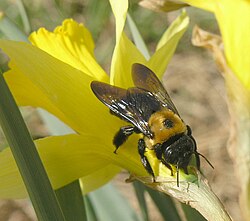
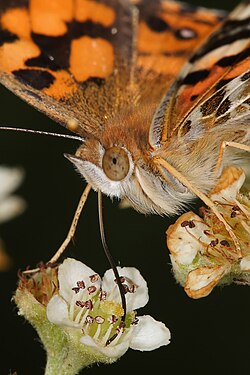
Nectarivory is most common among insects, particularly within the families Coleoptera, Lepidoptera, Diptera, Hymenoptera, and Hemiptera. While many are pollinators, others, like carpenter bees, engage in nectar robbing by piercing the base of deep corollas (the petal structure of a flower) to reach the nectary directly.
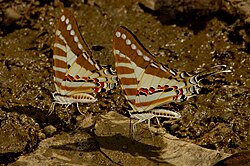
Because nectar provides ample hydration, many nectar-feeding insects rarely need to drink water. However, adult butterflies and moths often engage in mud puddling—gathering on moist soil to obtain salts and amino acids not found in nectar.
Arachnids
While spiders are typically carnivorous, some consume nectar. This is most common among wandering species that live in foliage, as web-building spiders do not exhibit this behavior. Some, like the jumping spider Bagheera kiplingi, make nectar a primary food source, while crab spiders use it opportunistically.
Birds
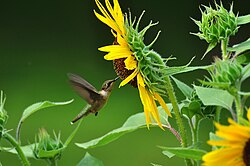
No bird species consumes nectar exclusively; most maintain a mixed diet including insects. However, three lineages are highly specialized: hummingbirds (Trochilidae), sunbirds (Nectariniidae), and honeyeaters (Meliphagidae). These birds have evolved higher rates of sugar absorption and specialized kidney functions to rapidly excrete the water content of nectar as hyposmotic urine (urine with a lower concentration of dissolved substances than blood).
Mammals
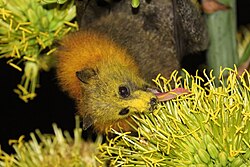
Many bat species are nectarivores, particularly in the Americas, where they share a similar ecological niche with hummingbirds. Some bats have a close association with columnar cacti, providing pollination in exchange for nectar. Because of this specialization, these bats may be at a higher risk of extinction if their specific plant partners disappear.
The honey possum is a unique marsupial that feeds exclusively on nectar and pollen. Due to the effort required to gather enough food, it raises fewer young, which grow more slowly than other marsupials of its size. Additionally, the Ethiopian wolf (Canis simensis) has been observed feeding on the nectar of Kniphofia foliosa, making it the only known macropredator that may act as a pollinator.
Summary of Nectarivore Groups
| Group | Examples | Key Adaptation/Behavior | Pollination Role |
|---|---|---|---|
| Insects | Bees, Butterflies, Moths | Mud puddling for minerals | Both Pollinators and Robbers |
| Birds | Hummingbirds, Sunbirds | Rapid excretion of hyposmotic urine | Primary Pollinators |
| Mammals | Nectar bats, Honey possum | Specialized diets; hovering flight (bats) | Primary Pollinators |
| Arachnids | Jumping spiders, Crab spiders | Wandering (non-web building) habits | Incidental/Minimal |
Frequently Asked Questions
What is the difference between a pollinator and a nectar robber?
A pollinator consumes nectar while inadvertently transporting pollen between flowers, aiding plant reproduction. A nectar robber consumes the nectar without touching the plant's reproductive organs, often by piercing the flower's base, thus providing no pollination benefit.
Why do butterflies engage in mud puddling?
Because nectar is deficient in minerals and vitamins, butterflies and moths visit moist soil or mud to ingest dissolved salts and amino acids that are essential for their survival.
Can any animal survive on nectar alone?
Very few. Most nectarivores supplement their diet with insects or other nutrients. The honey possum is one of the rare exceptions, feeding exclusively on nectar and pollen.
How do nectar-feeding birds handle the high water content of nectar?
Specialized birds, such as hummingbirds, have evolved kidneys capable of producing large quantities of hyposmotic urine, allowing them to rapidly eliminate excess water while retaining necessary nutrients.
Which mammal is considered a macropredator that pollinates?
The Ethiopian wolf (Canis simensis) is the only known macropredator observed feeding on nectar (specifically from Kniphofia foliosa) and potentially acting as a pollinator.