Natural History: The Evolution of Observational Science
Natural history is a domain of inquiry focused on organisms—including animals, fungi, and plants—within their natural environments. Unlike experimental sciences that rely on controlled laboratory settings, natural history leans heavily toward observational methods. Those who dedicate themselves to this study are known as naturalists or natural historians.
While it encompasses rigorous scientific research, natural history is not limited to it. It serves as a cross-discipline umbrella for many specialty sciences, such as geobiology, and integrates the systematic study of natural objects. From its roots in the ancient Greco-Roman and medieval Arab worlds to the modern era, it has evolved from a general description of the world into a sophisticated foundation for biological and geological sciences.
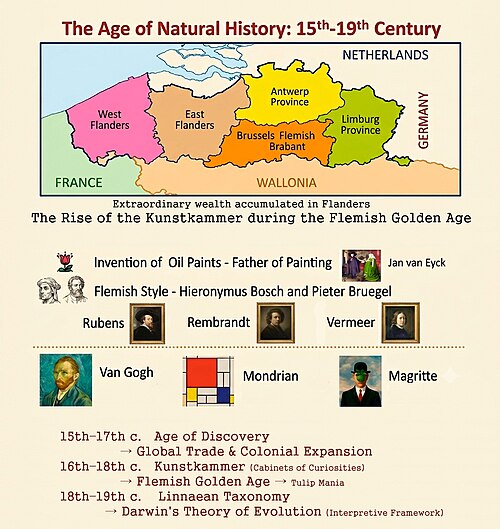
Key Facts
- Methodology: Primarily observational rather than experimental.
- Scope: Covers organisms (plants, animals, fungi) and their interactions with the environment.
- Historical Shift: Transitioned from a broad description of all nature to a specialized biological and geological focus.
- Key Figures: Includes Aristotle, Pliny the Elder, Carl Linnaeus, and Charles Darwin.
- Modern Application: Essential for determining conservation priorities and supporting mental health through active nature observation.
The Evolution of Natural History
Ancient and Prehistoric Foundations
Long before the formalization of Western science, humans utilized traditional ecological knowledge—indigenous ways of understanding the more-than-human world. This deep, experiential understanding is now recognized as a vital part of the broader definition of natural history.
Western natural history began with Aristotle and other ancient philosophers who analyzed the diversity of the natural world. Pliny the Elder, in his encyclopedia published around 77–79 AD, viewed natural history as a comprehensive study of everything in the world, including astronomy, geography, medicine, and technology.
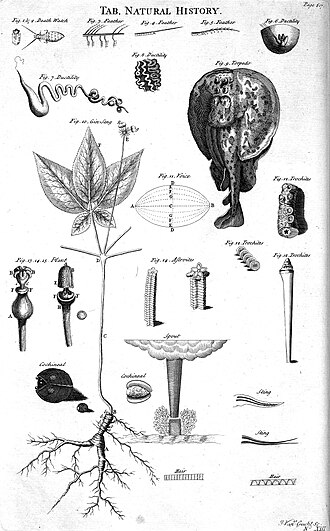
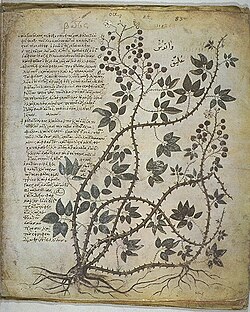
Another enduring pillar was the De Materia Medica, written by Pedanius Dioscorides between 50 and 70 AD. This text remained a primary resource for over 1,500 years. During this era, the scala naturae (Great Chain of Being) prevailed—a linear scale that arranged minerals, plants, and animals in order of perceived perfection, culminating in humans.
Medieval and Renaissance Developments
In medieval Europe, academic knowledge was split between the humanities and divinity, with nature studied primarily through texts. However, the Arabic and Oriental worlds continued to advance the field rapidly. In China, Li Shizhen's Bencao gangmu is regarded as one of the greatest scientific achievements of the Ming dynasty.
The Renaissance sparked a return to direct observation. Scholars began collecting exotic specimens, and the study of nature split into two branches: descriptive natural history (biological and geological sciences) and natural philosophy (the analytical study of nature, corresponding to modern physics and chemistry).
The Modern Era and the Rise of Theory
By the 18th century, natural history was often driven by practical needs. Carl Linnaeus sought to improve Sweden's economic condition through better classification, while the Industrial Revolution spurred the growth of geology to locate mineral deposits. The 19th century saw the rise of "parson-naturalists" and a significant contribution from women, particularly in botany.
The field underwent a massive transformation through the travels of Henry Walter Bates, Charles Darwin, and Alfred Russel Wallace. By collecting thousands of specimens from the Amazon, Galápagos, and Indonesia, they helped shift biology from a purely descriptive discipline to a theory-based science. Later, Alexander von Humboldt influenced the field by viewing nature as an integrated organism rather than a mere mechanism.
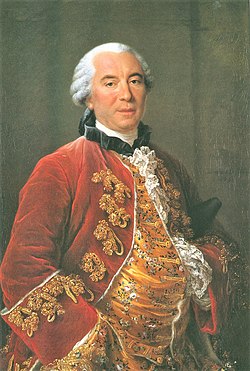
Institutionalizing Nature: Museums and Societies
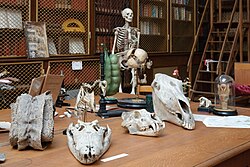
Natural history museums evolved from private "cabinets of curiosities" into professional research centers. In the 19th century, these collections became essential teaching tools for morphological research. Similarly, natural history societies emerged globally to maintain records of specific groups, such as ornithology (birds), entomology (insects), and mycology (fungi).
In Britain, societies like the Natural History Society of Northumbria (1829) and the London Natural History Society (1858) flourished, often fueled by specimens sent back from tropical colonies. Today, professional organizations like the Ecological Society of America continue to champion natural history as the "heart and soul of ecology."
Summary of Natural History Evolution
| Era | Primary Focus | Key Methodology | Notable Influence |
|---|---|---|---|
| Ancient | All natural objects, technology, and astronomy | General Encyclopedia/Observation | Pliny the Elder, Aristotle |
| Medieval/Renaissance | Botanical and zoological specimens | Textual study $\rightarrow$ Direct observation | Li Shizhen, Carl Linnaeus |
| 19th Century | Evolution, biogeography, and morphology | Global expedition and collection | Darwin, Wallace, Humboldt |
| Modern (Post-1900) | Organisms in their environment | Cross-disciplinary scientific research | Marston Bates, G.A. Bartholomew |
Frequently Asked Questions
What is the difference between natural history and natural philosophy?
Historically, natural history was the descriptive study of biological and geological sciences, while natural philosophy was the analytical study of nature, which eventually evolved into modern physics and chemistry.
How does natural history differ from modern biology?
While biology often relies on experimental methods and laboratory settings, natural history focuses on the direct observation of organisms in their natural environments, including their behavior and relationships with other species.
What is the "Great Chain of Being"?
The scala naturae, or Great Chain of Being, was a concept used from ancient Greece until the 18th century that arranged all forms of life and minerals on a linear scale of increasing perfection, with humans at the top.
Why is natural history still important today?
Natural history observations are critical for forming scientific theories and determining conservation priorities. Additionally, active observation of nature has been linked to mental health benefits for individuals.
Who were the "parson-naturalists"?
These were English clergymen, such as Gilbert White and John Ray, who studied plants and animals, often using their findings to argue for the existence or goodness of God through natural theology.