Natural History Museum London: A Legacy of Science and Architecture
Standing as a global beacon of biological and geological knowledge, the Natural History Museum in South Kensington, London, is more than just a repository of specimens; it is a "cathedral to nature." With over 7.1 million visitors in 2025, it remains one of the most visited attractions in the United Kingdom, blending Victorian architectural grandeur with cutting-edge scientific research.
Key Facts
- Established: 1881 (145 years ago).
- Founder: Richard Owen.
- Architect: Alfred Waterhouse.
- Annual Visitors: 7,116,929 (2025).
- Key Exhibits: Hope (blue whale skeleton), Dippy (Diplodocus replica), and Sophie (Stegosaurus).
- Location: Kensington & Chelsea, London, SW7.
Early History and the Sloane Collection
The museum's vast holdings began with the collection of Sir Hans Sloane (1660–1753), an Ulster doctor whose extensive array of dried plants, animal skeletons, and human remains was purchased by the British Government via a lottery. Originally housed in Montagu House, Bloomsbury, as part of the British Museum in 1756, the collection suffered significant losses in the early 19th century due to poor conservation and mismanagement.
By 1833, records indicated that none of the 5,500 insects originally listed in the Sloane catalogue remained. This notoriety for specimen loss, combined with administrative favoritism, eventually convinced leadership that a dedicated facility was necessary to preserve the natural world's treasures.
The Architecture of a "Temple of Nature"
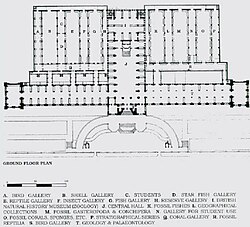
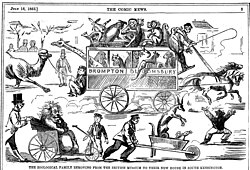
Recognizing the need for more space, Richard Owen spearheaded the move to South Kensington. Following a design competition in 1864, the project was eventually led by Alfred Waterhouse. Waterhouse revised the original plans by Captain Francis Fowke, introducing an idiosyncratic Romanesque style—a revival of medieval European architecture characterized by rounded arches and ornate stonework.
Construction took place between 1873 and 1880, with the museum officially opening on April 18, 1881. While budgetary constraints forced the abandonment of planned side wings, the resulting building became a landmark of Victorian design.
Evolution of the Site
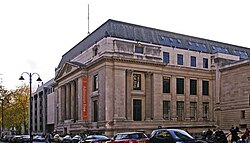
Over the decades, the museum has expanded and evolved. In 1985, it merged with the adjacent Geological Museum, which was renowned for its earthquake machine and active volcano model. This merger led to the creation of the Earth Galleries (focused on geology) and the Life Galleries (focused on biology).
More recently, the Darwin Centre was added to provide modern facilities for the storage and study of the museum's millions of specimens, ensuring their preservation for future generations.
The Path to Independence
For nearly a century, the institution operated as a department of the British Museum, officially titled the British Museum (Natural History). Prominent scientists, including Charles Darwin, Alfred Russel Wallace, and Thomas Henry Huxley, petitioned for its independence as early as 1866.
Legal separation finally occurred via the British Museum Act 1963. However, the formal name change to the Natural History Museum was not legally finalized until the Museums and Galleries Act 1992.
Iconic Exhibits and Collections
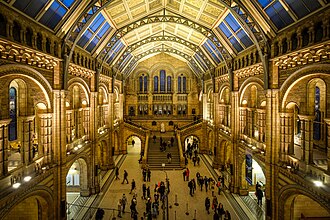
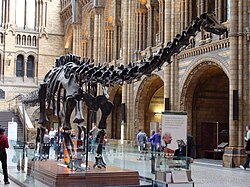
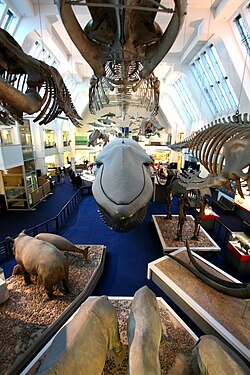
The museum is world-famous for its centerpiece displays in the Hintze Hall. For over a century, the hall was dominated by "Dippy," a 105-foot replica of a Diplodocus carnegii gifted by Andrew Carnegie in 1905.
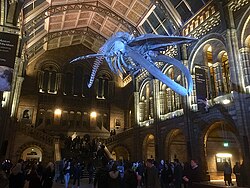
In 2017, Dippy was replaced by "Hope," the skeleton of a young blue whale, symbolizing the museum's shift toward highlighting conservation and the fragility of the planet.
The Spirit Collection and Rare Finds
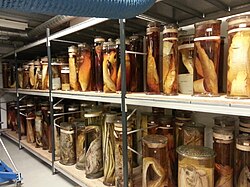
Beyond the skeletons, the museum houses the Spirit Collection—specimens preserved in formalin and saline. A notable resident is "Archie," an 8.62-metre giant squid captured in 2004 near the Falkland Islands, stored in a massive acrylic tank in the Darwin Centre.
Collection Highlights Summary
The museum's diversity is reflected in its wide range of treasures, from extraterrestrial rocks to extinct avian species.
| Category | Specimen | Significance |
|---|---|---|
| Meteorites | Otumpa Iron Meteorite | Weighs 635 kg; found in Argentina (1783) |
| Paleontology | Sophie the Stegosaurus | The most complete Stegosaurus fossil ever discovered |
| Gemstones | Aurora Pyramid of Hope | Collection of 296 multi-colored natural diamonds |
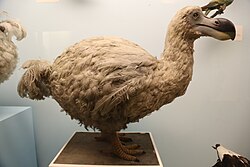
| Extinct Species | Dodo Skeleton | Reconstructed from bones over 1,000 years old |
| Space | Apollo 16 Moon Rock | Sample collected during the 1972 lunar mission |
Museum Layout and Zones
To manage the flow of millions of visitors, the museum is divided into color-coded zones:
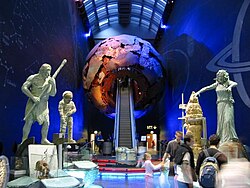
- Red Zone: Focuses on geology, including the Earth Hall, Volcanoes and Earthquakes, and Human Evolution.
- Green Zone: Features the Hintze Hall, Birds, Minerals, and the Anning Rooms.
- Blue Zone: Dedicated to Dinosaurs, Mammals, and Marine Invertebrates.
- Orange Zone: Includes the Darwin Centre, Wildlife Garden, and Zoology Spirit Building.
Future Developments
The museum is currently expanding its strategic footprint. Construction began in 2025 for a new facility at the Thames Valley Science Park in Shinfield, Berkshire. This site is expected to be completed by 2027, with a planned opening date in 2031, to better house and manage the museum's growing collections.
Frequently Asked Questions
Why was the museum separated from the British Museum?
The separation was driven by a need for administrative independence and more space. Naturalists like Darwin and Huxley advocated for a separate board of trustees to better manage the specific needs of natural history research and curation.
Who is "Hope" in the Hintze Hall?
Hope is the skeleton of a young blue whale. It replaced the Diplodocus replica (Dippy) in 2017 to serve as a symbol of hope for the future of the planet and the importance of conservation.
What is the Darwin Centre?
The Darwin Centre is a modern addition to the museum that serves as a hub for research and storage. It allows the public to see "behind the scenes" of how specimens are preserved and studied.
How can I visit the museum via public transport?
The museum is easily accessible via the South Kensington Underground station. Local bus routes including the 360 (Kensington Museums) and 14, 74, or C1 (Victoria & Albert Museum) also serve the area.