Hans Friedrich Gadow: Pioneer of Avian Classification
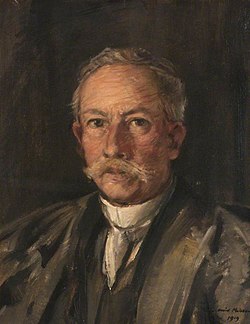
Hans Friedrich Gadow (1855–1928) was a distinguished German-born ornithologist who spent much of his professional life in Britain. He is best remembered for transforming the way scientists categorize birds, moving away from superficial observations toward a system based on anatomical and morphological characters—the physical structure and form of the organisms.
Gadow's approach was revolutionary for its time, as he integrated phylogenetic principles (the study of evolutionary relationships) into avian taxonomy. His work provided a scientific foundation that influenced generations of researchers, including Alexander Wetmore, who utilized Gadow's findings to classify North American birds.
Early Life and Academic Foundation
Born in Stary Kraków, Pomerania, Gadow was the son of a Prussian royal forest inspector. His academic journey took him through three prestigious institutions: the universities of Berlin, Jena, and Heidelberg. During his studies, he was mentored by some of the most prominent scientists of the era, including Ernst Haeckel at Jena and the anatomist Carl Gegenbaur at Heidelberg.
In 1880, Gadow's expertise led him to the Natural History Museum in London. He arrived at the request of Albert Günther to contribute to the museum's comprehensive Catalogue of Birds. It was during this period that Gadow began developing his influential sequence of bird orders and families.
Contributions to Ornithology and Science
Gadow's primary contribution to science was the establishment of a new sequence for bird classification. Unlike previous works, Gadow's system was based on a rigorous comparison of anatomical features and incorporated the research of Max Fürbringer. This phylogenetic approach remained a standard in the field, with modifications by James L. Peters and Alexander Wetmore, from the 1930s through the 1960s.
His specific contributions to the Catalogue of Birds included:
- Volume VIII: Focused on nuthatches, shrikes, and titmice.
- Volume IX: Focused on honeyeaters and sunbirds.
Academic Appointments and Honors
In 1884, Gadow's career reached a new milestone when he succeeded Osbert Salvin as the Curator of the Strickland Collection at Cambridge University. Simultaneously, he was appointed as a Lecturer on the Morphology of Vertebrates. His professional standing was further cemented by his membership in the British Ornithologists' Union (1881) and his election as a fellow of the Royal Society (1892). He became a naturalized British citizen in 1882.
Beyond the Laboratory: Travel and Publications
Gadow's interests extended beyond the museum. In 1895 and 1896, he and his wife, Clara Maud Paget, traveled through northern Spain, journeying from Galicia to the Basque Country. These expeditions resulted in the 1897 publication In Northern Spain, a multidisciplinary work covering fauna, flora, ethnography, and geography.
His broader bibliography includes several key scientific texts:
- Classification of the Vertebrata (1898)
- The Last Link (1898), a translation of Ernst Haeckel's work.
- Anatomical articles contributed to Alfred Newton's Dictionary of Birds.
Scientific Legacy and Commemoration
The impact of Gadow's work is preserved not only in textbooks but also in biological nomenclature. He is commemorated in the names of three Mexican lizard species: Abronia gadovii, Anolis gadovii, and Urosaurus gadovi. His wife, Clara Maud Gadow, is also honored in the scientific name of the Mexican lizard Sceloporus gadoviae.
| Category | Details |
|---|---|
| Lifespan | 8 March 1855 – 16 May 1928 |
| Key Specialization | Ornithology and Vertebrate Morphology |
| Major Institutions | Natural History Museum (London), Cambridge University |
| Key Methodology | Phylogenetic classification based on anatomy |
| Notable Publications | Classification of the Vertebrata, In Northern Spain |
Key Facts
- Gadow shifted bird classification from superficial traits to phylogenetic principles based on anatomy.
- He served as the Curator of the Strickland Collection at Cambridge University starting in 1884.
- His classification system influenced avian taxonomy from the 1930s until the 1960s.
- He was a fellow of the Royal Society and a member of the British Ornithologists' Union.
- Four species of Mexican lizards are named after him and his wife.
Frequently Asked Questions
What was Gadow's main contribution to ornithology?
Gadow established a new sequence of bird orders and families based on phylogenetic principles and the comparison of anatomical and morphological features, rather than relying on earlier, less scientific methods.
Which scientists were influenced by Gadow's work?
His classification methods were notably utilized and modified by Alexander Wetmore and James L. Peters.
Where did Hans Friedrich Gadow study?
He studied at the universities of Berlin, Jena, and Heidelberg, learning under influential figures such as Ernst Haeckel and Carl Gegenbaur.
Did Gadow publish work outside of bird classification?
Yes, he wrote In Northern Spain (1897), which detailed his observations on the geography, flora, fauna, and ethnography of the region.
How is Gadow remembered in zoology today?
Beyond his academic influence, he is commemorated through the scientific names of three species of Mexican lizards (Abronia gadovii, Anolis gadovii, and Urosaurus gadovi).