Bird Beaks: Anatomy, Function, and Evolutionary Adaptation
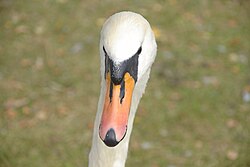
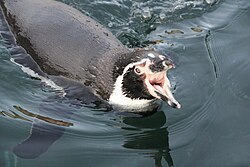
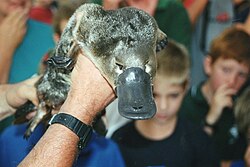
The beak, also known as the bill, is a specialized external rostrum structure most commonly associated with birds. Far more than just a mouth, the beak serves as a versatile tool essential for survival, used for everything from gathering food and killing prey to preening feathers and engaging in complex courtship rituals. While we primarily associate beaks with avian species, similar structures are found in a diverse array of animals, including certain non-avian theropods, pterosaurs, cetaceans, turtles, and monotremes like the platypus.
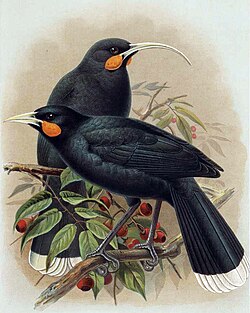
Though beaks vary wildly in size, color, and shape across different species, they share a fundamental biological blueprint that allows them to be both lightweight and incredibly strong.
Key Facts
- Composition: Beaks consist of bony mandibles covered by a keratinized epidermal layer called the rhamphotheca.
- Versatility: They are used for eating, grooming (preening), defense, and social communication.
- Sensory Capability: Some species possess specialized organs in their bills to detect vibrations or motion.
- Thermoregulation: Certain birds use their beaks as radiators to exchange heat with the environment.
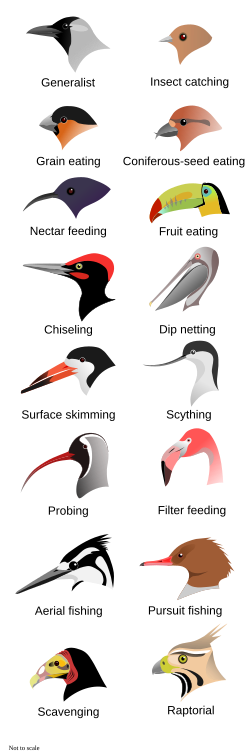
- Diversity: Beak shapes are highly adapted to specific feeding methods, such as probing, grasping, or crushing.
The Anatomy of a Beak
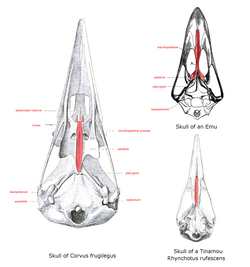
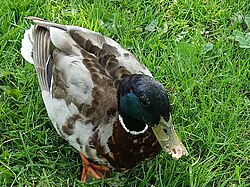
At its core, a beak is composed of two bony projections known as the upper and lower mandibles. These bones provide the structural framework necessary for the beak's strength.
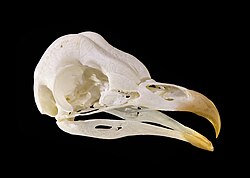
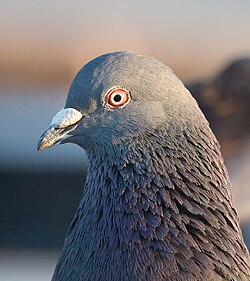
This bony core is encased in the rhamphotheca, a thin but tough layer of keratinized epidermis. This outer shell protects the bone and can be worn down or replaced over time. In some cases, injuries can expose the underlying periosteum (the membrane covering the bone), as seen in birds that suffer traumatic beak damage.
Structural Components and Terminology
To describe the complex geometry of a beak, ornithologists use specific anatomical terms:
- Culmen: The dorsal ridge of the upper mandible, measured in a straight line from the tip to the forehead.
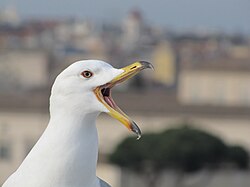
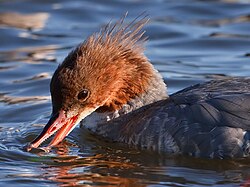
- Tomia: The cutting edges of the beak. Some birds, like the common merganser, have sawtooth serrations on their tomia to grip slippery prey.
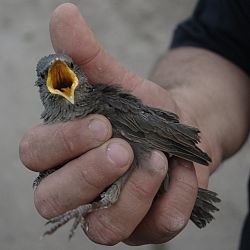
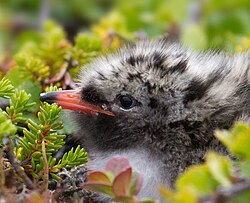
- Gape: The opening of the mouth. In juvenile altricial birds (those born helpless), the gape is often brightly colored to signal parents for food.
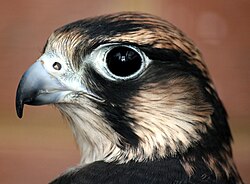
- Nares: The nostrils located at the base of the beak leading to the respiratory system. Some raptors, like falcons, have a small tubercule within each naris.
- Cere: The fleshy, waxy patch at the base of the upper mandible found in many species.
- Nail: The hard, often distinct tip of the upper mandible.
![A bird's culmen is measured in a straight line from the tip of the beak to a set point—here, where the feathering starts on the bird's forehead.[27]](/images/1e/d4/1ed46ee4546f797784931d7b8e5595e1ed5468940d099d8f7b3c920f187c6cf3.jpg)
Specialized Features
Depending on the species, beaks may include unique adaptations. For example, some chicks possess an egg tooth, a small projection used to break through the shell during hatching. Others have rictal bristles—stiff feathers around the mouth that can assist in prey capture or sensory detection.
Primary Functions of the Beak
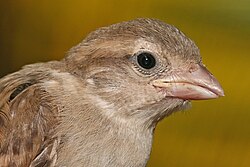
The beak is the primary interface between a bird and its environment, performing several critical roles:
Feeding and Foraging
The most obvious function is eating. Beaks are evolved for specific diets: probing for insects, cracking seeds, or tearing meat. Some birds use their beaks for sensory detection; for instance, the kiwi and certain shorebirds have a bill tip organ that detects motion or vibrations in the soil.

Maintenance and Social Behavior
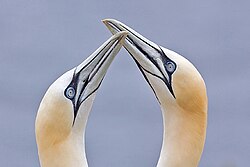
Birds use their beaks for preening, the process of cleaning and arranging feathers to maintain waterproofing and insulation. Beaks also play a role in social bonding and communication. Some species engage in billing, where they clatter their beaks together during courtship or territorial displays.
Thermoregulation
In some species, the beak acts as a thermal radiator. By controlling blood flow to the beak, birds can dissipate excess body heat into the air, helping them maintain a stable internal temperature.
Comparative Beak Summary
| Feature | Avian Beak (General) | Platypus Bill | Raptor Beak |
|---|---|---|---|
| Primary Material | Keratin over Bone | Leathery Skin/Sensory Tissue | Hard Keratin/Strong Bone |
| Key Function | Feeding, Preening | Underwater Navigation/Detection | Tearing Prey |
| Special Feature | Rhamphotheca | Electro-receptors | Naris Tubercule |
Frequently Asked Questions
What is the rhamphotheca?
The rhamphotheca is the thin, keratinized layer of the epidermis that covers the bony mandibles of a bird's beak, providing a hard, protective outer shell.
How do birds use their beaks for more than just eating?
Beyond feeding, birds use their beaks for preening their feathers, defending themselves, performing courtship displays, and in some cases, regulating their body temperature through heat exchange.
What is the purpose of the egg tooth?
The egg tooth is a temporary structure found in many bird chicks that allows them to crack the internal surface of the eggshell to hatch.
Do animals other than birds have beaks?
Yes. Beak-like structures are found in monotremes (platypuses and echidnas), turtles, certain fish (like parrotfish and billfish), and extinct groups such as pterosaurs.
What is the difference between the culmen and the tomia?
The culmen is the top ridge of the upper mandible, while the tomia are the sharp cutting edges of the beak used for gripping or slicing.