Biological Identification: Methods for Classifying Organisms
In the field of biology, identification is the essential process of assigning a pre-existing taxon name—a formal name representing a specific group or individual—to an organism. Whether a scientist is tracking a single whale across an ocean or classifying a newly discovered plant, identification provides the necessary framework for organizing the natural world.
This process is fundamental to several scientific disciplines, including ecology, wildlife management, and conservation biology, where knowing exactly which species or individual is being studied is critical for accurate data collection and environmental protection.
Types of Biological Identification
Identification generally falls into two categories: the identification of individuals and the identification of species.
Individual Identification
Individual identification focuses on distinguishing one specific organism from another of the same species. This is often achieved through natural body features, molecular markers (similar to paternity tests), or experimentally created markers, such as specific color dot patterns. These methods allow researchers to track the movements and health of specific animals over time.
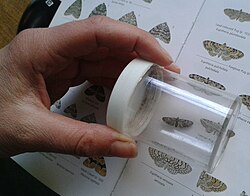
Species Identification
The more common form of identification involves assigning an organism to a common name (such as "lion") or a formal scientific name (such as Panthera leo). This process relies on inherited characters—traits passed down through generations—which define a specific class of organisms. These characters can be:
- Morphological: The physical form and structure of the organism.
- Anatomical: The internal structure of the organism.
- Physiological: The chemical and physical functions of the body.
- Behavioral: The specific actions and habits of the organism.
- Molecular: The genetic makeup and molecular markers.
Methods of Identification
Biologists use a variety of manual and computerized tools to determine the identity of an organism. In some contexts, the term determination is used as a synonym for identification, particularly when referring to "determination slips."
Common identification methods include:
- Identification Keys: Structured tools (often dichotomous) that lead the user to the correct taxon through a series of choices.
- Field Guides: Illustrated books containing species accounts for quick reference in nature.
- Natural History Collections: Comparing a specimen against preserved examples in museums or herbaria.
- Computerized Analysis: Using images and pre-trained knowledge bases to automatically identify species via computer vision.
Key Facts
- Identification assigns a pre-existing taxon name to an organism.
- Individual identification uses unique markers for ecology and conservation.
- Species identification relies on inherited morphological, anatomical, physiological, behavioral, or molecular traits.
- Methods range from manual field guides and identification keys to automated computer vision and DNA profiling.
| Approach | Focus | Primary Markers Used |
|---|---|---|
| Individual Identification | Single Organism | Molecular markers, body features, artificial dots |
| Species Identification | Taxon/Group | Inherited morphological, anatomical, and genetic traits |
Frequently Asked Questions
What is the difference between identification and determination?
In biological contexts, the terms are often used interchangeably, though "determination" is specifically seen in terms like "determination slips."
How is individual identification used in conservation?
It allows wildlife managers and conservation biologists to track specific individuals within a population to monitor health, migration, and population dynamics.
What are molecular markers?
Molecular markers are natural individualistic genetic sequences used to identify organisms, functioning similarly to the tests used for maternity or paternity identification.
Can computers identify species automatically?
Yes, computerized identification involves taking images of an organism and comparing them against a pre-trained knowledge base containing species information.
What is a taxon name?
A taxon name is a pre-existing scientific name or code assigned to a group or individual organism to categorize it within the biological hierarchy.