Natufian Culture: The Bridge to Sedentism and Agriculture
The Natufian culture represents a pivotal chapter in human history, marking the transition from nomadic foraging to settled community life. Emerging in the late Epipalaeolithic period of the Near East in West Asia between 15,000 and 11,500 years Before Present (BP), the Natufians challenged the traditional archaeological narrative that agriculture was a prerequisite for permanent settlement.
Unlike their predecessors, Natufian populations established sedentary or semi-sedentary communities while still primarily relying on wild resources. This shift in lifestyle laid the groundwork for the Neolithic Revolution, making the Natufians likely ancestors to the builders of the world's first true Neolithic settlements.
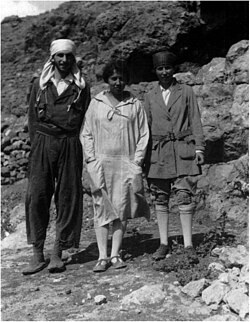
Key Facts
- Time Period: 15,000–11,500 BP (Late Epipalaeolithic).
- Region: The Levant, spanning modern-day Israel, Palestine, Jordan, Sinai, Lebanon, and Syria.
- Defining Trait: Sedentism (permanent settlement) prior to the widespread adoption of farming.
- Agricultural Roots: Earliest evidence of rye cultivation found at Tell Abu Hureyra.
- Technological Feats: Advanced lime plaster production and the world's oldest known brewery.
Environmental Context and Geography
The Natufian culture flourished across the Levant. Their geographical range extended from the Sinai Peninsula in the south to a long arm reaching into Lebanon and Syria in the north. Their development was closely tied to climatic shifts; they appeared during the Bølling–Allerød warming period, a time of rising temperatures that expanded available resources.
![The Natufian appeared at the time of the Bølling–Allerød warming, before temperatures dropped drastically again during the Younger Dryas. Temperatures would rise again at the end of the Younger Dryas, and with the onset of the Holocene and the Neolithic Revolution. Climate and Post-Glacial expansion in the Near East, based on the analysis of Greenland ice cores.[11]](/images/35/94/3594be0c6accb11f7af11763dbfc2e609ab0039736d6a3826aa39ac33d60d866.jpg)
However, this stability was interrupted by the Younger Dryas, a period of drastic temperature drops. Following this cold snap, temperatures rose again, leading into the Holocene epoch and the subsequent Neolithic Revolution.
Settlements and Material Culture
The Natufians are distinguished by their move toward permanent dwellings. Excavations at sites like Abu Hureyra have revealed pit dwellings, indicating a structured approach to living that differed from the temporary camps of earlier hunter-gatherers.
Tools and Technology
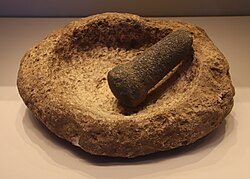
The Natufian toolkit was heavily geared toward processing wild grains and nuts. They utilized heavy-duty stone tools, including mortars (deep bowls used for crushing) and pestles (heavy tools used for grinding).
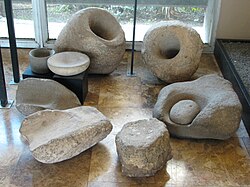
Beyond basic survival, the Natufians demonstrated surprising technical sophistication. In the Upper Jordan Valley at Nahal Ein Gev II, evidence shows they produced high-quality lime plaster 2,000 years earlier than previously believed. Furthermore, researchers discovered 13,000-year-old beer residue in a cave near Haifa, suggesting the world's oldest brewery and a culture of ritual feasting.
Art and Ritual
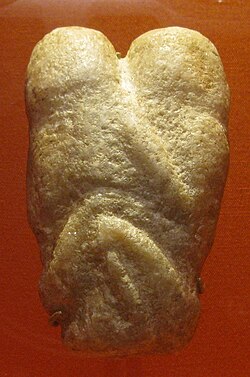
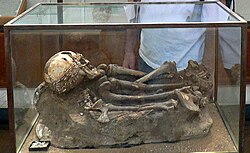
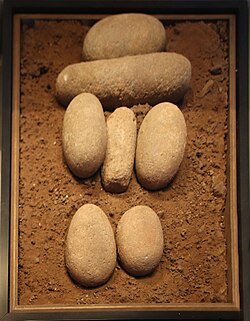
Artistic expression was present in both symbolic objects and burial practices. Findings include schematic human figures made of pebbles and poignant burials. One notable discovery, the "Ain Sakhri lovers," showcases the emotional and social complexity of these early humans.
Burial sites, such as those in el-Wad Cave, provide insight into their social structures and possible spiritual beliefs, including the discovery of what some archaeologists describe as a shaman's grave.
Subsistence and the Dawn of Farming
While primarily foragers, the Natufians were on the cusp of agriculture. They focused on a "broad spectrum" of foods, but the deliberate cultivation of cereals—specifically rye—at Tell Abu Hureyra provides some of the earliest evidence of farming in human history.
| Feature | Description |
|---|---|
| Lifestyle | Sedentary or semi-sedentary hunter-gatherers |
| Key Sites | ʿAin Mallaha, El Wad, Tell Abu Hureyra, Beidha |
| Primary Tools | Basalt mortars, pestles, and sharpening stones |
| Dietary Shift | Transition from wild foraging to early rye cultivation |
| Genetic Mix | Basal Eurasian and West Eurasian Unknown Hunter Gatherers |
Genetics and Ancestry
Modern genomic analysis has shed light on the origins of the Natufians. Ancient DNA suggests they were a mixture of approximately 50% Basal Eurasian ancestry and 50% West Eurasian Unknown Hunter Gatherer (UHG) related to European Mesolithic groups. Other models suggest the Basal Eurasian component may be closer to 15%.
The Natufians share a common genomic component with the Iberomaurusian culture of the Maghreb (North Africa), suggesting bidirectional gene flow between the Levant and North Africa. Recent studies indicate that modern Arabian populations, such as those in Saudi Arabia and Yemen, derive a significant portion of their ancestry from these Natufian-like hunter-gatherers.
![Principal component analysis of ancient West Asian populations, including the Natufians. Natufians cluster together with modern Middle Eastern populations.[57]](/images/78/24/7824be8ff8edeb259e32cfa8c88df0e8bbdc9e070b8a693732a6ef26efe01d20.jpg)
Frequently Asked Questions
Did the Natufians invent agriculture?
While they were primarily hunter-gatherers, they are credited with some of the earliest evidence of deliberate cereal cultivation, specifically rye at Tell Abu Hureyra, acting as a bridge to the full-scale farming of the Neolithic.
Why is the Natufian culture considered unusual?
They are unusual because they adopted a sedentary (permanent) lifestyle before the invention of agriculture, which traditionally was thought to be the cause of permanent settlement.
What is the significance of the "Basal Eurasian" component?
The Basal Eurasian component is a deep ancestral lineage that diverged from other West Eurasian groups roughly 26,000 years ago and is a primary genetic marker found in Natufian remains.
Where can Natufian sites be found today?
Natufian sites are distributed across the Levant, including present-day Israel, the Palestinian territories, Jordan, Sinai, Lebanon, and Syria.
What was the role of beer in Natufian society?
The discovery of 13,000-year-old beer residue suggests that the Natufians engaged in fermented beverage production, likely used for ritual feasting and social gatherings.