UNRWA: Supporting Palestine Refugees in the Near East
The United Nations Relief and Works Agency for Palestine Refugees in the Near East, commonly known as UNRWA, is a specialized United Nations programme dedicated to providing direct relief and works programmes for Palestinian refugees. Established on December 8, 1949, the agency has operated for 76 years, serving as a critical lifeline for millions of people across the Levant region.
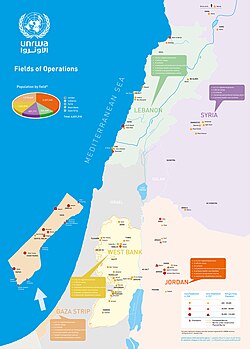
Headquartered in Amman, Jordan, and Gaza, Palestine, UNRWA manages a vast network of services designed to protect the rights and improve the living conditions of registered refugees. Under the leadership of Commissioner-General Philippe Lazzarini and Deputy Commissioner-Generals Natalie Boucly and Antonia Marie De Meo, the agency employs approximately 30,000 staff members to deliver essential humanitarian aid.
Key Facts
- Founded: December 8, 1949.
- Primary Purpose: Direct relief and works programmes for Palestinian refugees.
- Region of Operation: The Levant.
- Staff Size: Approximately 30,000 employees.
- Budget: US$806 million (as of 2020).
- Core Services: Education, healthcare, social services, infrastructure improvement, and microfinance.
Core Operations and Services
UNRWA provides a comprehensive suite of services to ensure the basic needs of refugees are met. These operations are divided into several key programmes:
Education and Health Care
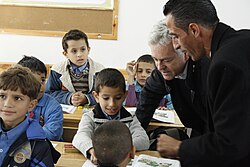
Education is a cornerstone of UNRWA's mandate, providing schooling to generations of refugee children. Parallel to this, the health programme ensures access to primary care. In 2014, the agency operated 139 primary health facilities, employing 3,107 health staff to serve over 3.1 million refugees, resulting in more than 9.2 million annual patient visits.
Relief, Social Services, and Infrastructure
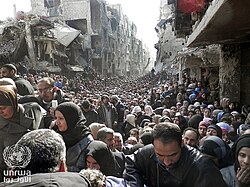
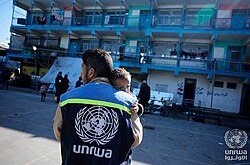
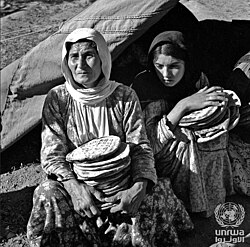
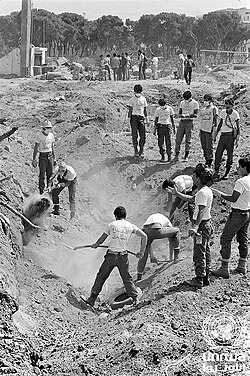
The agency provides essential social services and works to improve the infrastructure of refugee camps and settlements. This includes emergency response efforts during conflicts and natural disasters, as well as long-term camp improvement projects.
Microfinance and Economic Support
To foster self-reliance, UNRWA operates a Microfinance Department. As of 2023, the agency has awarded 29,000 loans with a cumulative value of US$531.41 million. This initiative specifically targets vulnerable groups, with 48% of outreach directed toward women and 25% toward youth.
Funding and Governance
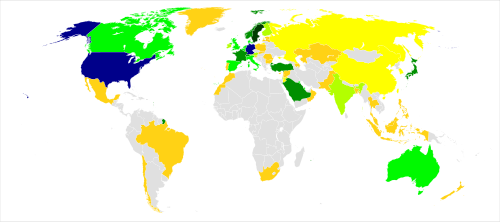
As a UN programme, UNRWA relies on voluntary contributions from member states and private partners. Funding levels vary by country, with some providing over US$100 million annually and others contributing smaller amounts.
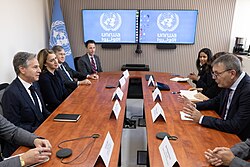
The agency is overseen by an Advisory Commission and maintains high-level diplomatic relations to secure its operational mandate. This includes coordination with global leaders to ensure the continuity of aid in volatile regions.
Challenges and Controversies
Due to the complex political environment of the Levant, UNRWA has faced significant challenges. These include disputes over the content of textbooks used in its schools, allegations regarding the neutrality of its staff, and tensions regarding the influence of local political entities like Hamas.
The agency has been the subject of various independent evaluations and reform initiatives. While some critics have called for defunding or restructuring, other international bodies and governments have reaffirmed the necessity of UNRWA's services to prevent humanitarian collapse.
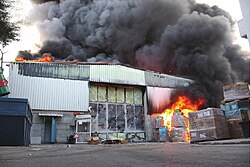
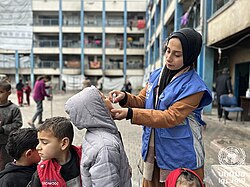
Recent legal and political developments include an Israeli parliament vote to ban UNRWA within 90 days and subsequent cases brought before the International Court of Justice (ICJ). Despite these pressures, the agency continues to administer critical aid, such as polio vaccines during the 2024–25 Gaza Strip epidemic.
Summary of UNRWA Impact
| Category | Key Metric / Detail |
|---|---|
| Health Facilities (2014) | 139 primary facilities |
| Patient Visits (2014) | 9,290,197 annually |
| Microfinance Loans (to 2023) | 29,000 loans (US$531.41 million) |
| Staffing | 30,000 employees |
| Budget (2020) | US$806 million |
Frequently Asked Questions
What is the primary purpose of UNRWA?
UNRWA is designed to provide direct relief and works programmes specifically for Palestinian refugees in the Near East, focusing on education, health, and social services.
Where does UNRWA operate?
The agency operates within the Levant region, with major headquarters and operations located in Amman, Jordan, and Gaza, Palestine.
How is UNRWA funded?
UNRWA is funded through voluntary contributions from various countries and private donors, rather than a fixed UN budget.
What services does UNRWA provide beyond food and shelter?
Beyond basic relief, UNRWA provides comprehensive primary healthcare, formal education, infrastructure improvements for camps, and microfinance loans to support economic independence.
Who leads UNRWA?
The agency is led by the Commissioner-General, currently Philippe Lazzarini, supported by Deputy Commissioner-Generals Natalie Boucly and Antonia Marie De Meo.