Nationalist Faction of the Spanish Civil War
The Nationalist faction (Spanish: Bando nacional), also known as the Rebel or Francoist faction, was a coalition of right-wing political and military forces that fought during the Spanish Civil War from 1936 to 1939. This faction emerged from the Spanish coup of July 1936, an attempt to overthrow the Second Spanish Republic and depose President Manuel Azaña.
What began as a fragmented group of monarchists, fascists, and conservative military officers eventually coalesced into a unified ideological project. This movement sought a national palingenesis—a process of national rebirth—aiming to purify Spain through the conflict to create a "New Man" based on ultranationalist and authoritarian values.
Key Facts
- Active Period: 17 July 1936 – 1 April 1939.
- Primary Leader: General Francisco Franco, who became dictator until 1975.
- Core Ideologies: Spanish ultranationalism, authoritarian conservatism, and para-fascism.
- Unified Party: In 1937, disparate groups merged into the FET y de las JONS.
- Major International Allies: Fascist Italy, Nazi Germany, and the Portuguese Republic.
Political Composition and Factions
The Nationalist faction was not a monolithic entity but a marriage of convenience between several right-wing movements with differing visions for Spain's future.
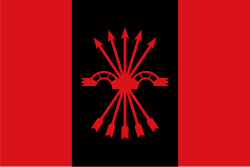
The Falange
The Falange began as a small, student-led movement advocating for a violent, utopian nationalist revolution. Before the war, Falangist terror squads engaged in street brawls to create a state of lawlessness, which the right-wing press used to justify a military uprising. As middle-class support for legalist parties waned, the Falange grew rapidly; by September 1936, they provided 35,000 volunteers, representing 55% of the Nationalists' civilian forces.
The CEDA
The CEDA represented the conservative, legalist wing of the right, though many of its supporters eventually shifted toward more radical authoritarianism as the conflict progressed.
Monarchist Rivals: Carlists and Alfonsists
The monarchists were split between two competing claims to the throne:
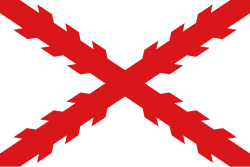
- Carlists: Traditionalists who deployed the Requetés, a highly effective shock troop militia that peaked at 42,000 recruits.
- Alfonsists: Supporters of Alfonso XIII who formed the Renovación Española. While they lacked mass appeal, they held significant economic power and military influence.
A pivotal moment occurred on July 13, 1936, when the charismatic Alfonsist leader José Calvo Sotelo was assassinated by political opponents. This event served as a catalyst that legitimized the military coup in the eyes of the political right.
Military Structure and Foreign Intervention
The military backbone of the faction included the Army of Africa, the Civil Guard, and rebel elements of the Spanish Navy and National Aviation.
International Support
The Nationalists relied heavily on foreign aid to secure victory, receiving critical military and logistical support from several authoritarian regimes.
- Italy: Provided fighter aircraft, bombers, and the Corpo Truppe Volontarie (CTV), an expeditionary force of 35,000 men. Italy also pressured Franco to unify his political factions into a single fascist party.
- Germany: Provided essential military hardware and support to the Nationalist cause.
- Portugal: Under António de Oliveira Salazar, Portugal provided a vital logistical lifeline, allowing ammunition and supplies to cross the border. They also provided a volunteer force known as the "Viriatos."
- The Holy See: Provided diplomatic and moral support to the Nationalist cause.
Summary of Nationalist Faction Components
| Component | Primary Goal/Role | Key Characteristic |
|---|---|---|
| Falange | Nationalist Revolution | Fascist-inspired, youth-led |
| Carlists | Traditionalist Monarchy | Requetés shock troops |
| Alfonsists | Restoration of Alfonso XIII | Economic and military influence |
| Military | Order and State Control | Led by General Francisco Franco |
| Foreign Allies | Anti-Communism/Geopolitics | Italy, Germany, Portugal |
Frequently Asked Questions
Who led the Nationalist faction?
While early leaders included José Sanjurjo and Emilio Mola, General Francisco Franco emerged as the primary leader and eventually became the dictator of Spain.
What was the FET y de las JONS?
The FET y de las JONS was the single political party created in 1937 by merging the Falange and the Traditionalist (Carlist) movements to unify the Nationalist political front.
How did Portugal support the Nationalists?
Portugal provided critical logistical support, allowing supplies to flow across the border, and contributed a volunteer force of 8,000 to 12,000 men called the "Viriatos."
What was the role of the Requetés?
The Requetés were the militia of the Carlist movement and served as some of the most effective shock troops for the Nationalist army during the war.
Why was the assassination of José Calvo Sotelo significant?
His assassination on July 13, 1936, sparked outrage among the political right and helped legitimize the military coup against the Second Spanish Republic.