National Register of Historic Places: Preserving America's Heritage
The National Register of Historic Places (NRHP) serves as the official list of the United States' districts, sites, buildings, structures, and objects deemed worthy of preservation. Established to safeguard the nation's diverse history, the Register provides a framework for identifying and protecting cultural resources across the country.
Managed by the National Park Service (NPS), the Register has grown from a modest legislative start to a massive database. Today, it encompasses over 1.5 million properties. While approximately 100,000 of these are listed individually, the vast majority are recognized as contributing resources within larger historic districts.
![Old Slater Mill, a historic district in Pawtucket, Rhode Island, the first property listed in the National Register, on November 13, 1966[1]](/images/5c/d3/5cd344b45e4d85d7c30e4927300ec3e2dafef4980972dd62896b5815b971ee3b.jpg)
Key Facts
- Established: 1966 via the National Historic Preservation Act (NHPA).
- Administration: Managed by the National Park Service under the U.S. Department of the Interior.
- Scope: Over 1.5 million properties, including 100,000 individual listings.
- Key Partners: State Historic Preservation Offices (SHPO) and the Advisory Council on Historic Preservation (ACHP).
- Special Categories: Includes Traditional Cultural Properties associated with Native American or Hawaiian groups.
History and Evolution
The National Register was created on October 15, 1966, through the enactment of the National Historic Preservation Act. This legislation marked the first time the United States implemented a broad-based historic preservation policy. Initially, the Register incorporated existing National Historic Landmarks and sites already within the National Park System.
To manage this new mandate, National Park Service Director George B. Hartzog Jr. established the Federal Office of Archaeology and Historic Preservation (OAHP), with Ernest Connally serving as its first director. The program's early years were characterized by limited staffing and funding at the state level, but it gradually matured through legislative amendments in 1980 and 1992.
![George B. Hartzog Jr., director of the National Park Service from 1964 to 1972[2]](/images/68/03/680344f74381a0ac277837b5083f6ccfead7266ae57d6cde36c56536bb2473cc.jpg)
The Role of State and Federal Agencies
The process of listing properties relies heavily on State Historic Preservation Offices (SHPO). While not detailed in the original 1966 act, SHPOs became integral to the nomination process, a role further codified by the 1980 amendments. Additionally, the Advisory Council on Historic Preservation (ACHP), an independent federal agency, works to mitigate the adverse effects of federal activities on historic sites.
The Nomination and Listing Process
Any individual can initiate a nomination for the National Register, though many hire professional historians or preservation consultants. The process requires the submission of a standard registration form (NPS 10-900), which details the property's physical appearance and the specific nature of its historical significance.
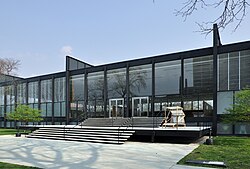
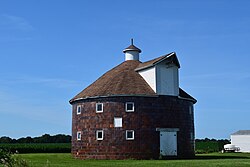
Properties can be listed individually or as part of a multiple property submission, which allows for the grouping of related structures. For example, certain architectural styles or thematic groups, such as round barns in Illinois, can be submitted together.
Protections and Incentives
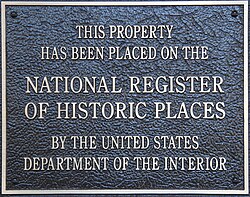
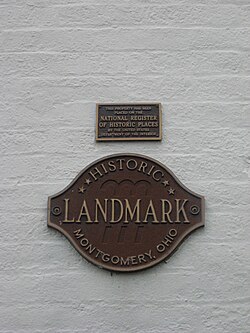
Listing on the National Register does not always impose strict restrictions on private owners, but it does trigger specific federal protections. Under Section 106 of the NHPA, federal agencies must assess the impact of their actions on historic resources. A notable success of this process occurred in the 1970s when a proposed 14-lane highway through Baltimore's Federal Hill neighborhood was rerouted and reduced in size, leading to the creation of Robert Baker Park.
Financial Incentives for Preservation
Prior to 1976, the federal tax code favored new construction over the reuse of old buildings. This changed in 1976 with the introduction of tax incentives for income-producing historic properties. To qualify, rehabilitations must meet the Secretary of the Interior's Standards for Rehabilitation, ensuring that the historic character of the building is maintained.
Limitations and Loss of Properties
Listing on the National Register does not guarantee permanent survival. Properties can be removed if they are destroyed or demolished. As of 1999, 982 properties had been removed. Notable losses include the Jobbers Canyon Historic District in Omaha, Nebraska—the largest historic district lost to date—and the Pan-Pacific Auditorium in Los Angeles, which was destroyed by fire.
![A cow barn in Enfield Shaker Village in Enfield, New Hampshire, built 1854, listed with NRHP[24]](/images/3e/30/3e309af5b8d63dc582196ea427254dc14e9c200d96257b39e834d589bdfe8fe1.jpg)
![The demolition of the Jobbers Canyon Historic District in Downtown Omaha, the largest National Register historic district lost to date[30]](/images/fd/78/fd78c1a23e29a6df64e61ddac7565417224a6eb702d016f85338b2db3e931fdd.jpg)
Global Comparisons
The U.S. approach to preservation differs from other nations. In France, the monument historique designation imposes permanent restrictions, requiring advance approval for any renovations. Similarly, the United Kingdom's listed buildings program prohibits demolition or alteration without special permission. In contrast, the NRHP focuses more on identification and incentive-based preservation.
| Country | Program Name | Approx. Listings | Primary Characteristic |
|---|---|---|---|
| United States | National Register of Historic Places | 1.5 Million+ (incl. districts) | Incentive-based; Section 106 federal review |
| France | Monument Historique | 43,600 (as of 2015) | Strict permanent restrictions on renovation |
| United Kingdom | Listed Buildings | 374,000 (as of 2010) | Strict permission required for any alteration |
Frequently Asked Questions
Who can nominate a property to the National Register?
Any individual can prepare a nomination, although historians and professional preservation consultants are frequently employed to ensure the documentation meets the required standards.
What is a "contributing resource" in a historic district?
A contributing resource is a property within a historic district that adds to the historical associations or architectural qualities for which the district is significant.
Does NRHP listing prevent a private owner from demolishing their building?
Generally, NRHP listing does not prevent a private owner from demolishing a building unless federal funding or permits are involved, or if local municipal laws provide additional protections.
What is Section 106 of the National Historic Preservation Act?
Section 106 requires federal agencies to assess and mitigate the potential adverse effects of their projects (such as highways or dams) on properties listed in or eligible for the National Register.
What are Traditional Cultural Properties?
Added via 1992 amendments, these are properties recognized for their association with cultural practices important to a group, specifically Native American or Hawaiian groups.