National Historic Landmark Districts: Preserving America's Most Significant Sites
A National Historic Landmark District (NHLD) is a designated geographical area recognized by the United States Government for possessing buildings, landscapes, cultural features, and archaeological resources of the highest significance. These districts are not merely old neighborhoods; they are sites deemed worthy of preservation due to their exceptional value to the nation's history.
The designation process is managed by the National Park Service, which operates as a division of the U.S. Department of the Interior. By identifying these areas, the federal government ensures that the most critical pieces of the American story are documented and protected for future generations.
Key Facts
- Governance: Designated by the National Park Service under the U.S. Department of the Interior.
- Scale: Districts vary wildly in size, from the massive Nantucket island (over 30,000 acres) to the Cobblestone District in New York (under one acre).
- Quantity: There are just over 100 NHLDs across the United States.
- Composition: Districts include contributing properties (which may be individual landmarks) and non-contributing properties.
- Benefits: Designation often leads to increased history-related tourism and eligibility for preservation grants.
Characteristics and Management of NHLDs
The boundaries of an NHLD are carefully defined to include properties that contribute to the area's historical integrity. While some buildings within a district may be listed individually on the National Register of Historic Places or as separate National Historic Landmarks, the district designation protects the collective character of the landscape.
Beyond historical prestige, these districts often serve as economic engines. By becoming cultural destinations, they attract tourists and generate revenue for their local communities. However, maintaining this status requires constant vigilance.
The integrity of an NHLD can be threatened by urban development or environmental crises. A poignant recent example is the Lahaina NHLD in Hawaii, which suffered catastrophic damage from wildfires in 2023. Such dramatic changes can jeopardize a site's integrity and potentially lead to the loss of its official designation.
Distribution of Landmark Districts Across the U.S.
National Historic Landmark Districts are spread across the country, reflecting the diverse history of the various states. From the colonial architecture of the East Coast to the frontier history of the West, these sites capture the evolution of the United States.
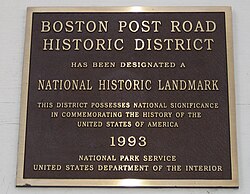
In New York, for example, the Boston Post Road Historic District in Rye is a notable site comprising five specific properties: The Jay Estate, The Jay Cemetery, Rye Golf Club, Lounsbury, and Marshlands Conservancy.
Other notable examples include the Garden District in New Orleans, Louisiana; the Savannah Historic District in Georgia; and the Presidio of San Francisco in California. These sites range from military installations and civic centers to residential neighborhoods and industrial hubs.
| State | Notable Landmark Districts |
|---|---|
| California | Old Sacramento State Historic Park, Presidio of San Francisco, Monterey Old Town |
| Colorado | Denver Civic Center, Telluride Historic District, Leadville Historic District |
| Massachusetts | Nantucket Historic District, New Bedford Historic District |
| New York | Brooklyn Heights, Cobblestone Historic District, Boston Post Road |
| Virginia | Colonial Williamsburg, Alexandria Historic District |
Frequently Asked Questions
What is the difference between a contributing and non-contributing property?
Contributing properties are those that add to the historical architectural qualities or archaeological values for which a district is significant. Non-contributing properties are located within the district boundaries but do not possess those specific historical characteristics.
Who is responsible for designating these districts?
The U.S. federal government designates these districts through the National Park Service, which is part of the U.S. Department of the Interior.
Can a National Historic Landmark District lose its status?
Yes. If a district undergoes dramatic negative changes—whether through aggressive development or natural disasters like the 2023 wildfires in Lahaina—its historical integrity may be compromised, which can lead to the loss of its NHLD designation.
What are the primary benefits of being an NHLD?
Districts often benefit from increased economic growth via history-related tourism and may qualify for specific preservation grant funding to help maintain their historic structures.
How large can these districts be?
They vary significantly in scale. The Nantucket Historic District in Massachusetts covers over 30,000 acres, while the Cobblestone National Historic Landmark District in New York is less than one acre.