Nadezhda Krupskaya: Architect of Soviet Education and Political Strategist
Nadezhda Krupskaya is often remembered primarily as the wife of Vladimir Lenin, but her legacy extends far beyond her marriage. A committed Marxist—a follower of the socio-economic theories of Karl Marx—Krupskaya was a formidable political operative and a visionary educator. From the clandestine operations of the early Bolshevik movement to the formal establishment of the Soviet educational system, she played a pivotal role in shaping the intellectual infrastructure of the early Soviet Union.
Key Facts
- Political Role: Served as secretary of the Central Committee in 1905 and later as deputy education commissar from 1929 to 1939.
- Educational Impact: Instrumental in founding the Soviet educational system and modernizing Soviet librarianship.
- Organizational Work: Managed the day-to-day operations and secret correspondence for the RSDLP newspaper, Iskra.
- Political Shifts: Navigated complex alliances, moving from supporting the triumvirate against Trotsky to joining the United Opposition against Stalin.
- Library Reform: Advocated for public access to books, professional librarian training, and the use of common speech with patrons.
Early Political Career and the RSDLP
Krupskaya was an active member of the Bolshevik faction of the Russian Social Democratic Labour Party (RSDLP) starting in 1903. Far from being a mere functionary, she was central to the party's organizational survival. Leon Trotsky, who worked with her between 1902 and 1903, highlighted her critical role as the secretary of the editorial board for Iskra.
In this capacity, Krupskaya managed the logistics of the revolutionary underground. She coordinated the arrival and departure of comrades, established secret connections, and handled the coding and decoding of sensitive correspondence. Her commitment was such that she often read secret letters by heating them over a fire to reveal invisible ink.
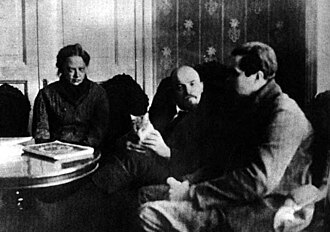
By 1905, she had risen to become the secretary of the Central Committee. Following the failed revolution of 1905, she spent several years in France working as a teacher before returning to the political fray.
Leadership in Soviet Education and Librarianship
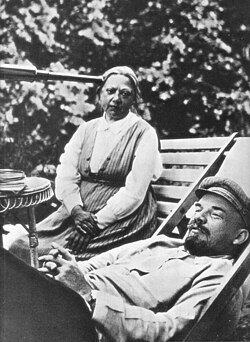
Following the 1917 Russian Revolution, Krupskaya transitioned into government leadership. She served as deputy to Anatoliy Lunacharskiy, the People's Commissar for Education, managing the Adult Education Division's Vneshkol'nyi Otdel. Her influence grew steadily; she chaired the education committee in 1920 and served as the deputy education commissar from 1929 to 1939.
Revolutionizing the Library System
Krupskaya viewed libraries as essential tools for liberation. Before the revolution, she had experience teaching factory workers, where she balanced legal lessons in arithmetic and literacy with illegal revolutionary teachings. She observed that pre-revolutionary libraries were often exclusionary, reserved for the upper classes or specific trade unions, and stocked with narrow, orthodox literature.
To remedy this, Krupskaya directed a comprehensive census of libraries to identify systemic failures. She pushed for several key reforms:
- Public Accessibility: Encouraging libraries to open their doors to the general public regardless of class.
- Patron-Centric Service: Urging librarians to use common speech and tailor book stocks to the actual interests and needs of workers.
- Professionalization: Establishing library "seminaries" to provide formal training, similar to Western models, though infused with Soviet pedagogical values.
She believed librarians should act as facilitators of the revolution, using their skills to guide patrons toward materials that fostered socialist political values.
Political Conflicts: Trotsky and Stalin
Krupskaya's later years were marked by volatile relationships with the leaders of the Soviet state. Her conflict with Joseph Stalin began as early as 1922, when she blocked his access to a severely ill Lenin. She later described Stalin's threats and "vile invectives" as the worst abuse she had encountered in 30 years of revolutionary work.
After Lenin's death in 1924, Krupskaya's allegiances shifted. Initially, she supported the alliance of Zinoviev and Kamenev against Leon Trotsky, even criticizing Trotsky's Marxist analysis and his underestimation of the peasantry. However, by 1926, she joined the United Opposition, aligning with Trotsky against Stalin.
By 1930, Krupskaya again opposed Stalin by defending right-wing opposition leaders Nikolai Bukharin and Alexei Rykov. This led to a period of intense party pressure. Nikita Khrushchev later recalled her as a "broken old woman" during these sessions, noting that Stalin even threatened to replace her as "Lenin's widow" with other figures like Elena Stasova or Rosalia Zemlyachka.
Final Years and Interventions
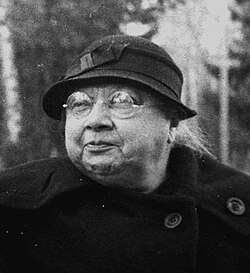
In her final years, Krupskaya's positions were complex. In 1936, she defended government restrictions on abortion, viewing them as part of a long-term policy to eliminate the need for the procedure. While she voted to expel Bukharin and Rykov from the party in 1937, she continued to use her influence to protect others, successfully securing the release of the Old Bolshevik I.D. Chugurin.
Summary of Career and Contributions
| Period/Year | Role/Event | Key Contribution/Outcome |
|---|---|---|
| 1903–1905 | Secretary of Iskra board | Managed secret communications and party organization. |
| 1905 | Secretary of Central Committee | High-level administrative leadership within the RSDLP. |
| 1917–1920s | Deputy Commissar for Education | Founded the Soviet educational system and adult education. |
| 1920s–1930s | Library Reformer | Modernized libraries, created professional training, and expanded public access. |
| 1929–1939 | Deputy Education Commissar | Long-term government ministerial leadership. |
Frequently Asked Questions
What was Krupskaya's primary contribution to Soviet society?
Krupskaya was fundamental in establishing the Soviet educational system and modernizing the library network, transforming libraries from exclusive institutions into public tools for mass literacy and socialist education.
How did her relationship with Joseph Stalin evolve?
Their relationship was characterized by deep conflict. It began with disputes over Lenin's health in 1922 and escalated as she joined the United Opposition against Stalin's leadership in the mid-1920s, eventually leading to her being targeted by party officials.
What was her view on the role of librarians?
She believed librarians should be more than clerks; they should be skilled facilitators who could explain the value of specific reading materials to patrons, thereby helping to preserve and spread socialist values.
Did she always agree with the Soviet leadership?
No. While she held high positions and supported certain policies (such as the 1936 abortion restrictions), she frequently clashed with the party leadership, specifically Stalin, and defended members of the political opposition.
What was her relationship with Leon Trotsky?
It was complex and fluctuating. While Trotsky praised her organizational genius in the early years, they later clashed over Marxist analysis and the role of the peasantry, though they eventually aligned in the United Opposition against Stalin.