Myth and Mythology: The Science of Sacred Narratives
In common conversation, the word myth is often used to describe a falsehood or a widely held misconception. However, for scholars of folklore and anthropology, a myth is something entirely different. In an academic context, a myth is a narrative that plays a fundamental role in a society, regardless of whether the events described are factually true. The veracity of the story is irrelevant; what matters is the function the story serves within its culture.
Myths are frequently endorsed by both religious and secular authorities. They can be natural or supernatural in character, and many societies blend their myths, legends, and history into a single tapestry of factual accounts regarding their remote past.
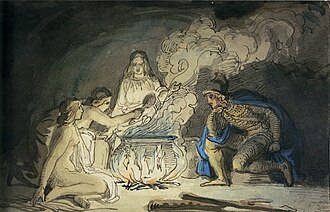
Types of Myths
Not all myths serve the same purpose. Scholars categorize them based on the specific societal need they address:
- Creation Myths: These narratives take place in a primordial age, explaining how the world transitioned from chaos into its current form.
- Origin Myths: These stories explain the establishment and sanctification of a society's customs, institutions, and taboos.
- National Myths: These are narratives about a nation's past that symbolize and reinforce the core values of that nation.

Key Facts
- Academic Definition: A myth is a fundamental societal narrative, not necessarily a "falsehood."
- Mythography: The practice of collecting and interpreting myths, with Ovid being one of the most influential figures in the Classical tradition.
- Mythopoeia: The act of artificially constructing a mythology, typically for storytelling purposes.
- Structuralism: A 20th-century theory suggesting myths reflect fixed mental structures, often organized as pairs of opposites.
- Mythic Charter: The concept that origin stories provide legitimacy for cultural norms and social institutions.
The Evolution of Mythological Study
Ancient and Classical Perspectives
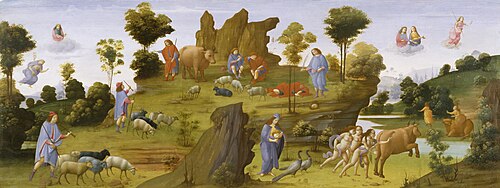
The study of myth has deep roots. In Ancient Greece, the scholar Sallustius divided myths into five distinct categories: theological, physical (natural law), animistic (concerning the soul), material, and a fifth category of general narrative. Later, mythographers like Ovid shaped how the Western world perceived these stories, blending divine action with human drama.
The 19th Century and Romantic Nationalism
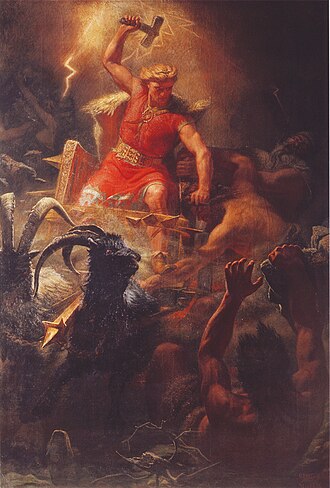
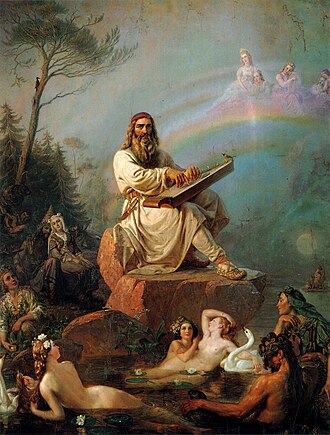
Modern Western scholarly theories emerged in the late 19th century, driven by Romantic Nationalism—a movement interested in vernacular culture and ancient roots. Jacob Grimm was a pivotal figure in this era, expanding scholarly focus beyond Classical Greece and Rome to include Norse and Finnish mythologies.
This period was also influenced by colonialism. As Europeans encountered new cultures, they sought to comprehend and control them by studying their narratives, ranging from the ancient Sanskrit Rigveda and the Sumerian Epic of Gilgamesh to the oral traditions of indigenous peoples in Africa and the Americas.
20th Century: Structuralism and Functionalism
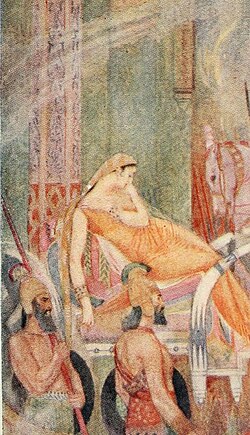
The mid-20th century introduced two dominant schools of thought. Claude Lévi-Strauss led the structuralist theory, arguing that myths are not about unconscious urges but reflect universal patterns of the human mind, specifically binary opposites like good versus evil.
Simultaneously, Bronislaw Malinowski focused on functionalism. He proposed that myths act as a "mythic charter," providing a social justification for the way a society is organized. By the 1980s, these approaches evolved to treat myth as a narrative linked to power, political structures, and economic interests.
Comparative Frameworks and Interpretations
To analyze myths, scholars use several interpretive lenses:
- Euhemerism: The theory that mythological gods were originally real historical people whose stories were exaggerated over time.
- Allegory: Interpreting a myth as a symbolic representation of a deeper moral or spiritual meaning.
- Personification: Attributing human characteristics to abstract concepts or natural forces.
- Ritualism: Exploring the complex relationship between the telling of a myth and the performance of a ritual.
| Approach | Key Focus | Primary Goal |
|---|---|---|
| Structuralism | Binary Opposites | Identify universal mental patterns |
| Functionalism | Social Utility | Explain how myths legitimize social norms |
| Euhemerism | Historical Basis | Trace gods back to real human ancestors |
| Mythopoeia | Artificial Creation | Construct new worlds for storytelling |
In the 21st century, new frameworks continue to emerge, such as the Cultural Myth Criticism proposed by José Manuel Losada in 2022, which seeks to analyze myths within contemporary cultural contexts.
Frequently Asked Questions
What is the difference between a myth and a legend?
While the distinction is often blurred, legends typically involve exaggerated accounts of historical people or events, whereas myths often deal with gods, the primordial past, and the fundamental origins of the world.
Is a myth always "untrue"?
In common language, yes. However, in scholarly terms, the truth or falsehood of a myth is irrelevant. A myth is defined by its role and function within a society, not by its factual accuracy.
What is a "mythic charter"?
A mythic charter is a concept developed by Bronislaw Malinowski. It refers to an origin story that serves as a legal or social justification for a culture's existing laws, customs, and social hierarchies.
Who was Ovid and why is he important to mythology?
Ovid was a Roman poet (43 BCE – 17/18 CE) whose retellings of myths were profoundly influential, shaping much of the Classical tradition and how subsequent generations understood Greek and Roman mythology.
What is the purpose of a creation myth?
Creation myths explain how the universe and the world came to be, usually describing a transition from a primordial, unformed state to the structured world we recognize today.