Nomadic Peoples: History, Lifestyles, and the Shift Toward Sedentarization
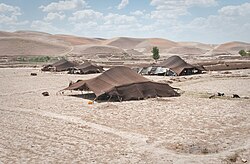
Nomads are communities without a fixed habitation who regularly move between different areas to sustain their way of life. This mobile existence is not a single uniform practice but a diverse set of strategies adapted to various environments. From the ancient tradition of hunting and gathering to the complex social structures of pastoralists, nomadism represents a highly efficient method of exploiting scarce resources in regions where permanent settlement is impractical.
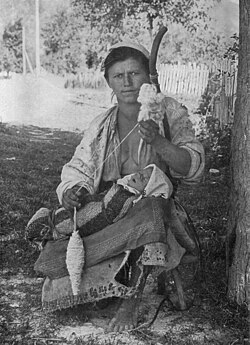
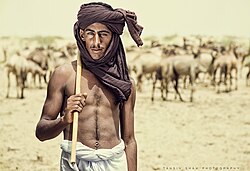
Historically, these groups have included hunter-gatherers, pastoral nomads (those who own and move livestock), tinkers, and trader nomads. While once a common human experience, the global population of nomadic pastoral tribes has seen a steady decline throughout the twentieth century, estimated at 30–40 million by 1995.
Key Facts
- Oldest Subsistence: Nomadic hunting and gathering is the oldest known human method of survival.
- Environmental Adaptation: Nomadism is most effective in infertile regions like the tundra, steppe, and deserts.
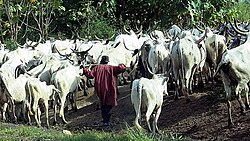
- Largest Group: The Fulani of West Africa are currently the world's largest nomadic group.
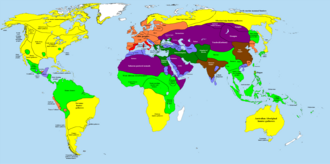
- Historical Origins: The first nomadic pastoral societies emerged in the southern Levant between 8,500 and 6,500 BCE.
- Modern Decline: Factors such as forced collectivization, nationalization of land, and climate change have accelerated sedentarization.
Types of Nomadic Lifestyles
Hunter-Gatherers
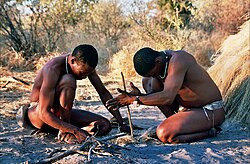
The most ancient form of nomadism involves following seasonally available wild plants and game. This lifestyle requires deep knowledge of the land and the ability to move quickly as resources shift with the seasons.
Pastoralism
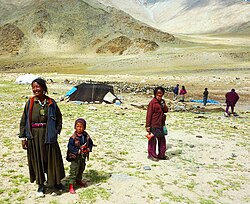
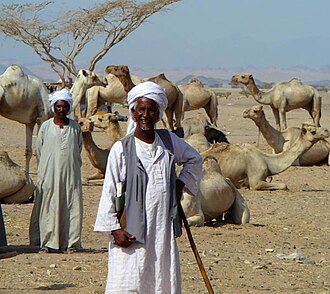
Pastoralists raise domesticated livestock, moving their herds in patterns that prevent the overgrazing of pastures, allowing the land to recover. This is common in the tundra, where semi-nomadic groups herd reindeer, or in the arid steppes and deserts.
![A Sámi family in Norway around 1900. Reindeer have been herded for centuries by several Arctic and Subarctic people including the Sámi and the Nenets.[13]](/images/5b/a1/5ba1ff21f712e7e88e8e963aad47f9c333f43b55550fc38cd702b4c11a1a549d.jpg)
Trader and Peripatetic Nomads
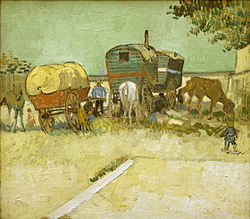
Some nomadic groups specialize in trade or craftsmanship. For example, the Bukat people of Borneo were historically self-sufficient but known for trading high-value forest products such as resins, wild honey, beeswax, camphor, and rhinoceros horn. Other groups, known as peripatetics, are endogamous nomads who rely on other human populations for their resources rather than primary production.
The History and Spread of Nomadism
The transition to pastoral nomadism began in the southern Levant during a period of increasing aridity. Pre-Pottery Neolithic B (PPNB) cultures in the Sinai were replaced by a pottery-using culture that fused the nomadic hunting lifestyle of Mesolithic people from Egypt (the Harifian culture) with the raising of livestock.
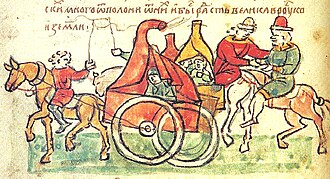
This development led to the "circum-Arabian nomadic pastoral techno-complex," which may be linked to the spread of Semitic languages. Similar rapid expansions occurred later with the Yamnaya culture of the Eurasian steppe (c. 3300–2600 BCE) and the Mongol expansions during the Middle Ages.
The Process of Sedentarization
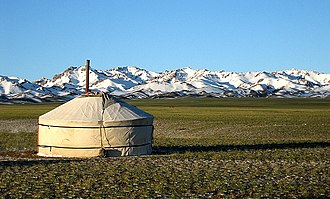
Sedentarization is the process by which nomadic people settle into permanent housing. This shift has been driven by government policy, economic changes, and environmental crises.
Political and Economic Pressures
- Iran: Nationalization of tribal pastures in the 1960s contributed to a decline in nomadic populations. In 1963, 9.5% of the population were nomads; today, that number is approximately 1.5 million in a population of 70 million.
- Kazakhstan: Forced collectivization under Joseph Stalin led to massive livestock losses and a famine (1931–1934) that killed over 40% of the Kazakh population.
- Middle East: Bedouin populations have shrunk from 10% of the Arab population a century ago to about 1% today, driven by oil production, urban migration, and government policies in Egypt and Israel.
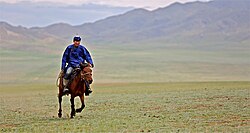
Environmental and Social Factors
Climate change and drought have played a devastating role. In Mauritania, where 85% of the population were nomadic herders at independence in 1960, the Sahel droughts of the 1970s reduced that number to 15%. Similarly, severe droughts in Afghanistan and food crises in Niger and Mali have threatened the fragile way of life for the Kuchi, Tuareg, and Fulani peoples.
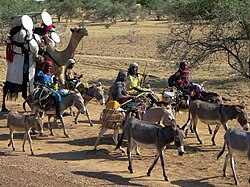
Case Study: Irish Travellers
In Ireland, seasonal nomadism was common among Traveller families. In 1960, 92% lived in tents or horse-drawn wagons. Due to modernization and laws targeting "itinerant" lifestyles, this dropped to 4% by 1981. Today, most reside in public housing, government sites, or vacant lots.
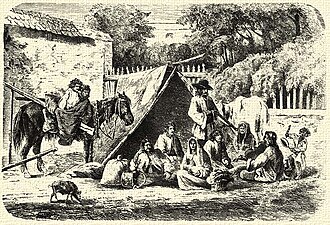
Summary of Global Nomadic Groups
| Group | Region | Primary Activity | Key Detail |
|---|---|---|---|
| Fulani | West Africa | Pastoralism | World's largest nomadic group |
| Bedouin | Middle East | Pastoralism | Significant decline due to urbanization |
| Sámi/Nenets | Arctic/Subarctic | Reindeer Herding | Semi-nomadic forage following |
| Bukat | Borneo (Malaysia) | Trade/Hunting | Traded resins, honey, and animal parts |
| Roma | Europe/Eurasia | Peripatetic/Trade | Historically mobile minority groups |
| Kuchi | Afghanistan | Pastoralism | Population halved by 2000 due to drought |
Frequently Asked Questions
What is the difference between a pastoral nomad and a hunter-gatherer?
Hunter-gatherers rely on wild plants and animals that are available seasonally. Pastoral nomads raise domesticated livestock and move their herds to ensure pastures are not depleted.
Why is the nomadic population decreasing worldwide?
The decline is caused by a combination of government-forced settlement (sedentarization), the nationalization of grazing lands, urban migration for better living standards, and environmental disasters like severe droughts.
Who are the Fulani people?
The Fulani are a nomadic group spread throughout West Africa and are recognized as the largest nomadic group in the world.
How did the first pastoral societies begin?
They emerged in the southern Levant between 8,500 and 6,500 BCE, resulting from a cultural fusion between Pre-Pottery Neolithic B cultures and Mesolithic people from Egypt during a period of increasing dryness.
What are peripatetic nomads?
Peripatetic nomads are groups that do not produce their own food or extract raw materials from the land; instead, they provide services or trade goods, relying on settled human populations for their resources.