Musical Quartets: A Comprehensive Guide to Four-Part Ensembles
In the world of music, a quartet is an ensemble consisting of four performers, whether they are singers or instrumentalists. From the rigid structures of classical chamber music to the improvisational nature of jazz and the high energy of rock and pop, the quartet is one of the most versatile and enduring formations in musical history.
Key Facts
- Standard String Quartet: Typically comprises two violins, one viola, and one cello.
- Vocal Range: Many quartets are based on the SATB (Soprano, Alto, Tenor, Bass) vocal registers.
- Classical Masters: Luigi Boccherini is among the most prolific string quartet composers, having written 91.
- Jazz Configuration: Often features a horn, a chordal instrument, a bass instrument, and a drum set.
- Pop/Rock Standard: Usually consists of a vocalist, electric guitar, bass guitar, and drums.
Classical Quartets
The String Quartet
The string quartet is one of the most prominent forms of chamber music. Its standard composition—two violins, a viola, and a cello—is designed to mirror the human voice's registers: soprano, alto, tenor, and bass (SATB). In this arrangement, the two violins cover the soprano and alto ranges, the viola handles the tenor, and the cello provides the bass.
Many legendary composers have contributed to this genre. Joseph Haydn wrote 68 compositions, while others like Wolfgang Amadeus Mozart (23), Ludwig van Beethoven (16), and Dmitri Shostakovich (15) left significant legacies. Luigi Boccherini stands out for his prolific output of 91 string quartets.
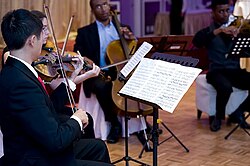
While the standard lineup is most common, some composers have experimented with different combinations. Carl Stamitz, for example, wrote six quartets for one violin, two violas, and one cello, while Johann Georg Albrechtsberger composed works for one violin, one viola, and two cellos.
The Piano Quartet
The piano quartet typically adds a piano to a string trio, consisting of a violin, viola, cello, and piano. This format was embraced by Romantic composers such as Beethoven, Brahms, and Mendelssohn, who each wrote three important works. Mozart, Dvořák, and Gabriel Fauré each contributed two. A notable variation is Olivier Messiaen's Quartet for the End of Time, which replaces the viola with a clarinet.
Other Instrumental Quartets
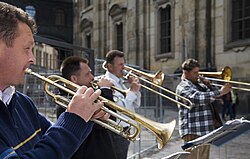
Wind quartets may follow the string quartet model by replacing the first violin with a wind instrument, or they may consist entirely of winds. A common SATB woodwind quartet includes a flute, oboe, clarinet, and bassoon. Similarly, the saxophone quartet utilizes a soprano, alto, tenor, and baritone saxophone, though a second alto or a bass saxophone is sometimes substituted.
Vocal and Baroque Quartets
Vocal Ensembles
Vocal quartets can perform a cappella (without instrumental accompaniment), with a piano, or alongside a full choir. While Brahms and Schubert wrote many pieces for private salons, vocal quartets are also integrated into larger works, such as Giuseppe Verdi's Messa da Requiem and the final movement of Beethoven's Ninth Symphony.
Common vocal configurations include:
- Mixed: Soprano, alto (or mezzo-soprano), tenor, and bass (or baritone).
- Male: 1st tenor, 2nd tenor, baritone, and bass.
- Female: 1st soprano, 2nd soprano, mezzo-soprano, and contralto.
- Barbershop: Tenor, lead, baritone, and bass (available for both male and female groups).
The Baroque Quartet
Similar to the trio sonata, the baroque quartet features four musical parts. These are typically performed by three solo melodic instruments (strings or winds) and a basso continuo (a continuous bass line providing harmonic support). Georg Philipp Telemann's Paris quartets are prime examples of this style.
Modern and Folk Quartets
Jazz and Fusion
In jazz, quartets are highly flexible. A standard lineup often includes a horn (saxophone, trumpet, etc.), a chordal instrument (piano, electric guitar, etc.), a bass instrument (double bass, tuba, etc.), and a drum set. Some groups modify this by using two horns or two chordal instruments.
Pop and Rock
The most common pop and rock quartet consists of a vocalist, electric guitar, bass guitar, and drums. Variations often occur when the vocalist also plays guitar, or when keyboards or saxophones are added to the mix.
In 20th-century popular music, "vocal quartet" often refers to same-gender groups, such as Gospel or barbershop quartets. Famous examples include female groups like The Chordettes and Blackpink, male groups like The Four Seasons and The Oak Ridge Boys, and mixed-gender groups like ABBA and The Mamas & the Papas.
Russian Folk Quartets
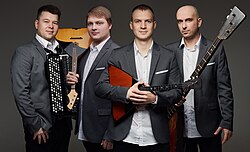
Russian folk music utilizes unique instruments. A common quartet consists of a bayan (a type of accordion), a prima balalaika, a prima or alto domra, and a contrabass balalaika. Other versions may omit the bayan in favor of additional domras or balalaikas.
Summary of Quartet Types
| Quartet Type | Standard Instrumentation / Voices | Key Characteristic |
|---|---|---|
| String Quartet | 2 Violins, Viola, Cello | Mirrors SATB vocal registers |
| Piano Quartet | Piano, Violin, Viola, Cello | Blends keyboard and strings |
| Woodwind Quartet | Flute, Oboe, Clarinet, Bassoon | Standard SATB wind arrangement |
| Jazz Quartet | Horn, Chordal, Bass, Drums | Highly flexible and improvisational |
| Pop/Rock Quartet | Vocals, Electric Guitar, Bass, Drums | Standard modern band lineup |
| Russian Folk | Bayan, Balalaikas, Domra | Uses traditional Russian instruments |
Frequently Asked Questions
What is the standard composition of a string quartet?
A standard string quartet consists of two violins, one viola, and one cello, which together cover the soprano, alto, tenor, and bass vocal ranges.
How does a baroque quartet differ from a standard quartet?
A baroque quartet typically features three solo melodic instruments accompanied by a basso continuo, making it similar in structure to a trio sonata.
What instruments are found in a saxophone quartet?
A saxophone quartet generally consists of a soprano, alto, tenor, and baritone saxophone, though substitutions like a second alto or a bass saxophone are sometimes used.
What are the typical roles in a jazz quartet?
A jazz quartet usually divides roles into a horn (melody), a chordal instrument (harmony), a bass instrument (low end), and a drum set (rhythm).
What is the difference between a mixed and a barbershop vocal quartet?
A mixed vocal quartet typically uses Soprano, Alto, Tenor, and Bass voices, while a barbershop quartet specifically uses Tenor, Lead, Baritone, and Bass roles.