Mozart Sonatas: A Comprehensive Catalog of Piano, Violin, and Church Works
Wolfgang Amadeus Mozart's contributions to the sonata form represent some of the most enduring achievements in classical music. From the precocious compositions of his childhood to the sophisticated structures of his final years, his sonatas showcase a mastery of melody, harmony, and emotional depth. These works are typically identified by the Köchel catalogue (K. or KV), the definitive chronological system used to categorize Mozart's vast output.
Mozart's sonatas span various instrumentations, including solo piano, ensembles for violin and keyboard, and the specialized liturgical forms known as church sonatas. Whether written for public performance, private study, or religious service, these pieces provide a window into the evolution of the Classical era.
Key Facts
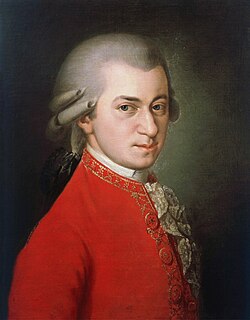
- Solo Piano: Mozart composed 18 numbered piano sonatas, including the famous "facile" (easy) Sonata No. 16.
- Violin Works: His violin sonatas are divided between early childhood works (1762–1766) and mature compositions (1778–1788).
- Church Sonatas: He wrote 17 church sonatas, which were specifically designed for liturgical use.
- Collaborations: Some of his later violin sonatas remained incomplete and were finished by Maximilian Stadler.
- Diverse Formats: Beyond solo works, Mozart wrote sonatas for two pianos and piano four-hands.
Piano Sonatas
Solo Piano Works
Mozart's solo piano sonatas trace his journey from Munich in 1774 to his final years in Vienna. These works range from the early C major Sonata (K. 279) to the complex D major Sonata (K. 576) completed in 1789.
| Sonata Number | Key | Köchel Number | Composition Date/Location |
|---|---|---|---|
| No. 1 | C major | K. 279/189d | 1774, Munich |
| No. 8 | A minor | K. 310/300d | 1778, Paris |
| No. 11 | A major | K. 331/300i | 1783, Vienna/Salzburg |
| No. 14 | C minor | K. 457 | 1784, Vienna |
| No. 16 | C major | K. 545 | 1788, Vienna |
Multi-Piano Compositions
Mozart also explored the sonata form through collaborative keyboard playing. This includes piano four-hands (where two players share one keyboard) and works for two pianos, most notably the Sonata for Two Pianos in D major, K. 448, composed in 1781.
Violin Sonatas
Childhood Sonatas (1762–1766)
As a child prodigy, Mozart composed numerous sonatas for keyboard and violin. These early works include the KV 6–9 series (1762–1764), the KV 10–15 series (which often included violoncello), and the KV 26–31 series from 1766.
Mature Violin Sonatas (1778–1788)
The mature period saw a shift toward more complex arrangements. This era includes sonatas No. 17 through No. 36. Notably, some works from 1782, such as No. 29 (K. 402) and No. 30 (K. 403), were left incomplete by Mozart and later finished by Maximilian Stadler.
Church Sonatas and Other Works
The Church Sonatas
Church sonatas are a specific genre of instrumental music used during the Mass. Mozart composed 17 of these works between 1772 and 1780, beginning with the E ♭ major Sonata (K. 67) and concluding with the C major Sonata (K. 336).
Miscellaneous Sonatas
Beyond the piano and violin, Mozart's curiosity led him to compose for other instruments, such as the Sonata for Bassoon and Violoncello in B ♭ major, K. 292, written in 1775.
Frequently Asked Questions
What is the "facile" sonata?
The "facile" or "semplice" sonata refers to Piano Sonata No. 16 in C major, K. 545. It is renowned for its accessibility and is frequently used as a teaching piece for students.
What is the Köchel catalogue?
The Köchel catalogue is the chronological list of all works composed by Wolfgang Amadeus Mozart, assigning a "K." or "KV" number to each piece for easy identification.
Who was Maximilian Stadler?
Maximilian Stadler was a contemporary who completed several of Mozart's unfinished violin sonatas, including K. 372, K. 402, and K. 403.
How many church sonatas did Mozart write?
Mozart wrote a total of 17 church sonatas between 1772 and 1780.
Did Mozart write sonatas for more than one piano?
Yes, he wrote several sonatas for piano four-hands and a prominent Sonata for Two Pianos in D major (K. 448).