Chamber Music: The Intimate Art of Musical Conversation
Chamber music is a specialized form of classical music composed for a small group of instruments. Traditionally, this referred to an ensemble small enough to fit within a palace chamber or a large room. At its core, chamber music is defined by the principle of one performer per part, distinguishing it from orchestral music where multiple musicians often share a single string part. While it excludes solo performances by convention, it encompasses a vast array of intimate instrumental combinations.
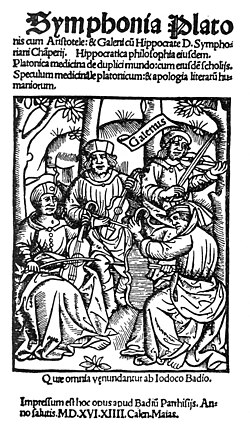
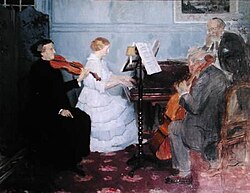
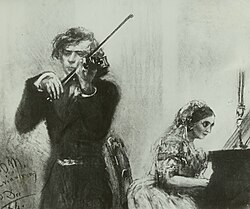
Often described as "the music of friends," chamber music emphasizes a unique social and musical synergy. For over a century, it was primarily the domain of amateur musicians playing in their homes. Although performances have largely migrated to professional concert halls, the spirit of playing for personal pleasure remains. This genre requires a distinct set of skills—both musical and social—that differ significantly from the demands of solo recitals or symphonic performances.
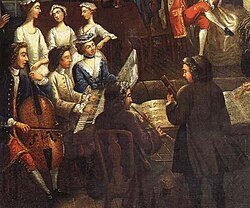
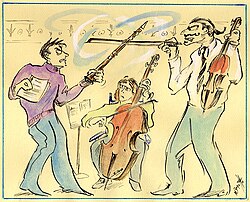
The philosopher and writer Johann Wolfgang von Goethe famously likened the string quartet to "four rational people conversing." This conversational paradigm, where one instrument introduces a motif and others respond, has remained a central theme in composition from the late 18th century to the modern era.
Key Facts
- Definition: Art music performed by a small group with one player per part.
- The Conversational Style: A compositional technique where instruments "respond" to one another's melodies.
- Evolution: Transitioned from private aristocratic chambers and middle-class homes to public concert halls.
- Core Instrumentation: Ranges from duos (2 players) to decets (10 players), with the string quartet being the most iconic.
- Technological Shift: The transition from the harpsichord to the pianoforte allowed for greater dynamic expression.
The Evolution of Chamber Music

Early Beginnings and the Classical Style
While Joseph Haydn is often credited with refining the form, he was not alone. Precursors to the string quartet were written by composers such as Giovanni Battista Sammartini, Ignaz Holzbauer, and Franz Xaver Richter. Additionally, Franz Ignaz von Beecke was a pioneer of the Classical period, contributing 17 string quartets and a Piano Quintet in A minor in 1770.
From the Home to the Concert Hall
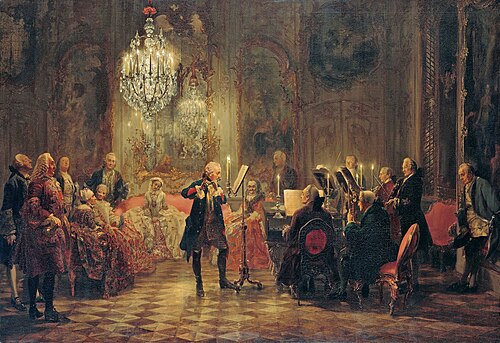
The shift in where chamber music was performed mirrored the collapse of the aristocratic system. As the social structure changed, music moved from private salons to public venues. This era also saw a massive surge in publications; between 1770 and 1800 alone, over 2,000 quartets were published. The demand was so high that composers like George Onslow (who wrote 36 quartets) and Gaetano Donizetti produced vast amounts of work to satisfy the public's appetite for both original compositions and arrangements of popular folk tunes.
The Impact of the Pianoforte
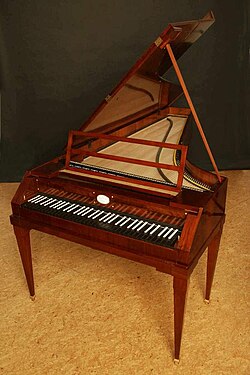
One of the most significant technological shifts was the replacement of the harpsichord. The harpsichord, which plucked strings with quills, produced a delicate sound with a constant volume regardless of the player's touch. In contrast, the pianoforte (invented by Bartolomeo Cristofori) allowed musicians to control dynamics—playing softly or loudly—and execute sharp sforzando (sudden strong emphasis) attacks.
By the late 1700s, the pianoforte became the dominant keyboard instrument. Mozart and subsequent composers began writing ensembles where the piano played a leading role, a trend that peaked in the 19th century with figures like Frédéric Chopin and Franz Liszt.
Mastery and Innovation: Beethoven and Beyond
Beethoven's Structural Revolutions
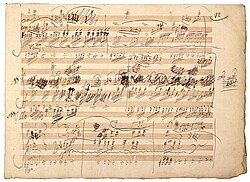
Ludwig van Beethoven expanded the boundaries of the genre. In his early Op. 18 quartets, he gave the cello a more lyrical, independent voice. Later, in works like "La Malincolia," he interleaved slow, melancholic sections with manic dances, creating a structure that influenced Johannes Brahms.
Beethoven's late period is characterized by deep introspection and a "stream of consciousness" style. He introduced avant-garde techniques, such as sul ponticello (playing on the bridge of the violin for a scratchy sound) and the use of the Lydian mode, a scale rarely used in Western music for two centuries. His late quartets often feel disjointed yet are held together by a rigorous overarching design.
The Romantic and Modern Eras
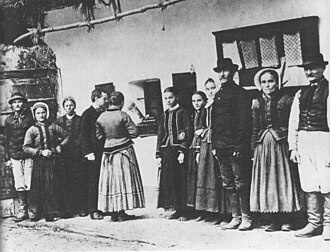
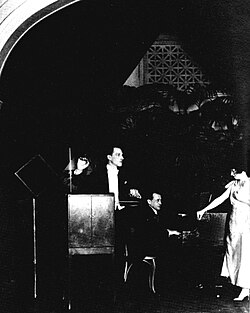
Johannes Brahms continued the tradition, publishing 24 chamber works, including unusual combinations like the trio for piano, violin, and horn. As the 20th century approached, chamber music embraced nationalism and folk influences, exemplified by Béla Bartók's recordings of Czech peasant songs. The era also saw the introduction of new sounds, such as the electronic theremin, and the rise of serialism and polytonality.
Common Chamber Music Ensembles
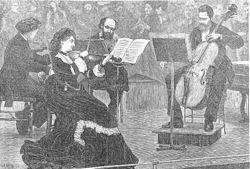
Chamber music is categorized by the number of performers. The following table summarizes the most common configurations.
| Number of Musicians | Ensemble Name | Common Instrumentation | Notable Examples/Comments |
|---|---|---|---|
| 2 | Duo/Duet | Piano duo, Instrumental duo (e.g., Violin/Piano) | Mozart's Duets KV 423 and 424 |
| 3 | Trio | String trio (Vln, Vla, Vc), Piano trio (Vln, Vc, Pno) | Beethoven's Trio Op. 11 |
| 4 | Quartet | String quartet (2 Vln, Vla, Vc), Piano quartet | The most standard chamber form |
| 5 | Quintet | String quintet, Wind quintet (Fl, Cl, Ob, Bsn, Hrn) | Mozart's KV 581 (Clarinet Quintet) |
| 6 | Sextet | String sextet, Piano sextet | Mendelssohn's Op. 110 |
| 8 | Octet | Wind and string octet, String octet | Mozart's KV 375 and 388 |
Frequently Asked Questions
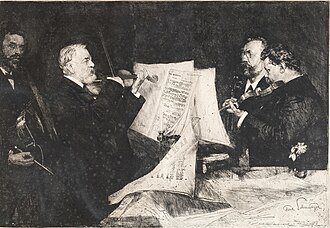

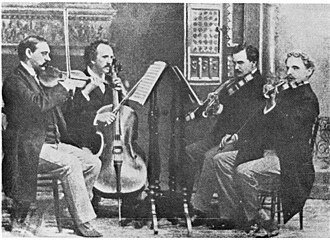
What is the main difference between chamber music and orchestral music?
The primary difference is the scale and the distribution of parts. Chamber music is performed by a small group where each musician typically plays a unique part. In an orchestra, multiple musicians often play the same part (for example, a section of ten second violins all playing the same notes).
Why is chamber music called "the music of friends"?
This term refers to the intimate nature of the performance and the high level of social and musical cooperation required. Because the group is small, musicians must listen and respond to one another with extreme sensitivity, much like a close conversation between friends.
What is a string quartet?
A string quartet is the most common type of chamber ensemble, consisting of two violins, one viola, and one cello. It is highly regarded for its balance and ability to express a wide range of emotions.
How did the invention of the piano change chamber music?
The pianoforte allowed for dynamic variation (loud and soft) that the harpsichord could not achieve. This enabled composers to write more expressive, dramatic music and led to the creation of new ensembles, such as the piano trio and piano quintet, where the piano often takes a leading role.
Can amateur musicians still play chamber music today?
Yes. While professional ensembles perform in concert halls, there is a thriving amateur community. Organizations like the Associated Chamber Music Players (ACMP) and various global workshops help amateurs find partners and retreats to play for pleasure.