Muséum National d'Histoire Naturelle
The Muséum National d'Histoire Naturelle (MNHN) stands as France's preeminent institution for the study of the natural world. Often referred to as the "Louvre of the Natural Sciences," this grand établissement of higher education is part of Sorbonne University and manages a staggering collection of 67 million specimens. While formally established during the French Revolution, its roots extend back to the 17th century, evolving from a royal medicinal garden into a global hub for research and education.
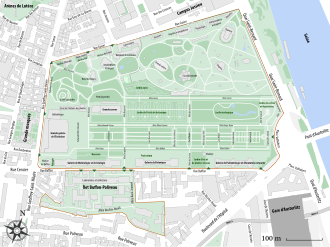
Located primarily within the historic Jardin des Plantes on the left bank of the River Seine in Paris, the museum now oversees a vast network of 14 sites across France, including zoological parks, botanical gardens, and specialized research centers.
Key Facts
- Founded: June 10, 1793 (Origins dating back to 1635).
- Collection Size: 67 million specimens.
- Annual Visitors: 3.8 million (FY-2024).
- Primary Location: Jardin des Plantes, Paris, France.
- Current Director: Gilles Bloch.
- Institutional Status: Grand établissement of higher education part of Sorbonne University.
A History of Scientific Evolution
From Royal Gardens to National Museum
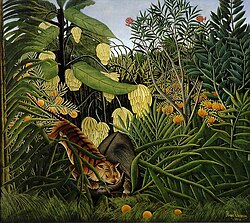
The museum's journey began in 1635 when King Louis XIII created the Royal Garden of Medicinal Plants, which was initially managed by royal physicians. By 1718, King Louis XV expanded its scope beyond medicine to include public lectures on botany (the study of plants), chemistry, and comparative anatomy. In 1729, the garden's chateau was expanded to house the Cabinet of Natural History, dedicated to royal zoology and mineralogy collections.
The formal transition to the Muséum National d'Histoire Naturelle occurred on June 10, 1793, by decree of the French Convention. This coincided with the establishment of the Louvre Museum, marking a pivotal moment in the democratization of science and art in France.
Growth and Challenges in the 19th and 20th Centuries
The 19th century was a period of massive architectural expansion. The museum added a new gallery of zoology (completed in 1889) and the Gallery of Palaeontology and Comparative Anatomy (opened in 1898). However, these ambitious projects strained the budget and led to conflicts with the University of Paris over teaching priorities, eventually pushing the MNHN to focus more heavily on research.
In the 20th century, the museum expanded its reach. In 1934, the Paris Zoological Park was opened in the Bois de Vincennes to house larger animals, and in 1937, the Musée de l'Homme (Museum of Man) was established at the Palais de Chaillot. Modern efforts have shifted toward studying the environmental impacts of human exploitation.
The Galleries and Gardens of Paris
The Grand Gallery of Evolution
The crown jewel of the MNHN is the Grand Gallery of Evolution. A masterpiece of Beaux Arts Architecture, it was opened in 1889 for the Paris Universal Exposition, the same event that debuted the Eiffel Tower. After falling into disrepair, the gallery underwent a major restoration between 1991 and 1994. It is famous for its breathtaking displays, including a nine-meter-long plastified giant squid.
Gallery of Mineralogy and Geology
Constructed in the neoclassical style between 1833 and 1837, this gallery houses an extensive collection of minerals and meteorites. A highlight is the 360 kg fragment of the Canyon Diablo meteorite, an asteroid piece that created the Meteor Crater in Arizona approximately 550,000 years ago.
Gallery of Botany
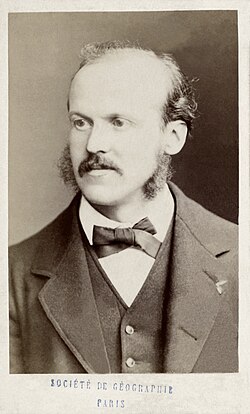
Built between 1930 and 1935 with support from the Rockefeller Foundation, this gallery houses the Herbier National. This collection contains 7.5 million plants, categorized into spermatophytes (seed-bearing plants) and cryptogams (spore-bearing plants like algae and fungi). Much of the collection was built upon the work of Jean Baptiste Christophore Fusée Aublet, who described hundreds of new species in French Guiana in 1775.
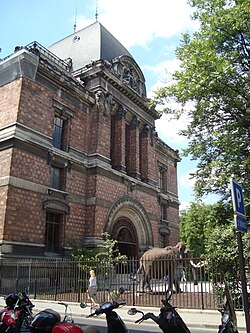
Gallery of Palaeontology and Comparative Anatomy
This gallery focuses on the history of life on Earth, featuring massive skeletons of Southern Mammoths, early whales (Cynthiacetus), and the extinct Elephant Bird (Aepyornis).
The Jardin des Plantes and the Ménagerie
The Jardin des Plantes serves as the museum's heart and original site. It has functioned as a living laboratory for legendary scientists, including Jean Baptiste Lamarck, the author of one of the earliest theories of evolution. The gardens have served as the staging ground for major scientific expeditions led by figures such as Alexander von Humboldt and Nicolas Baudin.
Within the gardens lies the Ménagerie, the second-oldest public zoo in the world still in operation. Established between 1798 and 1836 to house animals from the royal menagerie at Versailles, it now hosts approximately 600 animals across 189 species, including the critically rare Amur leopard.
Institutional Overview
| Category | Key Entities / Departments |
|---|---|
| Research Departments | Classification and Evolution; Ecology and Biodiversity Management; Prehistory; History of Earth; Aquatic Environments; Molecular Diversity; Men, Nature, and Societies. |
| Diffusion Departments | Galleries of the Jardin des Plantes; Botanical Parks and Zoos; Musée de l'Homme. |
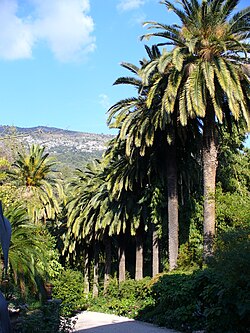
| External Sites | Paris Zoological Park; Vincennes Zoo; Chèvreloup Arboretum; Jardin botanique exotique de Menton; Abri Pataud Prehistoric Museum; L’Harmas de Fabre. |
Frequently Asked Questions
When was the Muséum National d'Histoire Naturelle founded?
The museum was formally established on June 10, 1793, during the French Revolution, although its origins date back to the Royal Garden of Medicinal Plants created in 1635.
What is the size of the museum's collection?
The MNHN manages a massive collection consisting of 67 million specimens.
What is the significance of the Grand Gallery of Evolution?
It is the museum's largest and most famous gallery, designed in the Beaux Arts style and opened in 1889. It serves as a primary showcase for the diversity of life on Earth.
Which rare animals can be found at the Ménagerie?
The Ménagerie is home to about 600 animals from 189 species, including the rare Amur leopard.
What is the Herbier National?
The Herbier National is the museum's botanical collection, containing 7.5 million plant specimens used for scientific study and classification.