Michel Adanson: The Naturalist Who Challenged Linnaean Taxonomy
In the 18th century, the world of biological classification was dominated by the binomial system of Carl Linnaeus. However, a French naturalist named Michel Adanson sought a different path. Rather than relying on a limited set of characteristics, Adanson proposed a "natural system" of taxonomy that looked at the totality of an organism's features to determine its relationships.
Born in Aix-en-Provence on 7 April 1727, Adanson’s journey from a student in Paris to a pioneering scientist was marked by immense intellectual curiosity and, ultimately, profound personal hardship. His work would eventually pave the way for modern botanical methods and influence early concepts of evolutionary change.
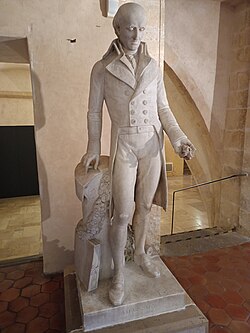
Key Facts
- Field of Study: Naturalist and Botanist
- Major Contribution: Proposed a natural system of classification based on multiple organ characteristics.
- Key Expedition: Five-year study of Senegal (1748–1753).
- Major Publication: Familles des plantes (1763).
- Scientific Legacy: The genus Adansonia (baobab) and the turtle species Pelusios adansonii are named in his honor.
The Senegal Expedition and Scientific Discovery
After studying at the Collège Sainte-Barbe and working within the cabinets of R. A. F. Réaumur and Bernard de Jussieu, Adanson embarked on a transformative expedition. Funded by a director of the Compagnie des Indes, he traveled to Senegal in late 1748.
During his five years in Senegal, Adanson acted as a true polymath. He did not merely collect plants and animals; he mapped the country, recorded meteorological and astronomical data, and even prepared grammars and dictionaries for the local languages. This vast collection of data formed the basis of his 1757 work, Histoire naturelle du Senegal.
Unfortunately, the publication of this work brought financial ruin. Following the publisher's bankruptcy, Adanson incurred a loss of 5,000 livres, beginning a period of lifelong poverty. Despite this, the book contained a groundbreaking essay on shells, where he first proposed a universal classification method distinct from the systems of Buffon and Linnaeus.
Revolutionizing Botanical Classification
Adanson’s approach to taxonomy was radical for its time. While the Linnaean system focused on specific sexual organs of plants, Adanson argued that classification should consider every individual organ. He believed that by observing all characteristics, one could establish a more accurate hierarchy of relatedness.
The Principle of Natural Relations
In his 1763 publication, Familles des plantes, Adanson refined this principle. He built upon the foundations laid by Joseph Pitton de Tournefort and John Ray, aiming for a system that adhered to natural botanical relations. Although his innovative use of terminology was initially ridiculed by supporters of the Linnaean system, his work was instrumental in the eventual acceptance of the natural method, later championed by Antoine Laurent de Jussieu.
The Unfinished Magnum Opus
Adanson’s ambition was nearly limitless. In 1774, he submitted a massive manuscript to the French Academy of Sciences. This work was staggering in scale, comprising 27 volumes of general relations, 150 volumes of alphabetical arrangements for 40,000 species, a 200,000-word vocabulary, and 30,000 specimens. Despite the Academy's recommendation to publish only his original findings, Adanson refused to abandon the entire compilation, and the work was never published.
| Category | Details |
|---|---|
| Lifespan | 7 April 1727 – 3 August 1806 |
| Primary Institution | Jardin des Plantes, Paris |
| Taxonomic Abbreviation | Adans. |
| Scientific Focus | Natural taxonomy, fungi, lichens, and evolutionary precursors |
| Notable Descendant | Aglaé Adanson (Horticulturalist) |
Early Concepts of Evolution
Adanson is often regarded as a precursor to evolutionary thought. While he rejected the concept of species transmutation and focused on the individual, he suggested that changes in specific characteristics could be produced through the inheritance of acquired characters. In 1769, he even used the term "mutations" to describe small changes leading to new variations in individuals.
His botanical insights extended to other groups as well; he was the first to classify lichens alongside fungi and made significant attempts to classify fungi based on the complexity of their fruit bodies.
Legacy and Later Years
Adanson's later life was defined by extreme penury. After the dissolution of the Academy of Sciences in 1793, he lost his pension and lived in such poverty that he was unable to attend the French Institute when invited to join. He eventually received a small pension to cover his basic needs.
He passed away in Paris in 1806. In a final, poetic gesture, he requested that his grave be decorated only with a garland of flowers from the fifty-eight plant families he had identified. Today, his scientific legacy lives on through the Adansonia genus and the preservation of his herbarium at the Hunt Institute for Botanical Documentation.
Frequently Asked Questions
How did Adanson's taxonomy differ from Linnaeus?
While Linnaeus used a specific, limited set of characteristics (primarily sexual organs) to classify plants, Adanson proposed a "natural system" that considered the totality of all organs to determine relationships.
What is the significance of the abbreviation "Adans."?
In botany, "Adans." is the standard author abbreviation used to credit Michel Adanson as the author when citing a specific botanical name.
Was Michel Adanson an evolutionary theorist?
He is considered a precursor to evolutionism. While he did not believe in the transmutation of species, he described how small "mutations" and the inheritance of acquired characters could produce variations in individuals.
What happened to his massive 1774 manuscript?
Despite its immense scale—comprising hundreds of volumes and thousands of specimens—Adanson refused to separate his original work from his compilations, and the work was never published.
What are some biological names honoring Adanson?
The baobab tree genus, Adansonia, and the turtle species Pelusios adansonii are both named in his honor.