Antoine Laurent de Jussieu: The Architect of Natural Plant Classification
In the history of biological science, few figures have reshaped our understanding of the natural world as profoundly as Antoine Laurent de Jussieu. A French botanist whose influence persists to this day, Jussieu moved beyond the rigid, artificial systems of his predecessors to develop a method of classification that mirrored the true complexity of nature. By focusing on the relationships between plant characteristics, he laid the groundwork for modern taxonomy—the science of naming, describing, and classifying organisms.
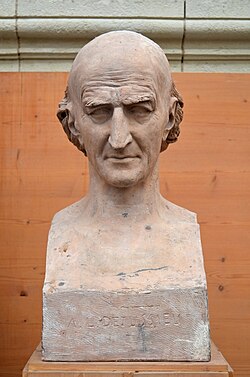
A Legacy of Botanical Innovation
Before Jussieu, the scientific community largely relied on the Linnaean system. While revolutionary, Linnaeus's method was considered "artificial" because it categorized plants based on a limited number of specific traits, such as the count of stamens and pistils. Jussieu proposed a more holistic approach. He argued that plant characteristics should be pesés et non comptés—weighed, not counted.
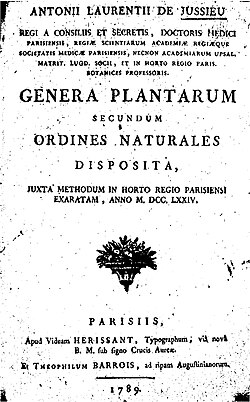
This methodology involved using multiple characters to define groups, assigning different levels of importance to various traits. This hierarchical approach allowed for a more nuanced and accurate representation of plant families. His seminal work, Genera plantarum, published in 1789, introduced this natural system, which eventually gained widespread acceptance among leading botanists like Robert Brown and A. P. de Candolle.
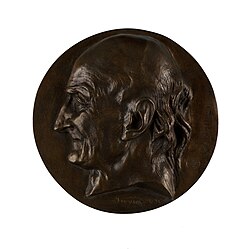
The Genera plantarum and the Natural System
In his landmark 1789 publication, Jussieu organized the plant kingdom into a structured hierarchy. Building upon the unpublished research of his uncle, Bernard de Jussieu, he established major groupings that remain foundational to botany. His system categorized plants into three primary groups:
- Acotyledon
- Monocotyledon
- Dicotyledon
From these groups, he derived fifteen classes and approximately one hundred families, known as ordines naturales. The impact of this work is measurable; while Linnaeus is credited with 11 conserved families in the International Code of Botanical Nomenclature (ICBN), Jussieu’s work accounts for 76.
Life and Scientific Career
Born in Lyon on April 12, 1748, Jussieu was part of a remarkable botanical dynasty. His father, Christophle, was an amateur botanist, and his three uncles—Antoine, Bernard, and Joseph—were all prominent figures in the field. This familial environment provided a rich foundation for his studies. After moving to Paris in 1765 to study medicine, he earned his doctorate in 1770 with a thesis focused on animal and vegetable physiology.
Jussieu's professional ascent was rapid. He was appointed as a botany Demonstrator at the Jardin du Roi (later renamed the Jardin des plantes) and was elected to the Académie des Sciences in 1773 following a successful lecture on the Ranunculaceae family. His career spanned periods of immense political upheaval, including the French Revolution, during which he served in the municipal government of Paris managing hospitals and played a key role in reorganizing the Jardin into the Muséum national d'histoire naturelle.
Institutional Leadership and Contributions
Jussieu held several prestigious positions throughout his life, including serving as the Director of the Muséum national d'histoire naturelle during two separate terms (1794–1795 and 1798–1800). He was also a professor of botany and, in 1808, was appointed as a counsellor of the university by Napoleon. One of his significant institutional achievements was the establishment of a comprehensive herbarium, aided by the acquisition of various collections during the revolutionary era.
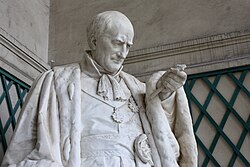
Key Facts
- Full Name: Antoine Laurent de Jussieu
- Lifespan: 12 April 1748 – 17 September 1836 (aged 88)
- Major Work: Genera plantarum (1789)
- Core Philosophy: Natural classification based on the relative value of multiple plant characteristics ("weighed, not counted").
- Key Institutions: Jardin des Plantes and Muséum national d'histoire naturelle.
- Scientific Impact: Established the basis for modern plant taxonomy and suprageneric nomenclature.
Summary of Botanical Contributions
| Feature | Linnaean System (Artificial) | Jussieu's System (Natural) |
|---|---|---|
| Primary Method | Counting specific organs (stamens/pistils) | Weighing multiple characters hierarchically |
| Complexity | Simple, easy to use for identification | Complex, reflecting evolutionary relationships |
| Nomenclature | Used binomial nomenclature | Retained binomial nomenclature |
| Legacy | 11 conserved families in ICBN | 76 conserved families in ICBN |
Frequently Asked Questions
What is the difference between an artificial and a natural classification system?
An artificial system, like Linnaeus's, uses a few easily observable traits to group organisms. A natural system, like Jussieu's, uses a wide array of characteristics to group organisms based on their overall structural similarities and relationships.
Why is Jussieu's work considered "epochal"?
His work Genera plantarum shifted the entire paradigm of botany from simple counting to a sophisticated analysis of plant morphology, providing a framework that remains relevant to modern plant science.
What were the three major groupings Jussieu identified?
Jussieu identified Acotyledon, Monocotyledon, and Dicotyledon as the primary groupings in his classification system.
How did the French Revolution affect Jussieu's career?
The Revolution led to the renaming of the Jardin du Roi to the Jardin des plantes and the reorganization of the institution into the Muséum national d'histoire naturelle, where Jussieu held significant leadership roles.
Where can Jussieu's legacy be seen today?
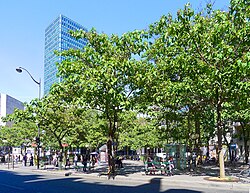
His legacy is visible in the many plant families still attributed to him, the Place Jussieu in Paris, and various scientific institutions and geographical locations named in his honor.