Multicellular Organisms: Evolution, Origins, and Biological Complexity
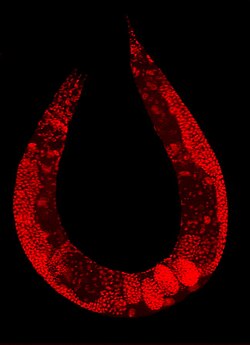
Life on Earth exists in a spectrum of complexity, ranging from single-celled microbes to massive, intricate animals. A multicellular organism is defined as an organism consisting of more than one cell and more than one cell type. This distinguishes them from unicellular organisms, which perform all life functions within a single cell.
While all animals, land plants, and most fungi are multicellular, the transition from single cells to complex bodies is not a simple linear path. Some organisms, such as slime molds and social amoebae (like the genus Dictyostelium), exist in a hybrid state, being partially unicellular and partially multicellular. Additionally, some macroscopic organisms, such as Xenophyophorea, can reach sizes of 20 cm; however, they are technically unicellular because they are multinucleate rather than composed of multiple distinct cells.
Key Facts
- Multicellularity evolved independently at least 25 times in eukaryotes and also occurred in certain prokaryotes.
- Complex multicellularity is limited to six eukaryotic groups: animals, symbiomycotan fungi, brown algae, red algae, green algae, and land plants.
- Animals exhibit the highest cell diversity, with 100–150 different cell types, compared to 10–20 in plants and fungi.
- The Colonial Theory suggests multicellularity arises when identical individuals join to form a colony.
- Experimental evolution in yeast has demonstrated the rapid emergence of macroscopic multicellular clusters.
The Evolutionary History of Multicellularity
The shift toward multicellularity is one of the most significant transitions in biological history. In eukaryotes, this process happened repeatedly. For example, it evolved once for animals and brown algae, and three times within fungi (specifically in chytrids, ascomycetes, and basidiomycetes). It also appeared multiple times in red algae and the Chloroplastida group, which includes green algae and land plants.
Beyond eukaryotes, some prokaryotes have also exhibited multicellular traits, including cyanobacteria, myxobacteria, actinomycetes, Magnetoglobus multicellularis, and Methanosarcina.
The Challenge of Reproduction
For a true multicellular organism to persist across generations, it must solve a fundamental biological problem: regenerating a complete, complex organism from germ cells (sperm and egg cells). This process is a primary focus of evolutionary developmental biology.
Theories on the Origin of Multicellularity
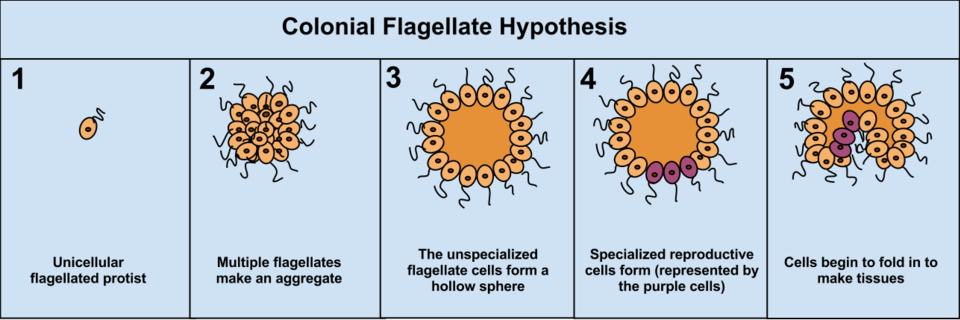
Scientists have proposed several hypotheses to explain how single cells began working together. One of the most prominent is the Colonial Theory, which posits that multicellularity began when single-celled organisms formed colonies. This theory is supported by observations in 16 different protoctistan phyla.
A clear example is the amoeba Dictyostelium, which aggregates into a single moving colony during food shortages, with some cells beginning to differentiate. Similarly, the Volvocaceae family includes Volvox, which can consist of 500 to 50,000 cells. In some species, only a small fraction (25–35 cells) are responsible for reproduction, while the rest provide structural support.
Because the line between a colony of individuals and a single multicellular organism is often blurred, some researchers use the term pluricellular to describe colonial protists.
Other Proposed Mechanisms
- Symbiotic Theory: Suggests different species of single-celled organisms merged to form a single organism.
- Cellularization (Syncytial) Theory: Proposes that a single cell grew large and developed multiple nuclei before dividing into separate cells.
- Synzoospore Theory: Focuses on the role of specialized spores in the transition to multicellularity.
Experimental Evolution: The "Snowflake" Yeast
Modern science has observed the evolution of multicellularity in real-time using yeast. Yeast are known for flocculation (clumping), often driven by the FLO1 gene. Researchers identified a "snowflake" phenotype caused by the loss of the transcription factor Ace2, leading yeast to grow in multicellular clusters that sediment quickly.
In a 2024 study, these snowflake yeast underwent over 3,000 generations of directed evolution, eventually forming macroscopic assemblies measured in millimeters. Interestingly, this trait evolved only in anaerobic cultures (environments without oxygen), while aerobic cultures did not develop the same multicellular structures.
Summary of Multicellularity Characteristics
| Category | Cell Types | Examples | Key Characteristic |
|---|---|---|---|
| Unicellular | 1 | Bacteria, Amoeba | Single cell performs all functions |
| Pluricellular (Colonial) | Few | Volvox, Eudorina | Identical cells joining in colonies |
| Complex Multicellular | Many | Animals, Land Plants | High specialization and differentiation |
Frequently Asked Questions
What is the difference between multicellular and pluricellular organisms?
Multicellular organisms typically have highly specialized cell types and a coordinated developmental plan. Pluricellular organisms, often colonial protists, consist of many similar cells that live together in a colony but lack the deep level of differentiation found in true multicellularity.
How many times has multicellularity evolved?
Multicellularity has evolved independently at least 25 times in eukaryotes and has also appeared in several prokaryotic groups, such as cyanobacteria.
Why do animals have more cell types than plants?
Animals have evolved a vast diversity of cell types, ranging from 100 to 150, to support complex systems like nerves and muscles. In contrast, plants and fungi typically possess between 10 and 20 different cell types.
What is "snowflake yeast"?
Snowflake yeast is a laboratory-evolved strain of yeast that lacks the Ace2 transcription factor. This causes them to form multicellular clusters that sediment quickly, providing a model for studying the evolution of macroscopic life.
Can a single-celled organism be macroscopic?
Yes. Some organisms, such as Xenophyophorea, can reach 20 cm in size. However, they are considered unicellular because they contain multiple nuclei within a single cell membrane rather than being composed of multiple individual cells.