The Remarkable World of Eukaryotes: Life's Complex Architects
From the microscopic picozoans that drift through the ocean to the massive blue whale stretching over 33 meters long, eukaryotes represent some of the most diverse and complex life forms on Earth. Unlike their simpler counterparts, the prokaryotes (which include bacteria and archaea), eukaryotes possess specialized internal structures that allow them to grow to incredible sizes and perform intricate biological functions.
While eukaryotes make up only a small minority of the total number of organisms on our planet, their physical presence is massive. The collective global biomass of eukaryotes is estimated at 468 gigatons, significantly outweighing the 77 gigatons of prokaryotic biomass. In fact, plants—a major group of eukaryotes—account for more than 81% of all biomass on Earth.
The Incredible Diversity of Eukaryotic Life
The scale of eukaryotic life is nearly impossible to fathom. On the smallest end of the spectrum, some single-celled eukaryotes, known as picozoans, are less than 3 micrometers across. On the largest end, we find the coast redwood, which can reach heights of 120 meters, and the blue whale, which can weigh up to 190 tonnes.
Eukaryotes are categorized into several major subdivisions based on their evolutionary relationships. These include groups such as Amorphea (which contains animals and fungi), Diaphoretickes (which includes land plants), and the SAR supergroup (comprising Stramenopiles, Alveolata, and Rhizaria). This vast biological tree includes everything from single-celled protists to complex multicellular organisms like plants, animals, and fungi.
Distinguishing Features of Eukaryotic Cells
What truly sets a eukaryote apart from a prokaryote is its internal complexity. Eukaryotic cells are typically around 10,000 times larger in volume than prokaryotic cells, a size made possible by specialized compartments called organelles.
The Nucleus and Internal Membranes
The defining characteristic of a eukaryote is the nucleus, a membrane-bound structure that houses the cell's genetic material. This organization is supported by an intricate system of internal membranes that allow different chemical reactions to occur in isolated environments within the same cell.
Mitochondria: The Energy Centers
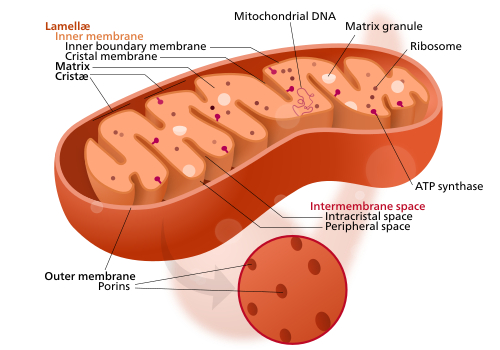
Most eukaryotes rely on mitochondria to produce energy. These organelles are so unique that they possess their own DNA, a trait that suggests they were once independent organisms. They act as the "powerhouses" of the cell, converting nutrients into usable energy.
Plastids and Photosynthesis
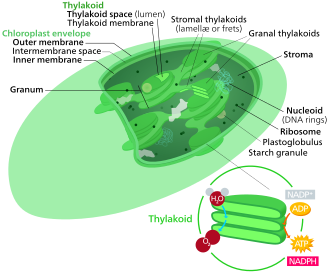
In many eukaryotes, such as plants and algae, specialized organelles called plastids are present. The most common type is the chloroplast, which contains chlorophyll and allows the organism to produce organic compounds through the process of photosynthesis.
The Cytoskeleton: Cellular Scaffolding
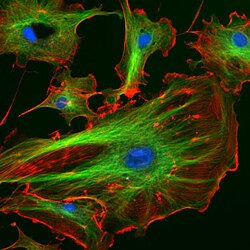
To maintain their large size and complex shapes, eukaryotes utilize a cytoskeleton. This is a network of protein filaments, such as actin filaments and microtubules, that provides structural support and allows for internal transport and movement within the cell.
Sexual Reproduction and Life Cycles
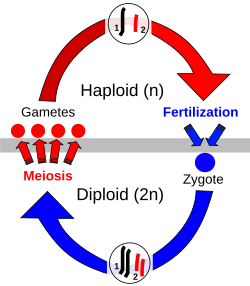
Eukaryotes often utilize sexual reproduction, a process that increases genetic diversity. This typically involves a life cycle that alternates between two phases: a haploid phase (where cells contain one copy of each chromosome) and a diploid phase (where cells contain two copies). In many eukaryotes, haploid gametes are produced through a specialized cell division called meiosis, and when two gametes fuse, they form a diploid zygote.
The Evolutionary Origins of Eukaryotes
The exact timeline of when eukaryotes first appeared is a subject of intense scientific debate, as the fossil record for early life is often contested.
The Theory of Symbiogenesis
One leading explanation for the origin of the eukaryotic cell is symbiogenesis. This theory suggests that eukaryotes arose from a merger between different types of cells. Specifically, a merger between an archaean and an aerobic bacterium is thought to have created the first eukaryotes with mitochondria. A subsequent merger involving a photosynthetic organism is believed to have added chloroplasts, leading to the evolution of green plants.
![In the theory of symbiogenesis, a merger of an archaean and an aerobic bacterium created the eukaryotes, with aerobic mitochondria; a second merger added chloroplasts, creating the green plants.[79]](/images/e9/cb/e9cb97de8e68d89d1e7e206794ffe6c0406cbffe0cc8b1aa6226645ea032242a.webp)
The Fossil Record and Ancient Life
While the origin is difficult to pin down, fossils clearly related to modern groups appear roughly 1.2 billion years ago in the form of red algae. However, some evidence suggests even older life. Fossils from the Ruyang Group in China, dating to 1.8–1.6 billion years ago, may be among the oldest known eukaryotes. The multicellular organism Qingshania magnifica lived approximately 1.635 billion years ago.
A 2026 study suggests that early fossil eukaryotes (dating from 1.75 to 1.4 billion years ago) may have been benthic aerobes—organisms that lived on the bottom of oxygenated waters—rather than floating in the water column (planktonic environments) until much later.
Some fossils push these dates even further back. The fossil Grypania may be as old as 2.1 billion years, and the "problematic" fossil Diskagma has been found in rocks approximately 2.2 billion years old.
![Reconstruction of the problematic[90] Diskagma buttonii, a terrestrial fossil less than 1mm high, from rocks around 2.2 billion years old](/images/24/e0/24e069594597013a4d510ccb76379a82fb9cca172603ba8ca9518c40ea868bac.jpg)
Key Facts
- Biomass: Eukaryotes account for 468 gigatons of Earth's biomass, with plants making up over 81%.
- Cell Size: Eukaryotic cells are roughly 10,000 times larger in volume than prokaryotic cells.
- Size Range: Organisms range from picozoans (<3 micrometers) to coast redwoods (120 meters).
- Defining Feature: The presence of a membrane-bound nucleus.
- Oldest Fossils: Potential eukaryotic fossils like Diskagma date back to 2.2 billion years ago.
Summary Comparison
| Feature | Eukaryotes | Prokaryotes |
|---|---|---|
| Nucleus | Present | Absent |
| Cell Size | Large (up to 10,000x greater volume) | Small |
| Organelles | Complex (Mitochondria, Plastids, etc.) | Simple/Absent |
| Global Biomass | 468 Gigatons | 77 Gigatons |
Frequently Asked Questions
What is the main difference between eukaryotes and prokaryotes?
The primary difference is that eukaryotes have a membrane-bound nucleus that houses their DNA, as well as other specialized organelles like mitochondria. Prokaryotes lack a nucleus and these complex internal compartments.
How large can eukaryotic organisms grow?
Eukaryotes exhibit an incredible range of sizes. They can be as small as microscopic picozoans (under 3 micrometers) or as large as the blue whale (up to 33.6 meters long) and the coast redwood tree (up to 120 meters tall).
What is symbiogenesis?
Symbiogenesis is a theory explaining the origin of eukaryotes through the merger of different organisms. It proposes that mitochondria and chloroplasts originated from bacteria that were engulfed by an ancestral cell, eventually becoming permanent parts of the cell.
How old are the earliest eukaryotes?
The timeline is debated, but some fossils like Grypania are estimated to be 2.1 billion years old, while the problematic Diskagma fossil is found in rocks approximately 2.2 billion years old. Clearly identifiable eukaryotic groups appear around 1.2 billion years ago.
What is the role of mitochondria in a cell?
Mitochondria act as the energy centers of the cell. They are responsible for producing the energy required for various cellular processes and possess their own unique DNA.