Mulatto History and Global Racial Classifications
The term mulatto historically describes individuals of mixed African and European ancestry. While the term's usage and social acceptability have evolved over centuries, it remains a central concept in the study of colonial social hierarchies, demographics, and the complex history of racial admixture across the Americas, Africa, and the Caribbean.
From the early colonial era to the modern day, the experience of mixed-race populations has varied wildly depending on local laws, cultural attitudes toward skin color, and the political structures of the ruling powers.
Key Facts
- Global Presence: Significant populations exist in Brazil, Colombia, the Dominican Republic, Venezuela, Puerto Rico, Panama, Cape Verde, and the United States.
- Brazil's Pardo Population: As of the 2020 census, 45.3% of Brazilians identify as pardo (mixed background).
- Genetic Diversity: In the Dominican Republic, the average founder population is estimated at 73% European, 17% African, and 10% Native American.
- Legal Fluidity: Spanish colonial laws, such as the Regla del Sacar, allowed mixed-race individuals to pay a fee to be legally classified as white.
- US Classification: Historically, the US used rigid systems like the "one-drop rule," contrasting with the more fluid racial categories found in Latin America.
Regional Perspectives on Mixed Ancestry
Latin America and the Caribbean
In Latin America, racial categories often blended European, African, and Indigenous ancestries. In Brazil, the term pardo is widely used to encompass various degrees of mixture. The 2006 census showed 42.6% of the population identifying as pardo, a figure that rose to 45.3% by 2020.
In the Dominican Republic, the population is predominantly a mix of European and African ancestry with smaller amounts of indigenous Taino. Local terms include Mestizo (any mixed ancestry) and Indio (those with skin tones between white and black).
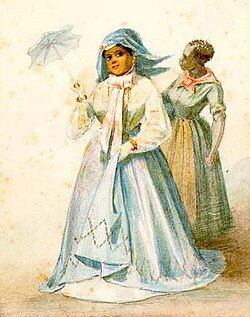
Puerto Rico presents a unique case of demographic shift. In the early 19th century, the island was two-thirds black and mulatto. However, due to the Royal Decree of Graces of 1815 and flexible racial laws, the population became nearly 80% white by the mid-20th century.
Africa and the Atlantic Islands
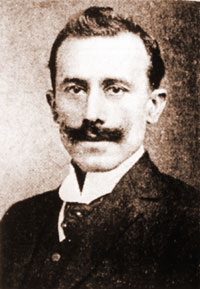
In Cape Verde and São Tomé and Príncipe, mixed-race populations (mestiços) formed as a result of unions between Portuguese colonists and enslaved Africans. In Cape Verde, 71% of the population is classified as such. Historically, these individuals often served as bilingual interpreters, occupying a social tier between colonists and enslaved people.
In Namibia, the Rehoboth Basters descend from Dutch Cape Colony settlers and indigenous African women. Though the name derives from the Dutch word for "bastard," the community uses the term proudly to signify their specific history.
Racial Hierarchies and Classification Systems
The United States and Colonial Louisiana
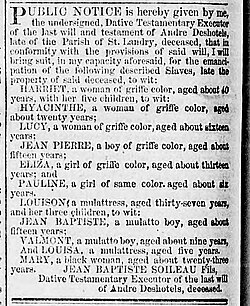
Unlike the more fluid systems in Spanish colonies, the United States often employed strict racial boundaries. In colonial Louisiana, a highly specific nomenclature was used to define a person's "percentage of Afro blood."
![Advertisement in the Virginia Gazette placed by Thomas Jefferson offering a reward for his escaped slave named Sandy who was defined as "mulatto".[114]](/images/ec/0e/ec0e209ecd94dcfccf584fede768f5baa16466ec123dbabaef41dbdce5754cbf.png)
| Term | Parentage | Estimated African Ancestry |
|---|---|---|
| Mulatto | Black and White | 50% |
| Quadroon | White and Mulatto | 25% |
| Octoroon | White and Quadroon | 12.5% |
| Griffe | Black and Mulatto | 75% |
| Sacatro | Black and Griffe | 87.5% |
Cuba's Demographic Evolution
Cuba's racial makeup has been heavily influenced by migration. While the 2012 census reported 26.6% of Cubans as mulatto or mestizo, the average DNA across the population is 72% European, 23% African, and 5% indigenous. A significant wave of Spanish migration between 1902 and 1933 altered the demographics, as many new arrivals did not intermix with the local population as previous settlers had.
Frequently Asked Questions
What is the difference between a Mulatto and a Mestizo?
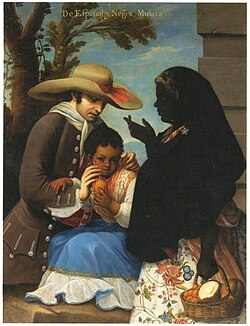
Historically, a mulatto refers to a person of mixed European and African descent. A mestizo typically refers to a person of mixed European and Indigenous American descent, though in some regions, like the Dominican Republic, the term is used more broadly for any mixed ancestry.
What was the Regla del Sacar?
The Regla del Sacar (or Gracias al Sacar) was a legal mechanism in Spanish colonies, such as Puerto Rico, that allowed individuals of mixed race to purchase a legal certificate of "whiteness," granting them the social and legal privileges of white citizens.
How does the "one-drop rule" differ from Latin American racial views?
The "one-drop rule" used in the United States classified anyone with any amount of African ancestry as black. In contrast, many Latin American and Caribbean societies used a spectrum of categories based on skin tone and parentage, allowing for more social mobility between racial tiers.
What is the current racial makeup of the Dominican Republic?
Recent DNA studies indicate the population is predominantly European and African. The average founder population was 73% European, 17% African, and 10% Native, though subsequent migrations have shifted the overall average to approximately 57% European, 35% African, and 8% Native.