Articles/Latin America: A Comprehensive Overview of Geography, Economy, and Culture
Latin America geographyLatin American economyLatin American demographicsLatin American cultureLatin American history
Latin America: A Comprehensive Overview of Geography, Economy, and Culture
Exploring Latin America: A Comprehensive Guide to its People, Economy, and Culture Latin America is a vast and diverse region that spans much of the Americas, encompassing a rich tapestry...
Exploring Latin America: A Comprehensive Guide to its People, Economy, and Culture
Latin America is a vast and diverse region that spans much of the Americas, encompassing a rich tapestry of history, geography, and cultural expression. With a population exceeding 656 million people, it stands as one of the most significant political and economic entities in the world. From the high peaks of the Andes to the lush expanses of the Amazon, the region offers a unique blend of indigenous heritage and colonial influence.
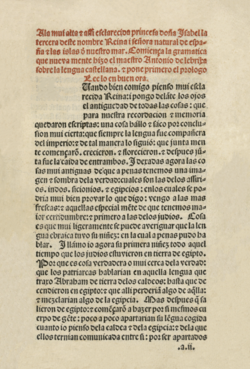
The first page of Nebrija's Gramática de la lengua castellana in 1492.: The first page of Nebrija's Gramática de la lengua castellana in 1492.
Key Facts
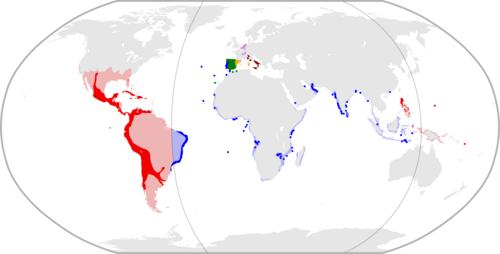
Philip II's dominions in 1598, coloured by governing council: Castile Aragon Portugal Italy the Indies Flanders
Total Area: Approximately 20,111,457 km².
Population: Over 656 million (2021 estimate).
Major Languages: Spanish (60%) and Portuguese (33%).
Economic Power: Total GDP (PPP) of $14.071 trillion (2024).
Primary Religions: Predominantly Catholic (69%).
Top Manufacturing Hubs: Mexico and Brazil lead the region in manufacturing value.
Geography and Subregions
The library of El Escorial
Latin America is not a single monolith but a collection of diverse subregions. These are generally categorized into South America, Central America, North America (specifically Mexico), and the Caribbean. This geographic variety results in a wide range of climates and ecosystems.
Areas of the world with a Catholic Christian majority. Latin America, like Latin Europe, is linked to the Latin Church.: Areas of the world with a Catholic Christian majority. Latin America, like Latin Europe, is linked to the Latin Church.
The four common subregions in Latin America: The four common subregions in Latin America
The region is part of the Neotropical realm, a biogeographic area characterized by high biodiversity. The climate varies significantly, ranging from tropical rainforests to arid deserts and temperate zones.
The Neotropical realm (in purple): The Neotropical realm (in purple)
South America Köppen climate map[66]: South America Köppen climate map[66]
Natural wonders abound, from the deep Sumidero Canyon in Mexico to the majestic peaks of Argentine Patagonia.
Sumidero Canyon, located in Chiapas, Mexico.: Sumidero Canyon, located in Chiapas, Mexico.
Monte Fitz Roy, Argentine Patagonia: Monte Fitz Roy, Argentine Patagonia
Demographics and Society
UNASUR summit in the Palacio de la Moneda, Santiago de Chile
The demographic makeup of Latin America is a profound reflection of its history, characterized by Mestizaje—the mixing of different ethnic groups. The largest group is Mestizo (40%), representing mixed Indigenous Amerindian and European heritage, followed by those of European heritage (29%) and mixed African and European heritage (19%).
Eighteenth-century Mexican Casta painting showing 16 castas hierarchically arranged. Ignacio Maria Barreda, 1777. Real Academia Española de la Lengua, Madrid.: Eighteenth-century Mexican Casta painting showing 16 castas hierarchically arranged. Ignacio Maria Barreda, 1777. Real Academia Española de la Lengua, Madrid.
Map of ethno-racial distribution by country.: Map of ethno-racial distribution by country.
Language plays a vital role in identity. While Indo-European languages dominate—specifically Spanish and Portuguese—many indigenous languages remain widely spoken, including Quechua, Guaraní, Aymara, and Nahuatl.
Most widely spoken Native languages in Latin America:Quechua, Guaraní, Aymara, Náhuatl, Mayan Languages, Mapudungun: Most widely spoken Native languages in Latin America:Quechua, Guaraní, Aymara, Náhuatl, Mayan Languages, Mapudungun
Standard of Living and Health
The region shows varying levels of development. The Human Development Index (HDI), a composite statistic used to measure social and economic development, ranges from "Very High" in countries like Chile and Argentina to "Medium" in others. Life expectancy has seen significant trends, with notable recoveries following the COVID-19 pandemic.
Life expectancy and healthy life expectancy in Latin America in 2019[279]: Life expectancy and healthy life expectancy in Latin America in 2019[279]
Economic Drivers: Resources and Industry
Honduran demonstrator holding a banner with a "don't turn left" sign, 2009
Latin America's economy is heavily supported by its vast natural resources. The region is a global leader in the extraction of minerals and the production of agricultural commodities.
Mining and Energy
The region is rich in essential minerals. Key producers include:
Copper: Chile, Peru, Mexico, and Brazil.
Silver: Mexico, Peru, Chile, Bolivia, and Argentina.
Lithium: Chile, Argentina, and Brazil.
Gold: Peru, Mexico, Brazil, and Argentina.
Cerro Rico, Potosi, Bolivia, still a major mine: Cerro Rico, Potosi, Bolivia, still a major mine
Energy production is also diverse, utilizing hydroelectric power, wind, solar, and nuclear energy to meet growing demands.
Itaipu Dam in Paraná: Itaipu Dam in Paraná
Wind power in Parnaíba: Wind power in Parnaíba
Pirapora Solar Complex, the largest in Brazil and Latin America with a capacity of 321 MW: Pirapora Solar Complex, the largest in Brazil and Latin America with a capacity of 321 MW
Angra Nuclear Power Plant in Angra dos Reis, Rio de Janeiro: Angra Nuclear Power Plant in Angra dos Reis, Rio de Janeiro
Agriculture and Manufacturing
Agriculture is a cornerstone of many Latin American economies. For instance, Latin America produces half of the world's soybeans, with Brazil being a massive producer. The region also contributes 25% of the world's beef and chicken meat.
Soybean plantation in Mato Grosso. In 2020, Brazil was the world's largest producer, with 130 million tons. Latin America produces half of the world's soybeans.: Soybean plantation in Mato Grosso. In 2020, Brazil was the world's largest producer, with 130 million tons. Latin America produces half of the world's soybeans.
Truck of a meat company in Brazil. Latin America produces 25% of the world's beef and chicken meat.: Truck of a meat company in Brazil. Latin America produces 25% of the world's beef and chicken meat.
In manufacturing, Mexico and Brazil hold significant global positions, with Mexico ranking as the 12th most valuable industry in the world as of 2019.
Culture, Art, and Heritage
Glaucous macaw (behind hyacinth macaw) and other macaws. Macaws are long-tailed, often colorful New World parrots.[72]
The cultural landscape of Latin America is incredibly vibrant, expressed through world-renowned literature, film, music, and dance. The region has produced numerous Nobel Prize winners in Literature, including Gabriel García Márquez and Gabriela Mistral.
Chilean poet Gabriela Mistral, first Latin American to win a Nobel Prize in Literature, in 1945: Chilean poet Gabriela Mistral, first Latin American to win a Nobel Prize in Literature, in 1945
Gabriel García Márquez Nobel Prize in Literature in 1982, primarily for his masterpiece, "One Hundred Years of Solitude" ("Cien años de soledad").: Gabriel García Márquez Nobel Prize in Literature in 1982, primarily for his masterpiece, "One Hundred Years of Solitude" ("Cien años de soledad")
Music and dance, such as Tango in Argentina, Salsa in Colombia, and Samba in Brazil, are iconic cultural exports that have gained international acclaim.
Salsa dancing in Cali, Colombia: Salsa dancing in Cali, Colombia
A couple dances tango in Buenos Aires, Argentina.: A couple dances tango in Buenos Aires, Argentina
Brazilian singer Carmen Miranda helped popularize samba internationally.: Brazilian singer Carmen Miranda helped popularize samba internationally.
UNESCO World Heritage Sites
The region is home to numerous UNESCO World Heritage Sites, which recognize locations of outstanding universal value, both cultural and natural.
Mayan UNESCO World Heritage Site of Chichén Itzá.: Mayan UNESCO World Heritage Site of Chichén Itzá.
Summary of UNESCO World Heritage Sites by Country
Country
Natural Sites
Cultural Sites
Mixed Sites
Total Sites
Mexico
6
28
1
35
Brazil
7
14
0
21
Peru
2
9
2
13
Argentina
5
6
0
11
Cuba
2
7
0
9
Colombia
2
6
1
9
Frequently Asked Questions
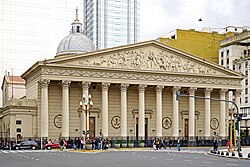
The former Casa Lonja (right), built by Philip II and today the General Archive of the Indies, next to the Cathedral of SevillePotosi produced massive amounts of silver from a single site in upper Peru. The first image published in Europe. Pedro Cieza de León, 1553.Braskem, the largest Brazilian chemical industryEMS, the largest Brazilian pharmaceutical industrySteel production in San Nicolás, Argentina.Panama Canal expansion project; New Agua Clara locks (Atlantic side)General Rafael Urdaneta BridgePort of Itajaí, Santa Catarina, BrazilYPF headquarters in Buenos Aires, Argentina.Aerial view of Cancún. Mexico is the most visited country in Latin America and 6th in the world.Rafael Correa, Evo Morales, Néstor Kirchner, Cristina Fernández, Luiz Inácio Lula da Silva, Nicanor Duarte, and Hugo Chávez at the signing of the founding charter of the Bank of the SouthSlums on the outskirts of a wealthy urban area in São Paulo, Brazil.Spanish Inquisition's auto-da-fé held in the Plaza Mayor, Madrid in 1680Italian immigrants arriving in Buenos Aires, during the great European immigration wave to Argentina.Trilingual sign in Spanish, Italian and Piedmontese in San Francisco, Córdoba Province, Argentina.The first Mass in Brazil among the Native Brazilians on 26 April 1500. Painting by Victor Meirelles (1860).The Las Lajas Sanctuary in southern Colombia, Department of NariñoCathedral of Arequipa, in Southern PeruBuenos Aires Metropolitan Cathedral, where the remains of General José de San Martín lie, the Libertador of Argentina, Chile and Peru.The adolescent birth rate in women aged 10–19 years, 2016[256]World map indicating literacy rate by country in 2015 (2015 CIA World Factbook). Grey = no data.Colegio Nacional de Buenos Aires, one of the most prestigious schools in Latin America. Its alumni includes two Nobel laureates and four presidents of Argentina.Palace of Running Waters, water pumping station and headquarters of Obras Sanitarias de la Nación soon after being inaugurated in Buenos Aires, Argentina.2012 map of countries by homicide rate. As of 2015, the Latin American countries with the highest rates were El Salvador (108.64 per 100,000 people), Honduras (63.75) and Venezuela (57.15). The countries with the lowest rates were Chile (3.59), Cuba (4.72) and Argentina (6.53).Roman Catholic Easter procession in Comayagua, HondurasNicaraguan women wearing the Mestizaje costume, which is a traditional costume worn to dance the Mestizaje dance. The costume demonstrates the Spanish influence upon Nicaraguan clothing.[298]Argentine women making empanadas, a traditional Iberian food.Diego Rivera's mural depicting Mexico's history at the National Palace in Mexico CityMural by Santiago Martinez Delgado at the Colombian CongressThe Guadalajara International Film Festival is considered the most prestigious film festival in Latin America.In 2015, Alejandro González Iñárritu became the second Mexican director in a row to win both the Academy Award for Best Director and the Directors Guild of America Award for Best Director. He won his second Oscar in 2016 for The Revenant.President Cristina Fernández with the film director Juan José Campanella and the cast of The Secret in Their Eyes (2009) with the Oscar for Best Foreign Language FilmCast of A Fantastic Woman on the red carpet at the Teatro de la Ciudad (City Theatre). It was selected as the Chilean entry for the Best Foreign Language Film where it won in the 90th Academy Awards.[310]Octavio Paz Nobel Prize in Literature in 1990 for his influential body of work, which explored existential themes, Mexican identity, and the complexities of modernityMiguel Ángel Asturias received the Nobel Prize in Literature in 1967 for his literary contributions, particularly for his novels that delve into the complexities of Latin American society and its indigenous cultures.Peruvian Mario Vargas Llosa, the winner of the 2010 Nobel Prize in Literature and the 1994 Miguel de Cervantes Prize, among othersJorge Luis Borges in 1951Traditional Mexican dance Jarabe Tapatío
What are the most spoken languages in Latin America?
The most widely spoken languages are Spanish (60%) and Portuguese (33%), which are both Romance languages. Other significant languages include various indigenous tongues like Quechua and Guaraní.
Which countries are the largest economies in the region?
Based on GDP (PPP), Brazil and Mexico are among the largest economies. Brazil is a major player in manufacturing and agriculture, while Mexico holds one of the most valuable manufacturing industries globally.
What is the ethnic composition of Latin America?
The population is highly diverse, with the largest group being Mestizo (40%), followed by those of European heritage (29%) and mixed African and European heritage (19%).
How diverse is the climate in Latin America?
The climate is extremely diverse due to the region's vast size, ranging from the tropical climates of the Caribbean and Central America to the temperate and cold climates found in parts of South America like Patagonia.
Which Latin American countries have the most UNESCO World Heritage Sites?
Mexico has the highest number of total sites listed, with 35, followed by Brazil with 21.


![South America Köppen climate map[66]](/images/96/57/96576e7bf382dafee0391655a845f5b0d2e3f57ae579d08822cc292abf8a9212.webp)


![Life expectancy and healthy life expectancy in Latin America in 2019[279]](/images/79/3e/793e1d9f532f856805c605900d5f95c558f016393dbc2451b81bdcec94aa6901.png)


![Glaucous macaw (behind hyacinth macaw) and other macaws. Macaws are long-tailed, often colorful New World parrots.[72]](/images/fc/6f/fc6f1b71b8b31b6055170495b74e769a349b14364ef178df4a72894ab51d1b95.jpg)





![The adolescent birth rate in women aged 10–19 years, 2016[256]](/images/e8/bc/e8bcd2f3f5c29c98e5f9000b4ba17ced99b6156f6b297f8f9de1faf58f41b65f.webp)


![Nicaraguan women wearing the Mestizaje costume, which is a traditional costume worn to dance the Mestizaje dance. The costume demonstrates the Spanish influence upon Nicaraguan clothing.[298]](/images/94/56/9456385c59a8bcc1bcef94d316621a04d3ab74ce9abbead74a962278022f60fb.jpg)


![Cast of A Fantastic Woman on the red carpet at the Teatro de la Ciudad (City Theatre). It was selected as the Chilean entry for the Best Foreign Language Film where it won in the 90th Academy Awards.[310]](/images/e8/6b/e86beb6e3daa27a1fa5b5e6b412ad44e681a52d9db2797ab2c138dced5b32649.jpg)


