Mongolian Language: History, Dialects, and Linguistic Structure
The Mongolian language is a significant member of the Serbi–Mongolic language family, specifically within the Mongolic branch. Spoken by approximately 5 million people as of the 2020–2022 period, it serves as a vital cultural and communicative tool across the Mongolian Plateau. Its reach extends beyond the borders of Mongolia, encompassing parts of Northeast and Northwestern China, southern Siberia, and the Issyk-Kul Region in Kyrgyzstan.
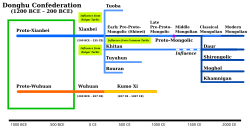
Historically, the language has evolved through several stages, including Proto-Mongolic, Middle Mongolian, and Classical Mongolian. Today, it is spoken by various ethnic groups, including Mongols, Buryats, and Oirats, forming a diverse linguistic landscape that spans multiple nations.
Key Facts
- Native Speakers: Approximately 5 million people.
- Language Family: Serbi–Mongolic (Mongolic branch).
- Primary Regions: Mongolia, China (Inner Mongolia, Xinjiang, Qinghai), and Russia (Buryatia, Kalmykia).
- Writing Systems: Mongolian script, Mongolian Cyrillic, and Mongolian Braille.
- Major Dialects: Khalkha (the dominant standard), Oirat, and Buryat.
Classification and Varieties
Mongolian is categorized into several branches and groups. The Common Mongolic branch is highly diverse, containing numerous subgroups and dialects. For instance, the Tongliao group includes dialects like Horchin and Jasagtu, while the Outer Mongolian group features the prominent Khalkha dialect.
Standard varieties are often defined by their geographic and political contexts. In Mongolia, Khalkha serves as the primary standard, whereas in China, the Chakhar variety is significant. Other major standard forms include Oirat and Buryat.

Dialect Groups and Subgroups
The complexity of the language is reflected in its many subgroups, such as:
- Juu Uda group: Includes Aru Horchin, Baarin, and Naiman.
- Josotu group: Includes Harachin and Tümet.
- Ulan cab group: Includes Cahar, Urat, and Darhan.
- Shilingol group: Includes Üdzümüchin and Abaga.
Writing Systems and Evolution
The history of Mongolian writing is a journey through various scripts. Historically, the 'Phags-pa script was utilized, which is notable for retaining the complete Middle Mongol vowel system.
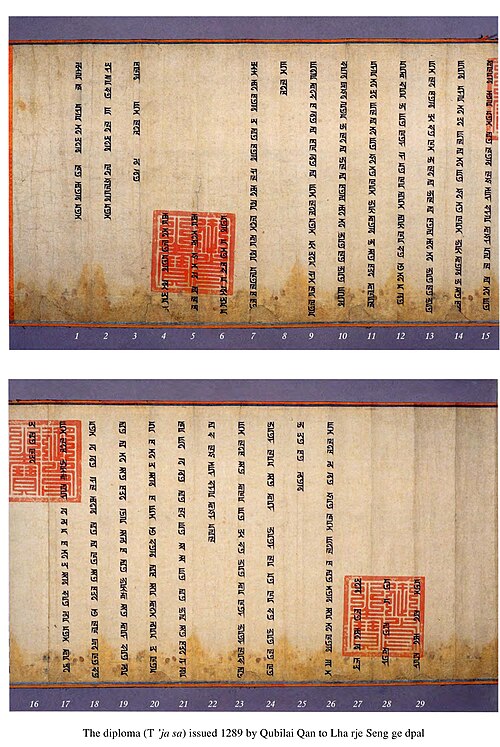
In modern times, two primary systems coexist. Mongolian Cyrillic is widely used in Mongolia and Russia, while the traditional Mongolian script is used in both China and Mongolia. There have been historical attempts to introduce other scripts, such as a brief adoption of the Latin alphabet in 1941. Notably, the Mongolian government has announced plans to transition toward the exclusive use of the traditional Mongolian script by 2030, with a period of dual usage (Cyrillic and traditional) expected by 2025.
Phonology and Vowel Harmony
One of the most defining features of Mongolian phonology is vowel harmony. This system divides vowels into three distinct groups: +ATR (front), Neutral, and −ATR (back). This harmony influences how suffixes are attached to words, ensuring phonetic consistency throughout a term.
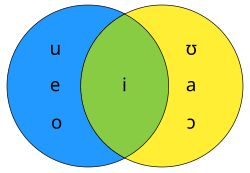
The language also features a distinction between short and long vowels, as well as a complex system of consonants including plain and aspirated plosives, affricates, and fricatives. The syllable structure is governed by specific phonotactic rules, such as constraints on where palatalized consonants or the nasal /ŋ/ can appear.
Grammatical Structure
Mongolian is an agglutinative language, meaning it uses suffixes to express grammatical relationships such as case, number, and tense. The noun system utilizes several cases, including the nominative (subject), accusative (object), genitive (possession), dative-locative (location/direction), and instrumental (means/manner).
| Case | Suffix Example | English Equivalent | Example (Cyrillic) |
|---|---|---|---|
| Nominative | – | (Subject) | ном (nom) |
| Accusative | ‑ г (‑ g) | the [object] | номыг (nomiig) |
| Genitive | ‑ н (‑ n) | of | номын (nomiin) |
| Dative-Locative | ‑ д (‑ d) | in, to, at | номд (nomd) |
| Ablative | ‑ аас (‑ aas) | from | номоос (nomoos) |
| Instrumental | ‑ аар (‑ aar) | with, using | номоор (nomoor) |
Verbs in Mongolian are marked for tense, including the past tense (with variations for informed and non-informed contexts), present progressive, and simple present. The syntax typically follows a structure where the verb is placed at the end of the sentence, though complex clauses can be formed using various conjunctions and particles.
Historical Manuscripts
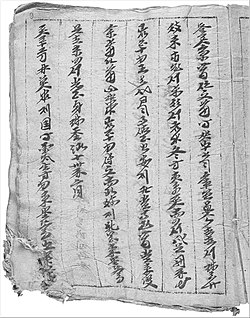
The linguistic history of the region is preserved in ancient texts. For example, the Nova N 176 manuscript, found in Kyrgyzstan, dates back to the 12th-century Western Liao. It is written in the Mongolic Khitan language using the cursive Khitan large script and contains 127 leaves and 15,000 characters.
Frequently Asked Questions
What are the main writing systems used for Mongolian today?
Currently, Mongolian Cyrillic and the traditional Mongolian script are the primary systems. Cyrillic is common in Mongolia and Russia, while the traditional script is used in both Mongolia and China. There is a planned transition in Mongolia to move toward the traditional script exclusively by 2030.
What is vowel harmony in Mongolian?
Vowel harmony is a phonological rule where vowels within a word must belong to specific groups (front, back, or neutral). This system ensures that suffixes match the vowel quality of the word stem.
Where is the Mongolian language spoken?
It is spoken in Mongolia, parts of Northeast and Northwestern China, southern Siberia, and the Issyk-Kul Region in Kyrgyzstan.
What is the difference between Khalkha and other Mongolian dialects?
Khalkha is the dominant dialect and serves as the basis for the standard Mongolian language used in Mongolia. Other dialects, such as Oirat and Buryat, have their own distinct characteristics and are spoken in different regions.
How many people speak Mongolian?
Based on data from 2020–2022, there are approximately 5 million native speakers.